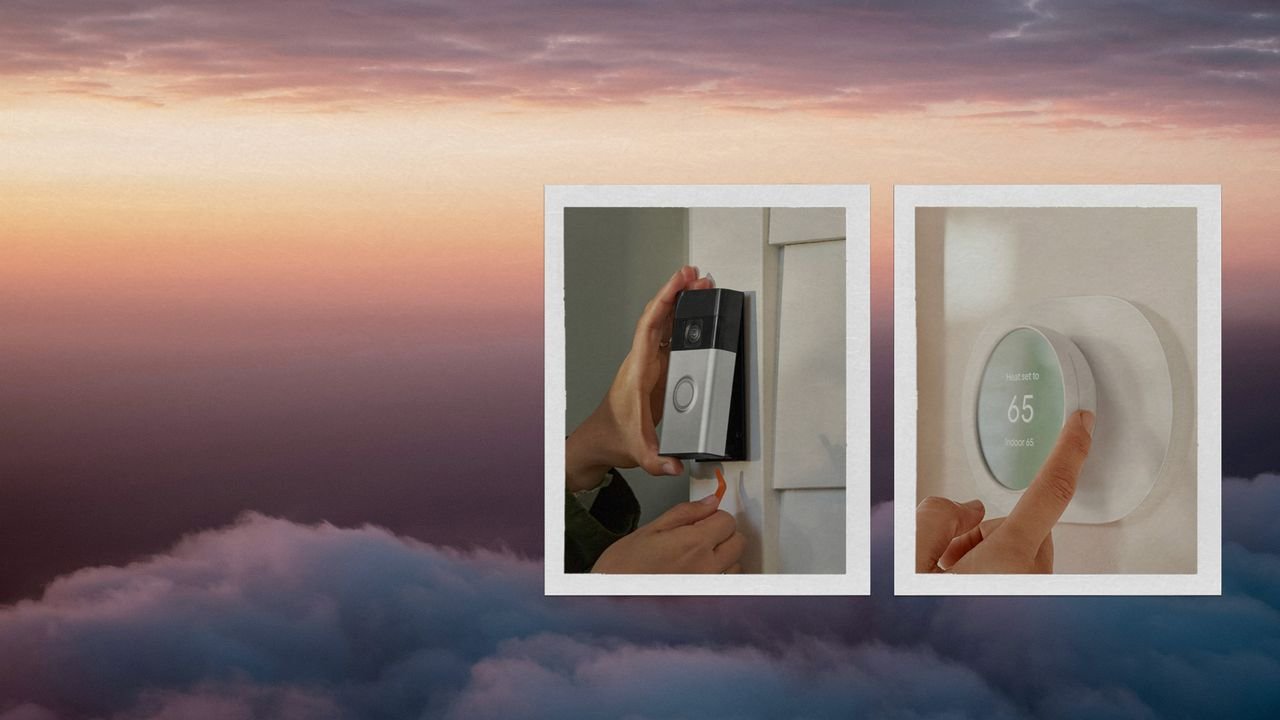
“In the winter, the primary concern is frozen or burst pipes due to heating failures or poor insulation,” says Lane. “In the summer, high humidity and heat can lead to mold growth, warped materials, and strain on cooling systems. So homeowners should never completely turn off their heat or air conditioning.”
A Google Nest thermostat is a great investment for travelers—it lets you control the temperature of your home, and the thermostat monitors your HVAC system and alerts you to any issues. Lane recommends setting the temperature to 55 degrees in colder climates and 78 degrees in warmer ones. You can also adjust your smart thermostat to your preferred temperature via app a few hours before your return, so you walk into a home that’s perfectly cool or warm without running up the electric bill.
Take care of the mail
Nothing screams “this home is vacant!” quite like an overflowing mailbox. Instead of relying on loved ones to check your mailbox, sign up for the USPS mail hold service to stop deliveries for up to 30 days, or try temporary mail forwarding for even longer absences.
Expecting something important to arrive? Anissia West, a life coach who leaves home for extended periods at least five times per year, recommends a virtual mailbox like iPostal1. The company collects your mail, uploads photos of it through an app, then allows you the option to discard it, forward it, or have it scanned so you can digitally read your mail from anywhere.
If you can’t delay the arrival of a special delivery, a smart lockable parcel box like Loxx Boxx will keep packages out of sight and out of reach of porch pirates. According to Rod Sides, president and CEO of Loxx Boxx, this reduces not only the risk of theft but also the effects of damaging weather exposure.
Make it look like someone is home
Another way to ward off would-be robbers is to create the illusion that you never left home. This can be as simple as arranging a regular landscaping service, but Royal Williams, online teacher and graduate student who splits her time between California and Colombia, goes the extra mile: “To make the house seem lived in, I use light timers—so for a few hours every night, the living room lights turn on.” Light timers that connect directly to your outlet, like this Amazon bestseller, are relatively inexpensive and easy to use. For a more advanced option, smart lightbulbs like Philips Hue often have a vacation mode that will randomly program the lights so they’re not turning on and off in a predictable manner.

Install smart home security
Long gone are the days of leaving a spare key under a flower pot by the door. Instead, invest in a smart lock like this keypad deadbolt from Schlage. Using the dedicated Schlage app, you can create temporary codes for pet sitters, neighbors, or anyone else coming to check on your property. Notifications will alert you whenever the door is unlocked, and you can also remotely control the deadbolt from your phone using the Schlage app, Apple Home, Alexa, Ring, and other home automation systems. Monitor your home further with the help of Ring and Nest, which offer other smart home security services such as indoor and outdoor cameras, motion-activated floodlights, and more.