By Alperen Acik, Savings Policy Analyst, Building Societies Association
“You shouldn’t be spending more than one third of your income on rent…” Sound familiar? It’s well-intentioned advice — but for many young people, the truth couldn’t be further from it.
Whether you’re in London, or Manchester, Newquay or Inverness or anywhere in between, if half your income goes straight to housing costs. you’re not alone. On average half of 16–24-year-olds now pay 46.5% of their income. [1]
When I was at university in London less than a year ago, for me that figure was 100%. My entire maintenance loan went straight to the landlord – and then some!
When the old rules don’t quite fit
So, I did what most students do and picked up a few shifts at a cafe, got involved in paid research and went cap-in-hand to my parents (sheepishly trying to convince them I was trying my best) for a bit of support. You tend to ‘hang in there’ and ‘grit your teeth,’ fantasising about the lives of your parents or your international classmates, because at the end of it all was a promise that things would let up once you got a job.
In times like this, one of the best ways to feel more prepared for the future is through savings. An established way of doing so is the 50/30/20 split – half of your income goes to needs, just under a third to wants and the remaining fifth straight to your savings. Though a great goal to work towards, how can young people begin saving when half their income goes straight to rent, to say nothing of other needs? There’s no right or wrong way, so I decided to share some things I’ve learnt in my own savings journey.
Keeping your money where you can see it
University taught me that if I saw all my money in one place – it felt like I could afford to splurge a bit more here and there, mindlessly tapping my phone to the reader. But I quickly learned this was unsustainable.
While I would keep my regular income for spending, I picked up a few side-hustles (like tutoring after work, but the options here are endless depending on your skillsets!) and decided that money would go straight into my savings.
When it came to separating my spending from my savings, I found it useful to put a psychological barrier between the two.
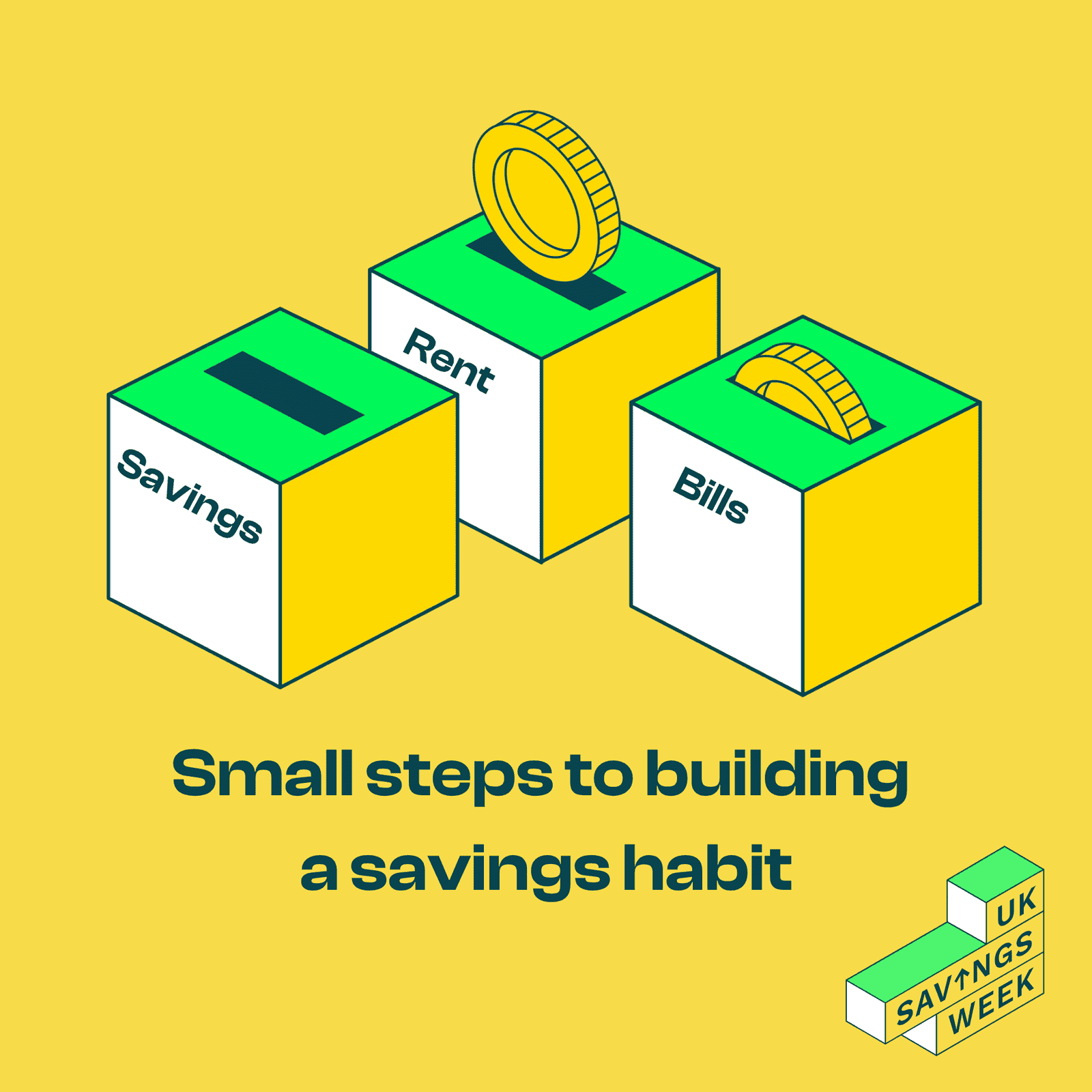
With a few different bank accounts, and sections within them under different labels, I could directly track how much of my money was actually for a rainy day. With so many convenient online banking options, this has become easier than ever to keep a track of. I felt that the extra step of transferring between accounts made me more intentional, and seeing all of my effort in one place felt rewarding.
Starting small (really small)
Sometimes the starting line to saving feels just up ahead, just around the corner of whatever ‘the right conditions’ look like. To be honest, I’ve also felt the urge to wait until I could start saving substantially, able to put a few hundred aside at the end of every month. While this might work for some people, it’s not the only way to grow your savings pot.
In retrospect, doing one of the many savings challenges, like the £1 a day or a penny more each day, would have made me feel more in control of my finances. Especially when I didn’t have a lot of money coming in.
These can be made easier by the automatic features of some of those online accounts I mentioned earlier, with some online banking tools even offering cash rewards for completing those challenges! Another way of cumulating micro-savings is by having the app ‘round up’ your payments, where you pay £4 for a £3.20 latte and put 80p straight into a savings pot.
These little contributions can build up significant buffers over the course of 12 –months. The regularity of such habits reduces financial anxiety (which often snowballs into negative feelings overall) and builds confidence in money management for that ‘later’ up ahead.
So, where do you start?
Overall, I still think that established savings advice has lots of value. But I also believe that it’s become more aspirational, and actually building financial resilience will look different for everyone. Still, there’s a million ways to blend in the tried and tested with more nifty and relatable tips. The mix of the two will look different from one person to another, there’s no right or wrong way.
So even if the best time to start saving was yesterday, the second-best time is now! Do whatever works for you, switch it up from time to time and keep things fun. I’m still figuring it out myself — but I’ve learned that even small steps count, and they add up faster than you’d think.
[1] https://www.alanboswell.com/resources/rental-statistics/