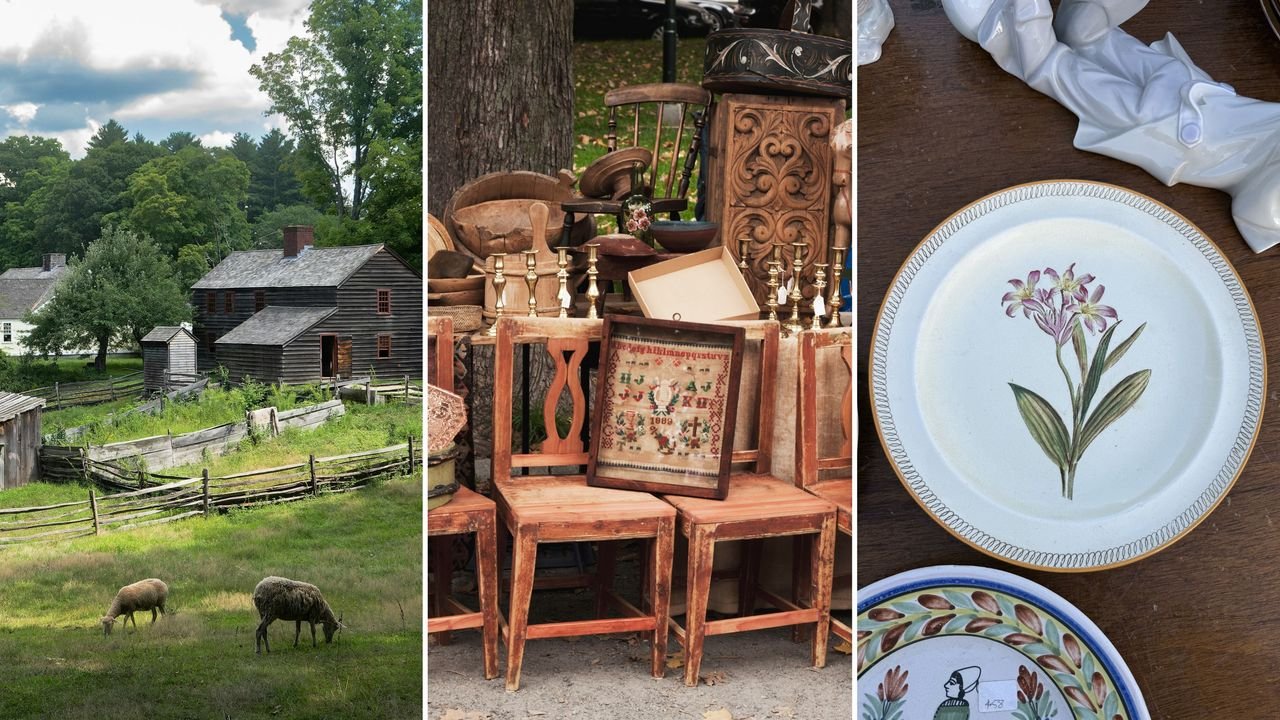
“I think antique dealers sometimes get a bad rap, as though they’re trying to pull one over on you or something, but what I found is that most of them really just care about these objects, about preserving history, and they want to get people interested in that,” Widener says. It’s not an easy endeavor, setting up a tent at Brimfield, which can cost upwards of $1,000 for the week. Some vendors even sleep in their tents overnight to protect their inventory.
Get the lemonade
When it comes to food options, prepare for your typical fair food: cheesesteaks, hot dogs, and even something called a pilgrim sandwich (basically Thanksgiving leftovers). Widener says the lemonade at Brimfield is some of the best, specifically the kind sold by the trucks shaped like lemons. “It comes in a souvenir cup, and if you bring the cup back, you get half off,” he says.
If you see something you like, don’t hesitate
When sourcing for his shop slash cottage, Widener focuses on handmade goods, like antique American quilts. “You only regret the things that you don’t buy,” he says. Because of its breadth and quick turnover, Brimfield requires a bit of on-the-spot decision-making, so be prepared to trust your gut. “If something speaks to you, then I think you should buy it,” he says. “It won’t be there when you do another lap.” And remember: if you bought a handwoven basket, only to see an even better shape a few tents down, there’s always the option to sell on Facebook Marketplace.
Lean into the chaos, but only if you want to
If you get in early enough, you’ll see hordes of shoppers running into the fields the second they open. With no time to waste, some people even wear signs that say oddly specific things like “I buy fishing lures.” Lean into the quirky chaos—or don’t. “If you see swarms of people going after something, you don’t have to be a part of that,” Widener says. “There will still be good things there in a little bit, once it quiets down.”
It’s also important to make peace with the fact that, try as you might, you won’t see everything. In the end, Widener says, it’s about the experience itself, not just the haul you bring home.