Ask A Local is a new series where we ask clued-up insiders to share their top tips for the place they call home.
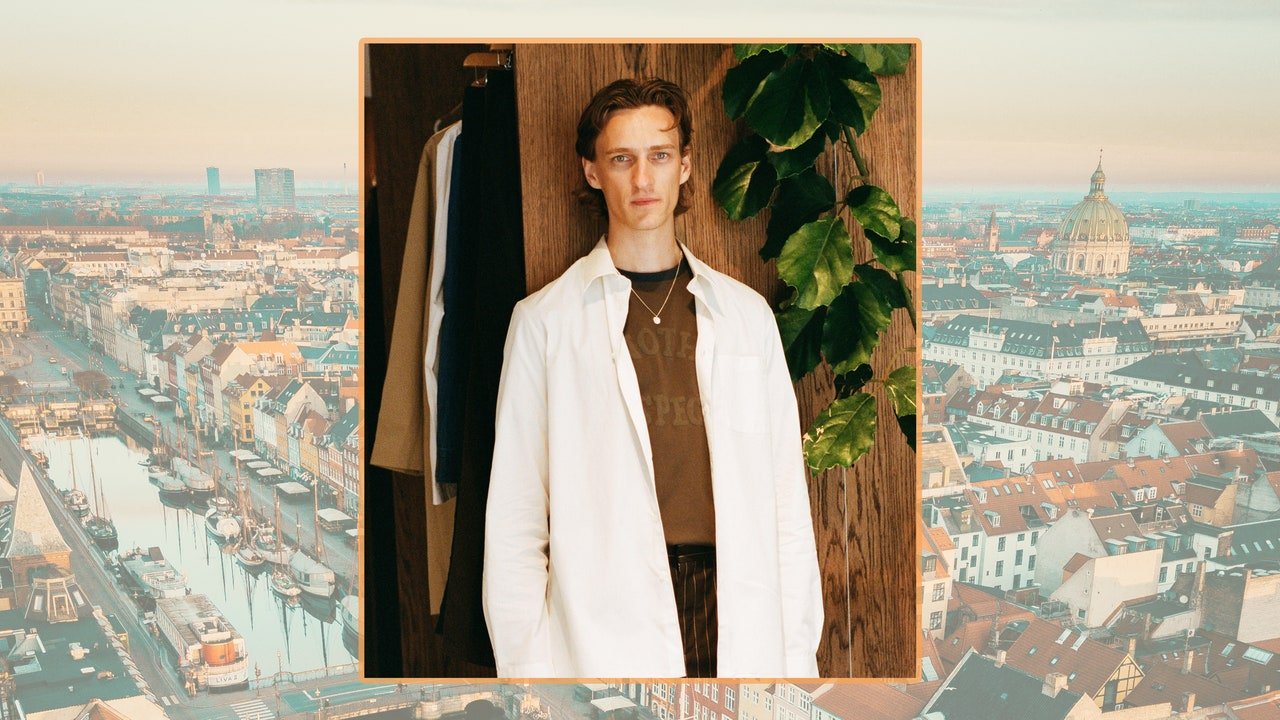
Another Aspect isn’t just another trend. Since launching in 2019, the fledgling Danish menswear brand has gained a loyal following for its versatile, reasonably priced staples: think, button-down cotton shirts and wool pants, crafted from sustainable materials like Tencel and deadstock, that can take wearers from bike, to bar, to office, and beyond. The pieces are built to last—and to combat the ever-growing wave of fast fashion.
“I care a lot about patience and the fact that things take time,” says Daniel Brøndt, who co-founded the line with his friends Anders Poulsen and Nicolaj Thomsen. “I think there is something beautiful in the whole process.” The 31-year-old brand director, who has called Copenhagen home for over a decade, believes this philosophy—of taking one’s time—is woven into the fabric of the Danish capital, which is already known for its eco-credentials and work-life balance. “People don’t run as fast as they do in other metropolises, like New York and Paris,” he says. “They take their time to bike the more beautiful or longer route home from work; they stop and chat with the neighbor.”
Accordingly, in his downtime, Brøndt seeks out warm, easygoing places that allow him to slow down—places, he says, “where you know the names of the staff, and you know the guests.” Here, the creative shares his favorite stops for a relaxed, sun-filled summer weekend in the Danish capital (which is “just a big village,” according to Brøndt), from exploring an under-the-radar museum to posting up with a great glass of wine. His most important tip? Rent a bike.

Scenic routes and morning dips
“In Copenhagen, you ride your bike everywhere. It’s such a great way to experience the city in the summer, when it really comes alive,” says Brøndt. He kicks off the weekend with breakfast at Lille, an organic cafe and bakery in Refshaleøen, the industrial island turned vibrant gastronomic and art hub. He’ll take his time, though, taking the scenic route from his neighborhood of Nørrebro through Freetown Christiania, the independent commune in the middle of Copenhagen; there, he’ll seek out the hidden paths along the water, which are dotted with Hobbiton-like DIY houses. “You almost owe it to yourself to go,” he says. “You’ll see the most beautiful homes.” Or, he’ll swing by CopenHill, the über-modern, spaceship-esque power plant, which doubles as a recreational center—complete with an artificial ski slope, a hiking trail, and one of the world’s tallest climbing walls.
Once at Lille, he’ll order either the sausage roll, the bakery’s fan favorite, or the bolle med smør og ost, a bun with butter and cheese, and a Danish breakfast staple—though in Lille’s version, the bun is made from moist sourdough. Afterward, he’ll take a dip in the harbor, jumping in from the deck of La Banchina, the waterfront restaurant and summer hangout right next to Lille. (Like a true Copenhagener, he’ll have thrown some swim trunks and a towel in his bicycle basket on his way out.) For a bit of culture, he’ll drop in at Copenhagen Contemporary around the corner, an international art center set in a former welding hall, to see works by world-renowned artists like James Turell and Yoko Ono as well by emerging talent.


Neighborhood eateries and sublime pastries
For lunch, he bikes back to Nørrebro, stopping in at the homely café Dzidra, owned by his friends Isabella Kristensen and Andreas Skou Albertsen. “Dzidra has a funny location,” says Brøndt. “It’s in the middle of a quiet residential street, but it’s become this local hangout with really good food, cakes, and specialty coffee from La Cabra. The menu changes regularly, so one week, it might lean Greek, and the next, Italian.” He’ll enjoy his lunch outside, on benches facing an impressive mural, then grab a slice of their homemade matcha mille crêpe cake for dessert. “It’s sooo good.” He might even find room afterward for a doughy treat from Juno the Bakery, in Østerbro. “Though it’s definitely not a hidden gem anymore,” laughs Brøndt, “they still make the best kardemommesnurrer (cardamom buns) in the city.”