We may earn a commission from links on this page.
Did you know you can customize Google to filter out garbage? Take these steps for better search results, including adding Lifehacker as a preferred source for tech news.
You may have heard of the Pomodoro technique before—perhaps even here at Lifehacker—and might already be aware it’s a solid productivity hack. But applied in another way, i can actually be more than that: This technique is also an excellent study tool that can help you maximize your focus and retention. It’s time-tested, variable, and available to you whether you want to do it the old-fashioned way or call in the help of an app.
What is the Pomodoro technique?
Although it has a fancy name, the technique itself is simple: If you have a large task to complete, you should break it down into pieces and schedule breaks to reward yourself in between finishing bits of it. The scheduling is the key part: When following the classic Pomodoro model, you have to set an alarm for 25 minutes and 25 minutes only. So, work for 25 minutes, and when the alarm goes off, take a five-minute break, maybe to grab a snack, refill your coffee, or scroll social media. When the five minutes are up, get back to work. Do this over and over, but every four cycles, give yourself a bigger break, up to a half an hour.
In the event something distracts you—whether it’s your phone or another person—you have to reset your timer, so try instead to be direct and tell them you’re busy and will be able to reconnect with them in a bit. Then, put them off until you get your five-minute break or even after your whole task is finished.
This works because you are aware you’re getting that little reset once your 25 minutes are up. You can throw yourself into the task knowing there’s a little treat coming down the pipeline. And while you rest up, your brain is processing everything you just learned.
How to use Pomodoro for studying
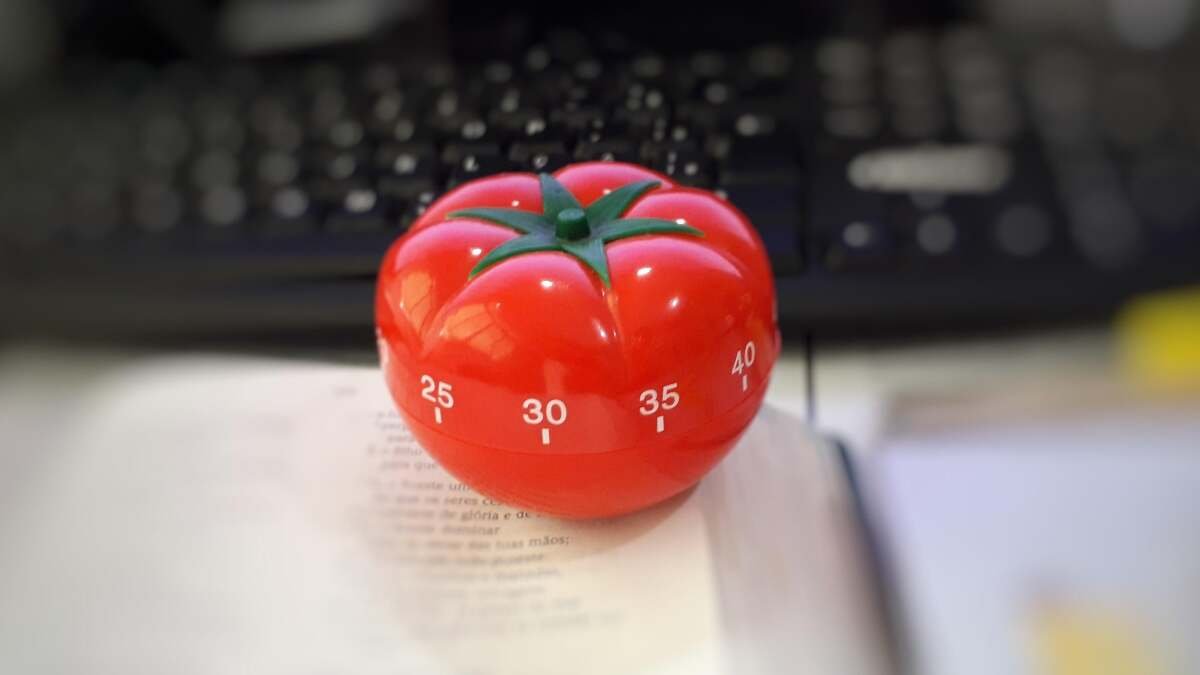
We usually discuss the Pomodoro technique in terms of working professionally, especially when there’s a big project you need to complete, but its origins actually come from the academic sphere. The method was invented by Fancesco Cirillo, a developer and entrepreneur, but he came up with it when he was a student. It’s actually named for the little tomato-shaped timer he used when he was studying. Those methods are certainly still viable, but the popularity of his technique has also birthed a cottage industry of specialty timers. On Amazon, you can get a Pomodoro-specific timer for under $20. These offer different preset time allotments, so you don’t have to stick to the 25 on, five off model—but I’ll get to that in a moment.
You can use this method to study for a test by breaking up the content you need to review. You go by chapter, by content, or by “chunk,” if you’re using the chunking method to divvy up your study load (which you should be). It’s a good way to stay on task if you get easily distracted and dividing your topics up will help you remember them better. It’s not ideal for quick cramming sessions, however, since you need at least two hours to get four “Pomodoros” in. Do this on a day you have plenty of time to devote to studying—and, of course, relaxing.
Pomodoro variations that work for studying
As noted, the classic Pomodoro technique involves 25 minutes on and five minutes off, but you needn’t be so rigid—there’s a reason those Pomodoro timers don’t lock you to those intervals. Twenty-five minute increments worked for Cirillo and countless adherents after him, but they may not work for you. I do recommend starting with the classic technique, but if you’re not finding yourself falling into a state of deep work during those blocks of time, you have to switch things up.
There’s a lot of flexibility to the method, so feel free to experiment. For instance, one student invented “Animedoro” a few years ago. This approach involves working for longer intervals, around 40 to 60 minutes, then getting 20 minutes to relax and do something you enjoy—like watching an episode of anime, which tend to be about 20 minutes long. With longer working time, you have a better chance of getting into deep work and focusing, plus not getting discombobulated when your timer suddenly goes off.
What do you think so far?
Another approach is called Pomodoro 2.0 and it involves adding 15 minutes to your work period every time you return to your task, so you focus longer and longer as you go. You still need to take breaks, of course, and you can even make those incrementally longer too.
Or maybe you prefer to work in quick bursts. You can try variations where you study for just 10 minutes before a short break, giving yourself a sense of urgency as you try to see how many flashcards you can study in that time. The point is it’s up to you: A period of work interspersed with breaks is the only core element of the method, and you can approach it in whatever way you find most useful. Just keep in mind that you’ll get better results if you commit to a set structure, even if it takes some time to adjust to it.
Pomodoro apps can help
I’m a fan of those Pomodoro timers because they keep me off my phone, which is a major distraction—it’s a slippery slope from setting an alarm to checking a notification and then finding myself in a Reels hole 10 minutes of my allotted study time.
Then again, the phone can be useful if you’re using it productively. Many focus timer apps can be used with the Pomodoro method, and will even block other apps during the work-time increments you set, or otherwise penalize you for getting distracted when you should be focusing. (If you need suggestions, I’ve previously written about a few of my favorites.)
There are also Pomodoro-specific apps—including my top pick, FocusPomo—that exist purely to help you structure your study or productivity time around the famous technique. If using your phone alarm seems risky and buying a tabletop timer off Amazon feels antiquated, look into one of these.