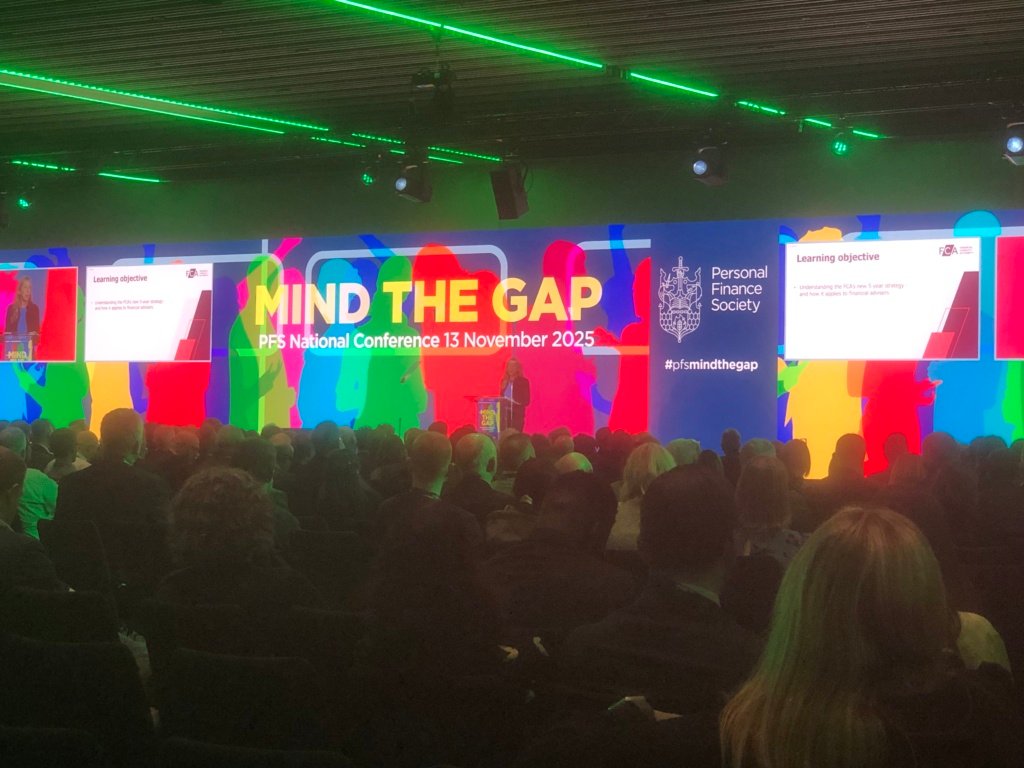
The Financial Conduct Authority (FCA) has reassured advisers that its targeted support plans are designed to widen access to help, not replace regulated financial advice.
Speaking at the PFS National Conference, FCA head of consumer investments Kate Tuckley said the national advice gap remains “stubbornly wide”, with fewer than 10% of consumers taking regulated advice and one in five turning to social media for investment guidance.
She said targeted support is intended to give more consumers a route to reliable guidance, but stressed it will sit alongside, not instead of, full advice.
“I want to reassure you that targeted support can never be a replacement for bespoke financial advice,” she said.
“This advice will continue to have a vital role to play for clients who need individualised recommendations tailored to their circumstances.”
Tuckley described targeted support as a “win win” for firms and consumers and confirmed the FCA plans to consult in early 2026 on simplifying advice rules and requirements for ongoing advice services.
She said the aim is to create a continuum of support so consumers can choose an appropriate level of guidance or advice. She also moved to dispel what she called persistent “myths” about the FCA’s intentions.
Tuckley rejected suggestions that the Consumer Duty’s price and value outcome could lead the regulator to become a price setter.
“Our role is about setting standards, not prices. This is not a race to the bottom,” she said.
Tuckley said the FCA remains committed to a proportionate approach and pushed back on perceptions that the regulator focuses primarily on larger wealth firms.
Smaller firms and sole traders, she said, should expect expectations calibrated to their size and resources.
She also highlighted ongoing work to reduce regulatory burden.
The FCA has already proposed decommissioning several reporting returns, cutting frequencies and simplifying data requirements, with more consultations planned later this year.
“We hear you and we are acting,” she told delegates.
Tuckley addressed the regulator’s review of consolidation, saying well-managed groups with strong governance can deliver sustainable outcomes for clients and retiring advisers.
However, she warned that weaknesses in risk management, prudential controls or client-bank transfers could create harm and urged firms to benchmark themselves against the FCA’s findings.
She acknowledged the pace of change facing the advice sector, including an ageing adviser population, the shift from DB to DC and the growing role of AI.
But she said the FCA is committed to being a “predictable, purposeful and proportionate” supervisor.
“Our work is about helping you deliver good outcomes for clients,” she said.
“Bespoke advice will remain essential, and targeted support is there to help more people make informed decisions with confidence.”