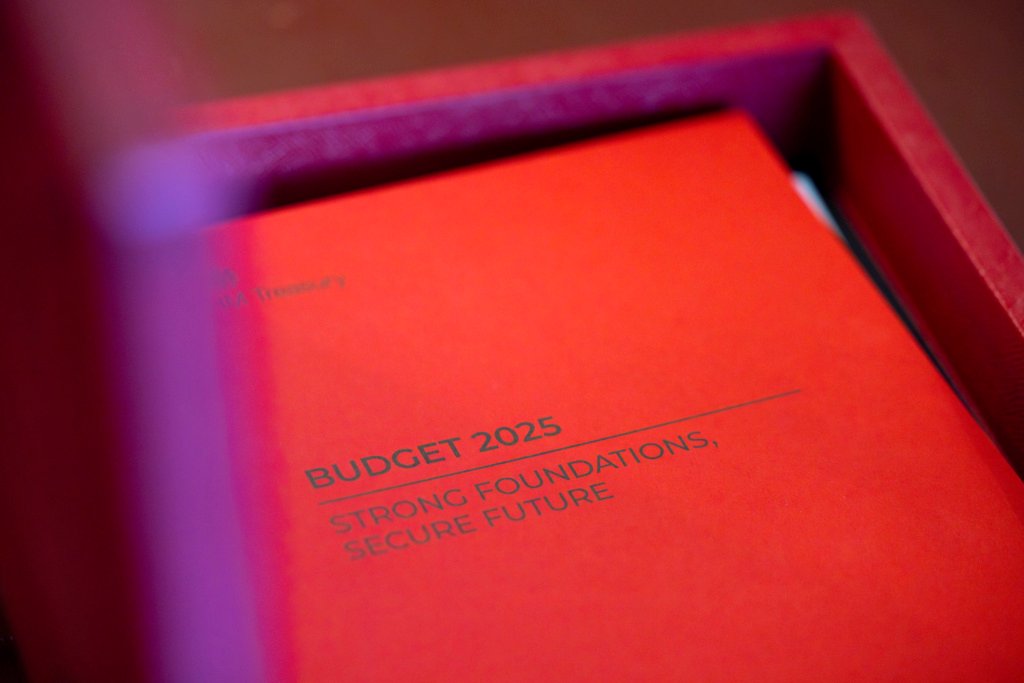
The chancellor has confirmed she will lower the current Cash Isa tax-free allowance to £12,000.
During the Budget today (26 November) Rachel Reeves said she would “reform our Isa system, keeping the full £20,000 allowance while designating £8,000 of it exclusively for investment.”
This means for those who pay into a combination of cash and stocks & shares Isas, at least £8,000 must be invested in stocks and shares.
Over 65s, however, will retain a £20,000 cash allowance. This rule will come in to effect from 6 April 2027.
This is the least popular Budget change according to AJ Bell.
AJ Bell research found that only 12% of Brits were in favour of a reduction to the £20,000 Cash Isa allowance, while nearly half (48%) oppose the change.
Nucleus technical services director Andrew Tully said: “Reducing the maximum Cash Isa saving is unlikely to drive significant additional stocks & shares Isa saving. People using cash Isas are more likely to instead use some form of cash savings account, which won’t generally drive better outcomes.
“We’re in danger that Isas are becoming too difficult and complex for people to understand and, perhaps more importantly, many of the restrictions caused by having multiple different variants puts barriers in the way of customers and the ability for them to simply and easily move from one type of saving to another as their experience develops.
“That could, for example, be achieved by having one main Isa product within which people could simply choose to invest in cash, stocks and shares, or both. And simply and easily move funds between the two as their individual circumstances change.
“Nudge’ behaviour is becoming widely used within the pension environment, but the current Isa structure makes that difficult to replicate. For example, someone who has built up a reasonable nest-egg within a Cash Isa may want to start investing future funds in a stocks and shares Isa.
“However, to do that the customer would need to take out a completely new Isa. That is a significant barrier, especially to clients who are less experienced or don’t have access to financial advice.”
In the run-up to the Budget the Treasury Committee warned that cutting the allowance would add friction and complexity to the system and is unlikely to incentivise Brits to invest.
Shadow economic secretary to the Treasury Mark Garnier also said it is an “incredibly bad idea” for the chancellor to lower the current Cash Isa tax-free allowance, with TISA CEO Carol Knight echoing these sentiments.
Garnier also said that this move hurts building societies as a reduction in the limit reduces the amount of money used for mortgages.
Prior to the Budget, research from Paragon Bank found that 62% of Cash Isa holders would not consider switching to a Stocks and Shares Isa if the Cash Isa limit were reduced.
As over half (57%) said they would rather opt for a regular savings account instead.
Also, over two thirds (67%) said that the risk of losing money concerned them most about diverting savings into a Stocks and Shares Isa, followed by stock market volatility (65%).
Additionally, 27% of those that hold Cash Isas already invest directly in company shares.
The idea behind this move is to encouraging more retail investors into UK equities.
Still, there are those who back the move and believe it is a step in the right direction.
Scottish Friendly CEO of leading mutual Stephen McGee said: “It’s encouraging to see the chancellor take steps to reduce the annual Cash Isa allowance, even if we believe she could have gone further.
“The direction of travel is right, but if the government really wants to shift behaviour and support long-term wealth creation, the cap ideally needs to be set at around £8,000.
“At that level, households would still be able to build a meaningful emergency fund but would be encouraged to invest anything above that.
“This is vital, as there is currently around £360bn sitting in Cash Isas earning interest that often fails to keep pace with inflation.
“To be clear, we welcome this move. But if the government wants to truly build a US-style investing culture here in the UK, then it needs to go further.”