It’s a sunny day in May at the foot of the French Prealps, and the bar-brasserie Le Schuss in the town of Voiron is throwing—there’s no other word for it—a rager. On the outdoor terrace, a DJ stands with his turntable on a raised platform, rallying a horde of teenagers in green and yellow bandanas, pumping their fists to pop hits from the 2000s and ’10s. The speakers blast “Starships” by Nicki Minaj as beer spills from plastic cups. What resembles a fine mist hovers over the scene—smoke from cigarettes and vapor from vapes.
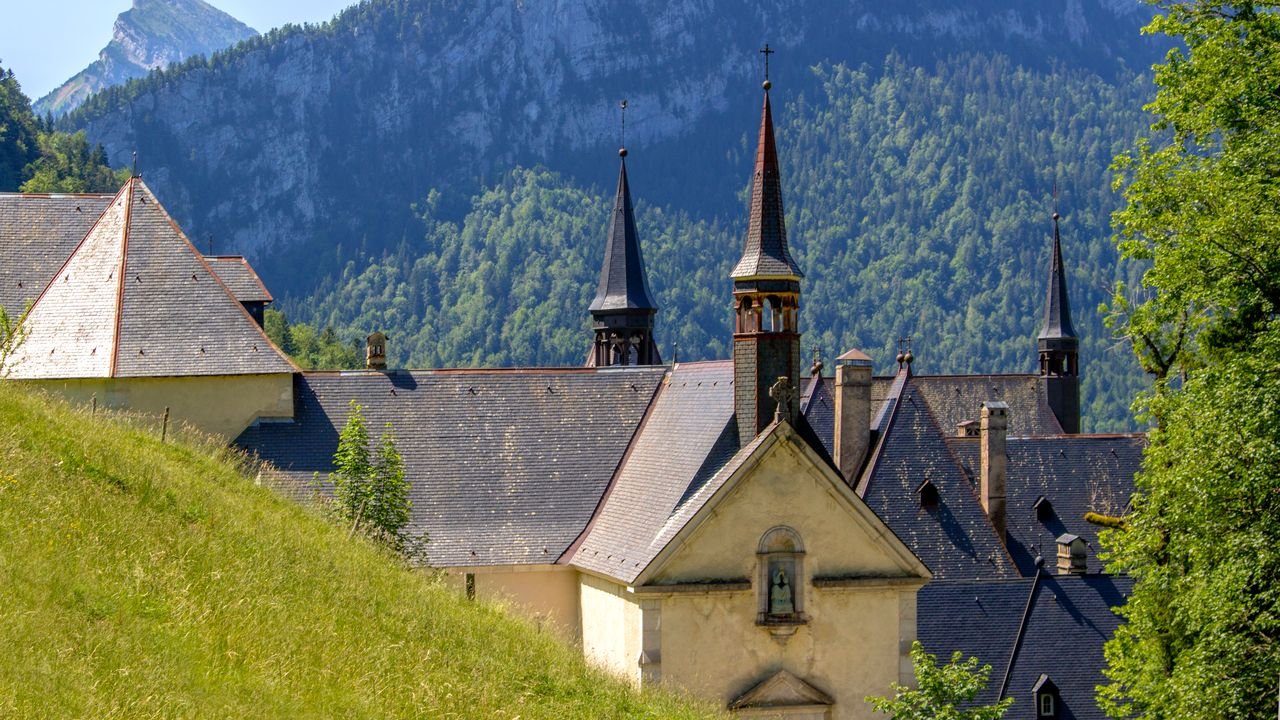
This is, to my great surprise, part of Les Fêtes de la Chartreuse, an annual festival in the Auvergne-Rhône-Alpes region of France that, indeed, fetes Chartreuse. It’s a triple celebration: of the green liqueur distilled from about 130 botanicals by Carthusian monks according to a centuries-old secret recipe; the verdant mountain range after which the drink, the monks, and their monastery are named; and the area’s natural bounty at the height of spring. The Voironnais, with their neighbors in nearby Saint-Étienne-de-Crossey and Saint-Nicolas-de-Macherin, have hosted Les Fêtes for the past 10 years. I have come to partake, as a francophile and booze hound, hoping to learn about Chartreuse at its source.

Chartreuse comes in two “flavors”: green and yellow. I prefer the former—herbaceous, piquant, and almost overwhelming. Drinking it straight feels like a meadow grabbing you by the throat and saying, “Do you like that?” (My answer is yes.) That sharpness tempers whatever drink it’s in, as in the sweet-and-sour Last Word, an IBA cocktail made with gin, lime juice, Maraschino liqueur, and green Chartreuse. But the yellow variation has its charms too. It’s milder—at about 40% ABV, compared to green’s 55%—and sweetly cozy, like a good morning kiss from a casual lover.
Given Chartreuse’s rarified place of pride in bars and drink menus around the world, I expected a more refined, cosmopolitan vibe to the proceedings in Voiron—maybe tastings that examine different vintages, or gastronomic menus made to pair with Chartreuse-based tipples. Instead, I find a parade on Voiron’s main street featuring circus performers and stiltwalkers in Chartreuse-colored wigs; a “banquet populaire” with food stalls selling wursts in stale buns; semi-professional musical acts led by French dads; French moms in cropped denim jackets hooting and hollering, pints in hand, with their besties from lycée in Lyon, Grénoble, or right here in Voiron. As I weave through the long refectory tables overflowing with revelers and ale, I can’t help but laugh: The whole affair is rambunctious and unabashedly down-home, like a cross between a state fair and a frat’s block party. To be clear, I don’t dislike this.
Inside Le Schuss, I squeeze through the crowd clad in varying shades of mint, pear, and lime. Over the music (Katy Perry’s rager anthem “Last Friday Night”), I ask the barman for a glass of Chartreuse. He shrugs that Gallic shrug and says, ever so Frenchly, “Pas possible.”
You see, there’s a Chartreuse “shortage.” It was all over the news about three years ago—or at least it was in my mixology-pilled corner of the internet. Historically, the liqueur was little-known, an if-you-know-you-know industry favorite imbibed by folks in F&B because it was very strong, delicious (so unique on the palate that a taste for it made you cool), and rarely requested by customers. That changed in the Covid-19 pandemic, when the masses took up hobbies like at-home mixology to kill time and, in my case, self-medicate. What was once left to gather dust on shelves started flying off of them. Scrooges hoarded the stuff. Prices spiked for bottles, if you could find one. Call her the elusive Chartreuse.