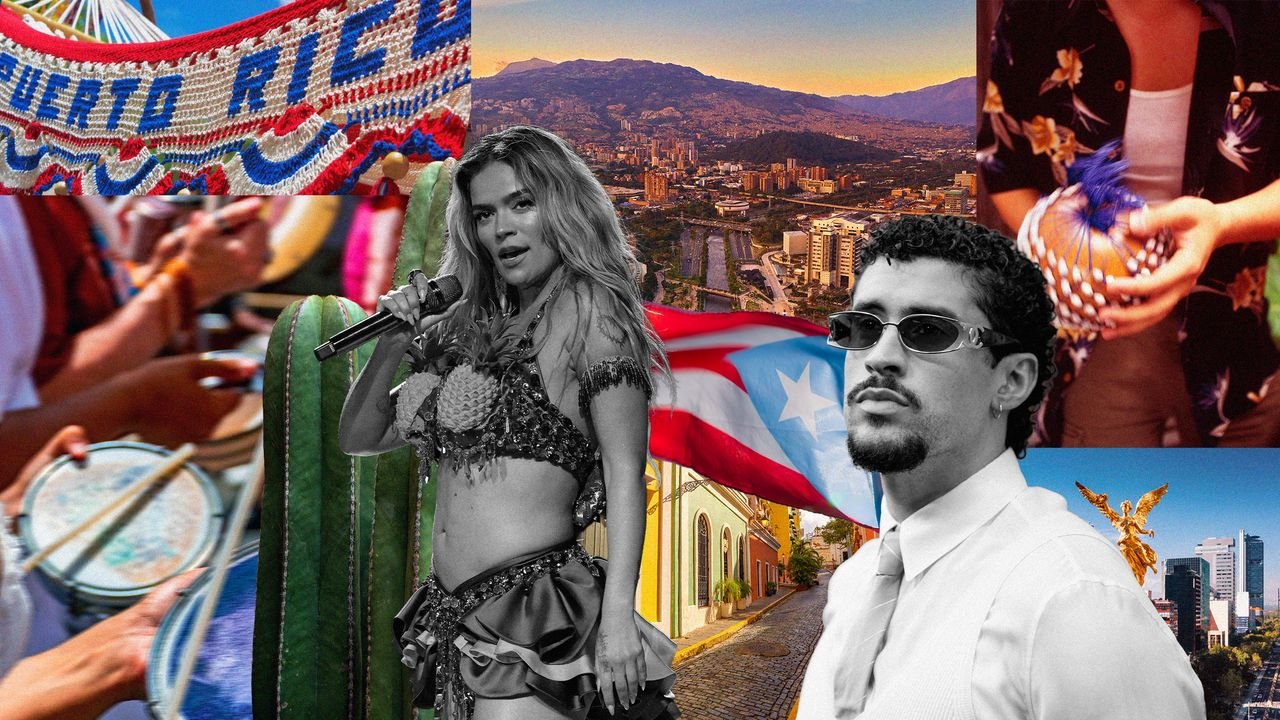
“Latin America and Latin music, in particular, has had the benefit at different stages in history of being the most famous ‘exotic’ music of the world. What Cuba had with the Cha-Cha-Chá and Brazil had with samba, you can now see today in different ways with Puerto Rico’s reggaeton and Mexico’s music. Colombia is also investing a lot in being a music tourism powerhouse,” he says.
And then there are today’s “gig trippers”—that is, travelers who craft their itineraries around concerts and festivals, as much as they do around greater music lore. And the opportunities to travel for both festivals, and individual shows on arena tours, will be plenty in 2026.
Mexico is gearing up for Vive Latino this spring, the largest festival in Mexico City dating back to 1998, which focuses on Latin rock. Chile, which has recently been in the pop-music spotlight with the ascendance of beloved internet baddie Paloma Mami, is home to Viña del Mar International Song Festival, the oldest and largest music festival in Latin America. In November, Argentinian producer and DJ Bizarrap—whose viral internet series, BZRP Music Sessions, is equivalent to Latin America’s COLORS—was tapped by the NFL to perform for the league’s inaugural game in Madrid, Spain (he was accompanied by none other than the godfather of el perreo, Daddy Yankee). Not to be outdone, Bad Bunny will be starring in this year’s Super Bowl—and no, he will not be singing in English.
Even the smaller and perhaps less expected Latin American nations are seeing the benefits and joining the music tourism movement and actively promoting themselves in this space. Belize, for example, hired Sound Diplomacy in 2022 to create a tourism plan designed solely around its musical history. The minuscule nation of 400,000 residents—comfortably snuggled along the Caribbean coast, and traditionally known for its barrier reefs and scuba diving excursions—is banking on the growing trend of music tourism to get on more would-be travelers’ radars. Though Belize has never been heralded as a bastion of commercial musical success, and lacks an obvious superstar to rally around, they have a rare form of musical currency: Garifuna. The style of dance, drumming, and storytelling originated from the Afro-Caribbean Garifuna diaspora in and around Belize, and has been designated as an intangible cultural heritage by UNESCO. It’s now a potentially wealthy resource and point of touristic interest.