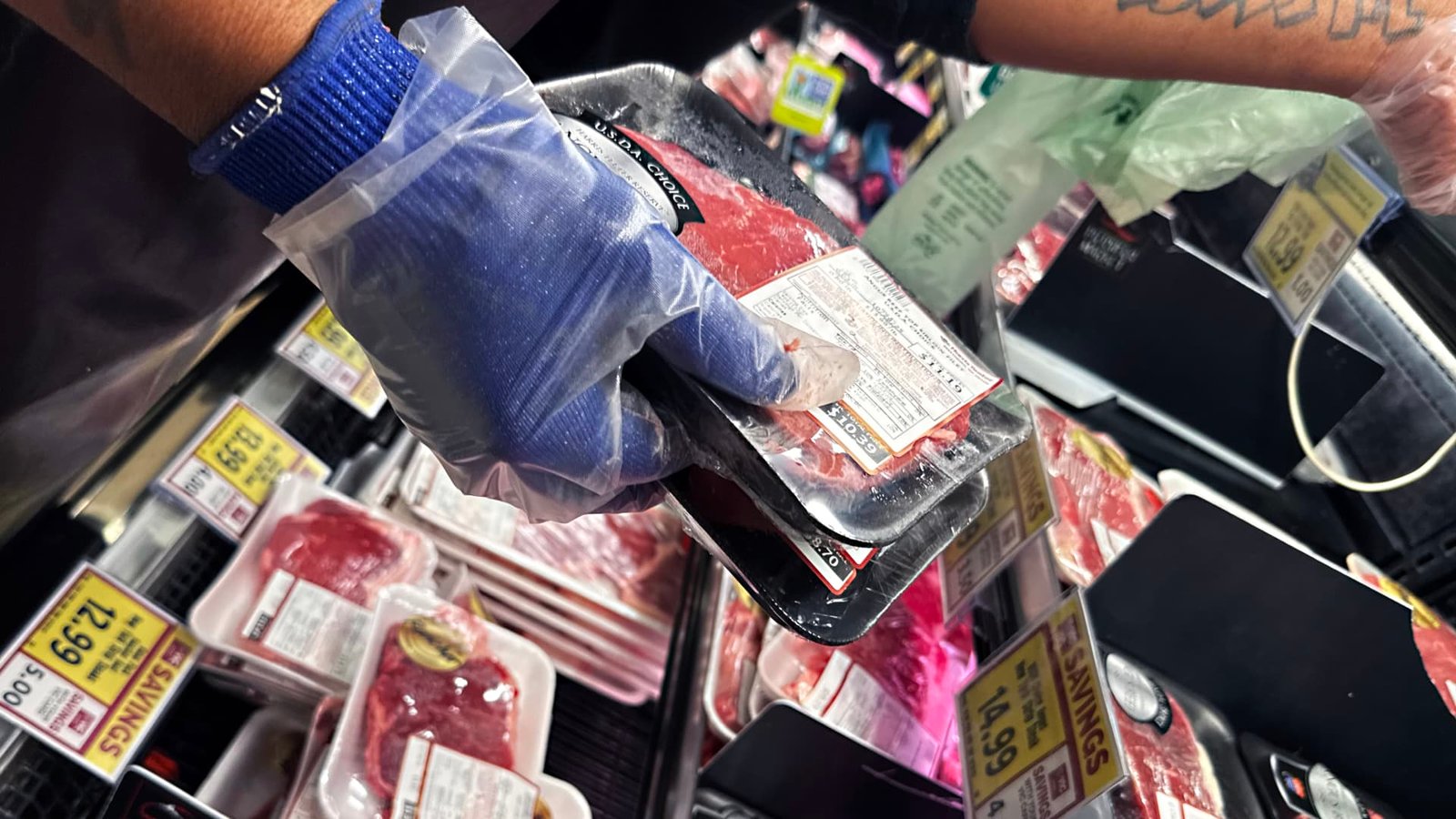
A worker stocks angus beef top sirloin filets in the meat section of a grocery store in Washington, D.C.
Tom Williams | Cq-roll Call, Inc. | Getty Images
Inflation decelerated in January as price pressures eased across a range of consumer staples such as food and gasoline, though they remain elevated for certain categories, including electricity and home heating, economists said.
The consumer price index, a key inflation gauge, rose 2.4% in January from 12 months earlier, the Bureau of Labor Statistics said Tuesday. That was down from 2.7% in December and lower than expected.
Inflation is still running above the target of policymakers at the Federal Reserve, the U.S. central bank, which aims for an inflation level around 2%, economists said.
Effect of tariffs and immigration policy
Inflation would likely be at the Fed’s target absent Trump administration policies on tariffs and immigration, said Mark Zandi, chief economist at Moody’s.
Tariffs levied by President Donald Trump on a host of trading partners have put upward pressure on prices, as many businesses pass at least some of those import taxes on to U.S. consumers, economists said. Immigration policy has also put some upward pressure on prices for services by reducing labor supply, they said.
“Broadly speaking, inflation is still too high for most Americans and the Fed,” Zandi said. “But I think we’ve seen the worst of it. If there are no changes in policy — to tariffs and immigration policy — we should get inflation back to something more comfortable by this time next year.”
The Yale University Budget Lab estimated in January that the U.S.’ effective tariff rate had risen to 16.9%, the highest since 1932. The Supreme Court is poised to rule on the constitutionality of a large swath of Trump’s tariffs in the coming weeks.
‘Big caveat’ in CPI report
The slowdown in inflation was “relatively broad-based” in January, aside from “some pockets of acceleration in services (particularly transportation costs),” Jason Pride, chief of investment strategy and research at Glenmede, an asset manager, wrote in a note Friday.
But there’s a “big caveat” in the CPI data, Zandi said: Inflation looks better on paper than in reality due to a quirk in the data from the government shutdown in the fall.
The record-long shutdown, which ran from Oct. 1 to Nov. 12, prevented federal statisticians from collecting typical inflation data in October. Without that data, the BLS assumed that no price increases had taken place during the month for most categories of goods and services.
Moody’s estimates the CPI inflation rate would be around 2.7% if that data were included, Zandi said.
Inflation report likely doesn’t change Fed posture
The inflation report comes amid a backdrop of calls for lower interest rates from Trump, who recently unveiled his pick of Kevin Warsh to succeed Fed Chair Jerome Powell. Powell’s term ends in May.
However, economists don’t expect the January inflation report to speed up policymakers’ pace of cutting.
“The downside surprise in the January CPI is welcome news for the Federal Reserve, but we aren’t changing the baseline forecast for monetary policy based on one inflation reading,” Bernard Yaros, lead economist at Oxford Economics, wrote in a note Friday. “Lingering distortions from the shutdown in the price data, prospects for solid growth this year, and a stabilizing job market will keep the central bank on hold until June.”
Where prices have been rising and falling
Inflation for some goods and services has been easing, while it has been elevated for others.
For example, gasoline prices were down about 3% on a monthly basis in January and by 7.5% on an annual basis, according to CPI data.
Food inflation — for groceries and dining out — was 2.9% on an annual basis in January.
That’s high by historical standards, Zandi said. Likewise for categories like electricity, apparel, child care, medical care and home heating, he said.
Prices for utility gas service were up about 10% annually in January, according to CPI data.
Outside of gasoline, “inflation for most necessities are well above target and in most cases above 3%,” Zandi said.