
Polymarket recorded historic trading activity on the day of the joint U.S.–Israel strike on Iran, with single-day nominal trading volume reaching $478 million, according to an analyst tracking platform data.
Summary
- Polymarket hit a historic $478 million in single-day trading volume, with politics markets alone accounting for $220 million.
- Six newly funded wallets reportedly made $1.2 million betting “yes” on a U.S. strike just hours before it happened.
- A major trader who had been betting against a strike lost $6.5 million in one day when the airstrikes occurred.
War bets surge: Polymarket hits $478M daily volume
The surge marked the highest daily volume in the platform’s history. The politics sector alone accounted for $220 million, or 46.2% of total daily volume, also setting a record. Polymarket Builders, the ecosystem’s infrastructure arm, similarly posted a single-day high as geopolitical tensions drove traders into war-related contracts.
At the center of the activity was the contract titled “US strikes Iran by February 28, 2026?” hours before coordinated airstrikes were launched early Saturday morning, several newly created wallets piled into “yes” shares.
On-chain analytics firm Bubblemaps flagged six wallets that collectively profited roughly $1.2 million.
According to its findings, most of the wallets were funded within 24 hours of the attack, specifically targeted the February 28 deadline, and accumulated “yes” positions just hours before the strikes occurred, raising suspicions of potential insider knowledge.
The surge has drawn scrutiny from analysts and regulators alike, with critics suggesting that fresh accounts profiting off the timing of strikes could indicate access to privileged information.
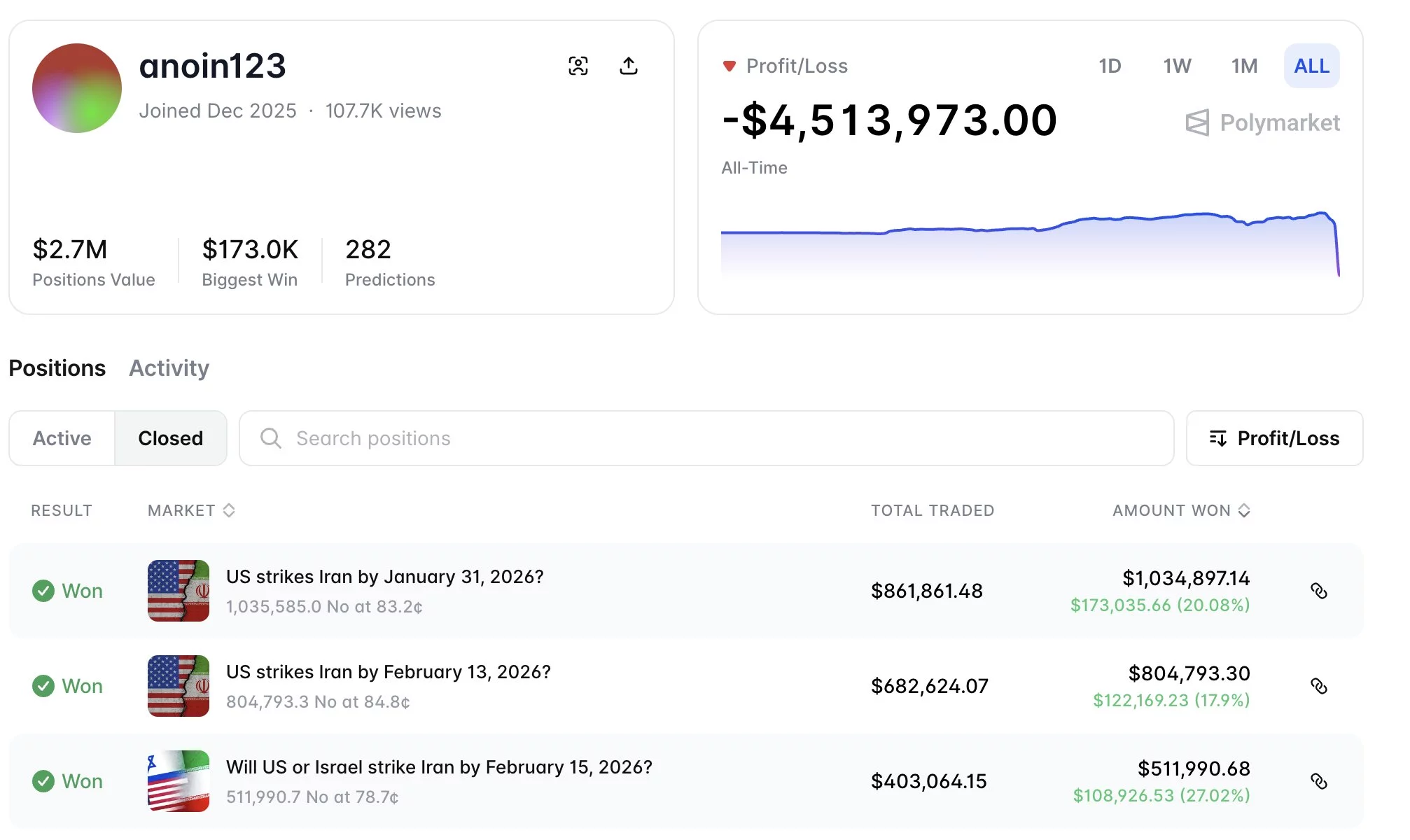
Not all traders emerged unscathed. On-chain tracker Lookonchain highlighted one high-profile bettor, “anoin123,” who had built more than $2 million in profits over two months by consistently wagering that the U.S. and Israel would not strike Iran.
When the strike ultimately took place, the trader lost $6.5 million in a single day, flipping from multimillion-dollar gains to more than $4.5 million in losses.
The episode shows both the explosive growth of blockchain-based prediction markets during geopolitical crises and the mounting scrutiny surrounding suspiciously timed bets.