U.S. Treasury Secretary Scott Bessent looks on as he speaks to the media after two days of meetings with a Chinese delegation, in Paris, France March 16, 2026.
Abdul Saboor | Reuters
The Trump administration announced on Thursday that it will task the U.S. Department of the Treasury with collecting on defaulted student loans.
Currently, the U.S. Department of Education oversees the country’s nearly $1.7 trillion federal education debt portfolio, held by roughly 42 million borrowers.
The joint announcement from the two agencies said that the Treasury Department would take on more duties related to federal student debt over time, eventually providing “operational support” on current loans.
President Donald Trump has repeatedly said he intends to dismantle the Education Department and to transfer education authority to the states. In a statement, U.S. Secretary of Education Linda McMahon said the partnership with Treasury is a “historic step toward breaking up the Federal education bureaucracy.”
Some student loan borrowers may see more direct and immediate impacts from the change than others.
“Borrowers are craving clarity and certainty around student loans,” said certified financial planner and certified student loan professional Landon Warmund at Reliant Financial Services in Kansas City, Missouri. “With this recent announcement, it’s adding more uncertainty into the mix.”
Here’s what we know, so far.
Why is this change happening?
The government said that the Treasury is better positioned to collect on debt because it has the offset program. That program involves debt enforcement of child support and other past-due balances owed to the federal government and states.
“Under President Trump’s leadership we are undertaking the first serious effort to clean up a $1.7 trillion portfolio that has been badly mismanaged for years,” U.S. Secretary of the Treasury Scott Bessent said in a statement about the transition.
“Treasury has the unique experience, the operational capability, and the financial expertise to bring long overdue financial discipline to the program and be better stewards of taxpayer dollars,” Bessent said.
Around 9 million borrowers are in default, according to the Education Department.
The Treasury Department has been involved in student loan collection efforts in the past. But the department itself found it collected at lower rates than private companies, according to an archived 2016 blog post from the Internet Archive’s Wayback Machine.
“Moving collections to the U.S. Treasury will not lead to improved effectiveness,” Kantrowitz said.
Will I be affected?
For now, only defaulted student loan borrowers are affected by the change. You’re typically not considered to be in default on your federal student loans until you haven’t made your scheduled payment in at least 270 days.
If you’re that far behind, the Treasury Department will likely be tasked with collecting on your debt. The student loan servicer that handles defaulted accounts for the government, Maximus, is unlikely to change, Kantrowitz said.
The federal government has extraordinary collection powers on its student loans, and it can seize borrowers’ tax refunds, paychecks and Social Security retirement and disability benefits. But those collection efforts are paused for now, and the Trump administration has not said when it will resume.
What are my rights?
The terms and conditions of your federal student loans cannot change even if the agency overseeing them does, experts say. Borrowers’ rights are guaranteed when they sign their master promissory note.
What actions should I take now?
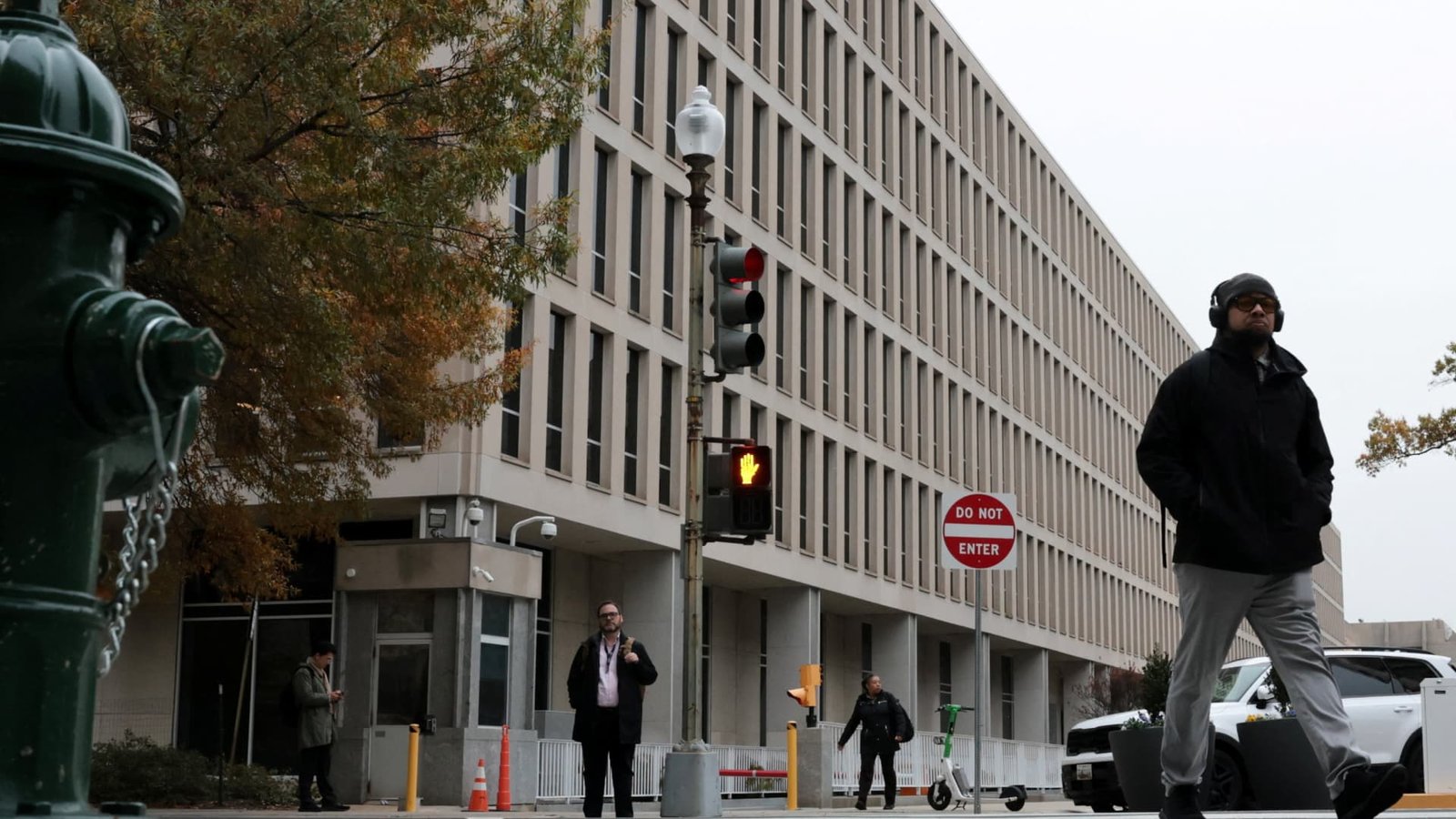
The U.S. Department of Education headquarters as U.S. President Donald Trump’s administration is taking steps to dismantle the department, in Washington, D.C., U.S., Nov. 20, 2025.
Jonathan Ernst | Reuters
Borrowers worried about their data and repayment history getting lost during the transition from Education Department to Treasury oversight should download their files from the National Student Loan Data System, said Warmund, a member of CNBC’s Financial Advisor Council.
Those in default can contact the government’s Default Resolution Group and pursue a number of different avenues to get current on loans, including enrolling in an income-driven repayment plan or signing up for loan rehabilitation.
What if I’m current on my loans?
Trump officials said the Treasury Department will eventually “work to provide operational support over non-defaulted federal student loan debt” as well.
But their language was too vague to know what that means, said Betsy Mayotte, president of The Institute of Student Loan Advisors, a nonprofit that helps borrowers navigate the repayment of their debt.
“I have a lot more questions about the subsequent phases, and I suspect there may be pushback,” Mayotte said.
CNBC Make It reporter Kamaron McNair contributed reporting.