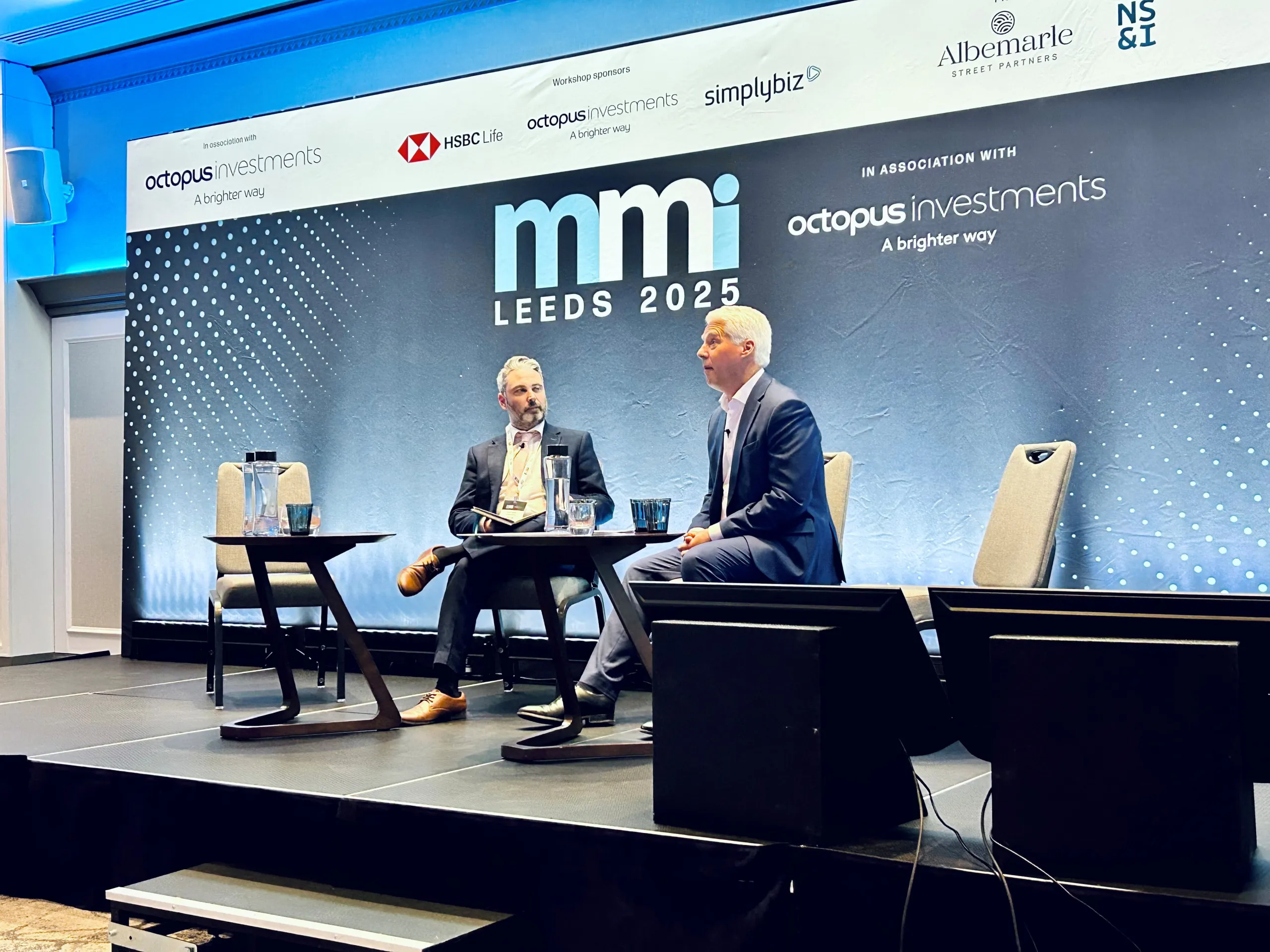
Advisers must make income protection a top priority in financial planning conversations, according to David Mead, Head of Protection at St James’s Place.
He warned that the loss of income remains the biggest threat to clients’ long-term financial wellbeing.
Mead was talking to Money Marketing news editor Dan Cooper in a session entitled ‘How protection can grow your business: Unpacking the real benefits of protection’ at MMI Leeds today (8 May).
He stressed that income protection is often overlooked or delayed, despite its critical role in protecting clients’ financial stability.
“Losing your income is the biggest risk – income protection is the number one,” he said. “The average income protection claim lasts over six years. That’s a long time to go without regular earnings.”
He urged advisers to model the impact of income loss using cashflow tools, helping clients visualise how their finances would cope over months or even years.
“Just ask the question: what would you do if your income stopped for a year, or six?” he said.
Mead acknowledged that protection remains an under-prioritised area for many advisers, with some arranging just a handful of policies each year.
He attributed this to a combination of limited training, lack of confidence and a fear of poor client outcomes due to complex underwriting.
“Protection is still seen by some as a tick-box exercise,” he said. “But if you’ve built a long-term, trust-based relationship with a client, that trust gives you permission to have the difficult conversations.”
To emphasise the real-life impact of getting protection right, Mead shared the story of a former client named Joe, a 35-year-old self-employed boom operator who was left paralysed after a swimming accident.
Thanks to an income protection policy and a critical illness plan arranged 18 months earlier, Joe avoided financial ruin.
“He had income protection paying from day one and a critical illness payout of £200,000,” said Mead. “If he didn’t have that cover, he probably wouldn’t still have a house.”
Mead called on advisers to frame protection discussions honestly but empathetically.
“One adviser told a client, ‘These questions might make you uncomfortable – they might even make me uncomfortable – but we’ll only need to do this once.’ That’s a great way to open the conversation.”
He also encouraged the use of tools like CIExpert to identify protection gaps, compare policies and explain coverage in simple terms.
“You need to build protection into your client agenda and not let it fall off the bottom,” he said.
On business strategy, Mead outlined three viable approaches: become highly competent in protection, develop an in-house expert, or partner with a specialist firm.
He emphasised that under the Consumer Duty, doing nothing is no longer acceptable.
“We can’t walk past these conversations any more,” he said. “Either be really good at protection, or work with someone who is – but make sure your clients are covered.”