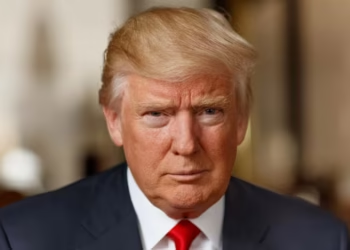
Major global banks are integrating crypto infrastructure through Coinbase. BlackRock is moving towards tokenizing its entire portfolio of funds. The Biden administration has been perceived as hostile towards the US crypto industry.
Key Takeaways
- Major global banks are integrating crypto infrastructure through Coinbase.
- BlackRock is moving towards tokenizing its entire portfolio of funds.
- The Biden administration has been perceived as hostile towards the US crypto industry.
- Trump has been credited with supporting clear crypto regulation.
- Clear crypto regulations are crucial for the US to remain competitive globally.
- Crypto has achieved massive global adoption with over 500 million users.
- The Genius Act requires stablecoins to back assets with US Treasuries.
- Rewards programs in crypto must incentivize activities beyond holding funds.
- Banks are increasingly nervous about competition from tech-driven financial services.
- The complex relationship between banks and crypto companies is strained under current regulations.
- Tokenization in asset management could significantly reshape the industry.
- The regulatory landscape presents both challenges and opportunities for crypto firms.
- The US must address regulatory clarity to attract global crypto capital.
- Stablecoins’ regulatory requirements are key to maintaining market trust.
- The evolving financial landscape is pushing traditional banks to adapt.
Guest intro
Brian Armstrong is the co-founder and CEO of Coinbase, a leading crypto company providing exchange, brokerage, and custody services to over 100 million verified users in more than 100 countries. He co-founded Coinbase in 2012 after participating in Y Combinator, leading it to a historic public listing on Nasdaq in 2021 under the ticker COIN. Armstrong has driven mainstream crypto adoption, including custody for major spot Bitcoin and Ethereum ETFs, while advocating for regulatory clarity.
Crypto adoption by global banks
-
Five of the top 20 global banks are now using Coinbase to build their crypto infrastructure into their products.
— Brian Armstrong
- This partnership indicates a significant shift towards crypto adoption in traditional banking.
- Coinbase’s influence is growing within the traditional financial sector.
- The integration of crypto by major banks highlights its increasing legitimacy.
- These partnerships could pave the way for broader crypto adoption in the financial industry.
- The collaboration reflects a move towards modernizing financial systems with blockchain technology.
- This trend suggests a blending of traditional finance with innovative crypto solutions.
- The banking sector’s adoption of crypto could enhance financial inclusivity.
- Such partnerships may drive further technological advancements in the banking industry.
- The involvement of top banks underscores the potential of crypto in mainstream finance.
BlackRock’s tokenization strategy
-
They’ve said they wanna tokenize every single one of their funds.
— Brian Armstrong
- Tokenization could fundamentally change asset management practices.
- BlackRock’s strategy may influence other asset managers to explore blockchain technology.
- This move represents a significant endorsement of blockchain’s potential in finance.
- Tokenization can offer greater liquidity and accessibility for investors.
- The initiative could lead to more transparent and efficient asset management.
- BlackRock’s approach may set a precedent for the financial industry’s future.
- The shift towards tokenization aligns with the growing trend of digital asset adoption.
- This strategy could democratize investment opportunities for a broader audience.
- The move highlights the evolving nature of financial products in the digital age.
Regulatory challenges in the US
-
The Biden administration really tried to unlawfully kill this industry in America.
— Brian Armstrong
- The US crypto industry faces significant regulatory hurdles.
- Political actions have created an uncertain environment for crypto businesses.
- Trump’s administration is viewed as having taken steps towards clearer crypto regulations.
-
You got to give him credit… he’s kept his promises… tried to get clear rules and regulations passed.
— Brian Armstrong
- Regulatory clarity is essential for the US to maintain its competitive edge.
- The US must establish a balanced regulatory framework to foster innovation.
- Current regulatory challenges could drive crypto businesses to other jurisdictions.
- A supportive regulatory environment is crucial for attracting global crypto capital.
- The US needs to address regulatory issues to ensure its leadership in the digital economy.
Global crypto adoption
-
The reality is that crypto is massive something like 500,000,000 people have used it globally.
— Brian Armstrong
- Crypto’s widespread adoption underscores its growing relevance in finance.
- The global user base reflects the increasing acceptance of digital assets.
- This adoption trend highlights the potential for crypto to drive financial inclusion.
- The scale of adoption indicates crypto’s role in the future of global finance.
- Crypto’s growth presents opportunities for innovation in financial services.
- The expanding user base may lead to increased regulatory scrutiny.
- Global adoption could drive further technological advancements in the crypto space.
- The trend suggests a shift towards decentralized financial systems.
- Crypto’s popularity is reshaping traditional financial paradigms.
Stablecoin regulations under the Genius Act
-
Under the Genius Act that got passed into law last year US regulated stablecoins have to have 100% of the assets stored in short term US Treasuries.
— Brian Armstrong
- This regulation aims to enhance the stability and trustworthiness of stablecoins.
- The requirement aligns with efforts to ensure transparency in the crypto market.
- Stablecoin regulations are crucial for maintaining investor confidence.
- The Genius Act reflects a move towards more stringent oversight of digital assets.
- These regulations could set a standard for stablecoin issuers globally.
- Compliance with such regulations may bolster the legitimacy of stablecoins.
- The act highlights the importance of regulatory frameworks in the crypto industry.
- Stablecoins play a critical role in bridging traditional finance with digital assets.
- The legislation underscores the need for secure and reliable digital currencies.
Incentivizing customer activity in rewards programs
-
The difference legally is that rewards can’t be based solely on the balance you’re holding the customer has to do some sort of other activity like payments or trading or they have a subscription to Coinbase One.
— Brian Armstrong
- Rewards programs are designed to engage customers beyond passive holding.
- This approach encourages active participation in the crypto ecosystem.
- The regulatory framework ensures compliance with financial regulations.
- Incentivizing activities can enhance customer loyalty and engagement.
- Such programs reflect a strategic approach to customer retention.
- The initiative aligns with efforts to promote broader crypto adoption.
- Rewards programs can drive increased transaction volumes on platforms.
- This strategy highlights the importance of customer-centric financial services.
- The approach may lead to innovative financial products and services.
Competition between banks and fintech
-
These banks haven’t had to deal with a disruptive competitor a technology competitor who’s really good at what they’re doing so they’re a little bit nervous about their franchise.
— Brian Armstrong
- Traditional banks face increasing competition from tech-driven financial services.
- The rise of fintech is challenging established financial institutions.
- Banks must adapt to remain relevant in a rapidly changing landscape.
- The competitive pressure is driving innovation in the banking sector.
- Fintech companies offer more agile and customer-focused solutions.
- This competition highlights the need for banks to embrace digital transformation.
- The evolving landscape presents opportunities for collaboration and partnerships.
- Banks’ nervousness reflects the disruptive potential of fintech innovations.
- The shift towards technology-driven finance is reshaping the industry.
Complex relationship between banks and crypto companies
-
I think we have to accept that that’s law and that’s gonna continue to exist but that doesn’t mean banks and crypto companies can both win in this new world.
— Brian Armstrong
- The relationship between banks and crypto companies is marked by tension.
- Regulatory frameworks create challenges for coexistence in the financial ecosystem.
- Both sectors must navigate complex legal and operational landscapes.
- The evolving dynamics may lead to new forms of collaboration or competition.
- Current regulations pose challenges for the growth of crypto businesses.
- The relationship highlights the need for regulatory clarity and innovation.
- Banks and crypto companies must find ways to coexist in a digital economy.
- The tension underscores the transformative impact of digital assets on finance.
- The industry’s future depends on finding a balance between traditional and digital finance.