There are lots of reasons why saving money is hard.
With the cost of living making even day to day items feel like a luxury, not to mention student loans, rents and any type of debt draining many people’s finances, putting even a small amount away each week or month can be a challenge.
It’s hardly surprising that 1 in 10 people have no cash savings at all.
Cash savings are important, as they can help you absorb any unexpected financial shocks, whether that’s an unexpected bill or something that needs to be fixed or replaced. They can also help you plan for goals like buying a home, a holiday or that nice coat you’ve had your eye on.
So, if you have made the commitment to save, there are a few simple ways to make it easier.
Manually separating out your money when you get paid into savings and spending money is a great way to do it, especially if you put your savings in a high-interest savings account.
But if you have a smartphone or computer, there are a whole range of different digital tools available to take the hassle out of saving and keep you motivated.
Many personal apps generally work by connecting to your bank accounts digitally to analyse your spending and automating parts of saving and budgeting.
Here are some of the different techniques, tools and apps available to help you start on your savings journey.
- Separate out your spending
Separating our money manually can be a simple way to get started, but lots of personal finance apps and even some banking apps can do the heavy lifting instead.
Many mobile apps like HyperJar, Snoop, Emma or Chip can be great ways to set a budget and separate out your spending.
Some will allow you to get a control on all your spending and provide suggestions about where you can cut back. Others focus more on helping you regularly put a percentage of your spending account into a savings account.
Whichever one you choose, they can be a great way to get started, learn about your own finances and cut back or boost your savings.
- Rounding up the pence rather than the pounds
One of the best mantras for good savings behaviour is “little and often”, and there is no better example of this concept than with banking apps and personal finance apps that round up the pence when you spend.
You don’t need to be saving £10 or £100 at a time to start your saving journey. Regularly saving pence into a savings account can quickly stack up. For example, even just a few payments or direct debits could mean that close to a £1 is saved over a day without even thinking about it. Digital banks like Monzo, Starling and Chase all offer this service to customers.
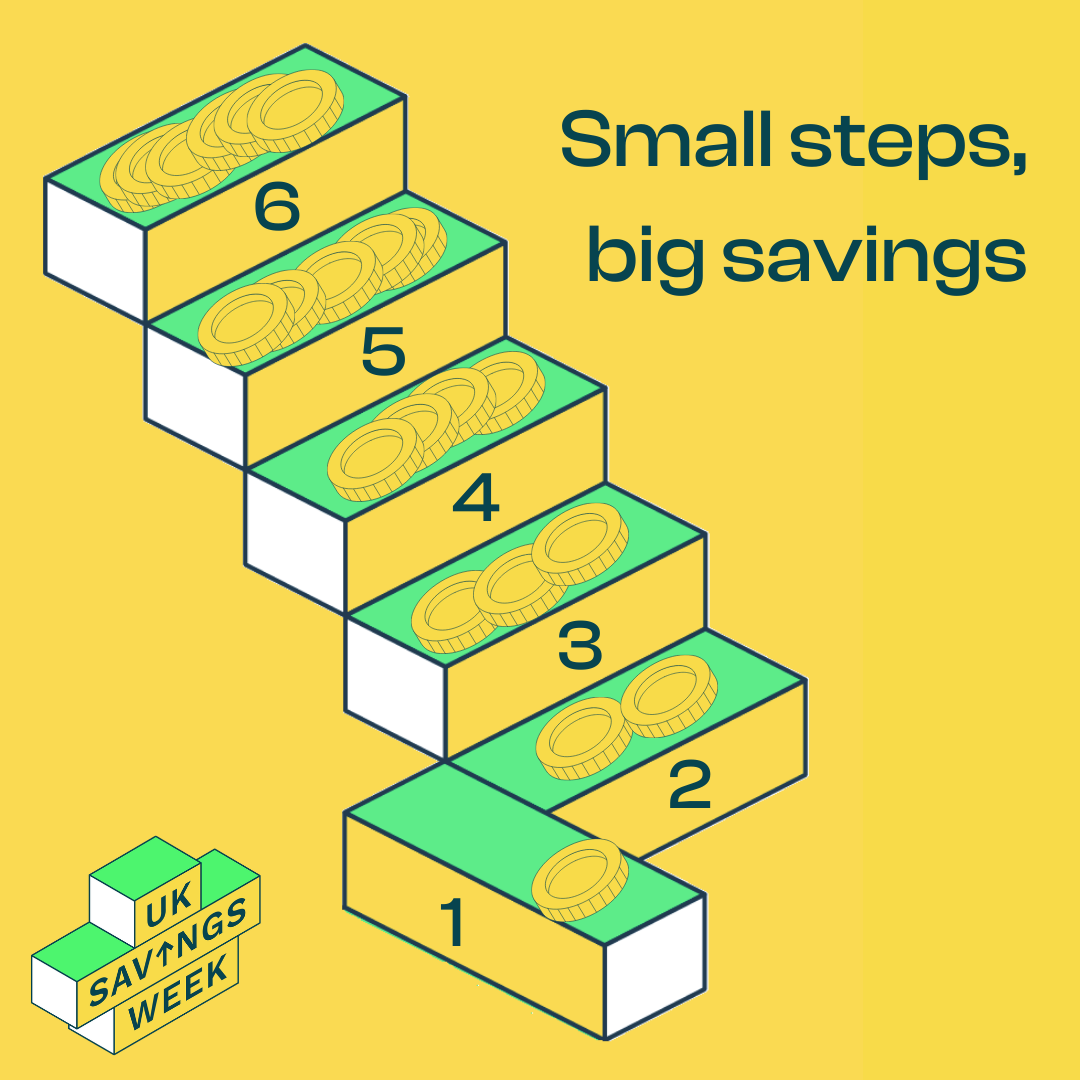
An increasing number of apps also offer 1p challenges. These gradually build a savings habit by setting aside 1p on day one, 2p on day two, and so on until small daily amounts add up to a meaningful pot of money over the year – £667.95 in total.
As the saying goes, look after the pennies… and the pounds will look after themselves.
- Gamification to keep you on track
Gamification is the use of game-like elements such as points, challenges, streaks, rewards, or progress tracking to turn any activity into a habit that you’ll actively seek to repeat.
In financial services, it’s used to help people save or manage money by turning good financial behaviours into small “wins”.
Just as on Snapchat, Duolingo and other mobile apps that reward you for maintaining your “streak” of updates and posts, personal finance apps like Chip and Plum reward you with positive feedback for keeping up a run of savings.
This all helps to make savings challenges and roundup goals feel easier, more motivating, and more consistent as a saver.
So, there are many different ways that apps can help you have a better savings habit. The key is to choose a method that fits your lifestyle, so savings becomes something you do automatically, rather than something you have to think about.