Text size
Polestar stock has fallen more than 60% over the past 12 months.
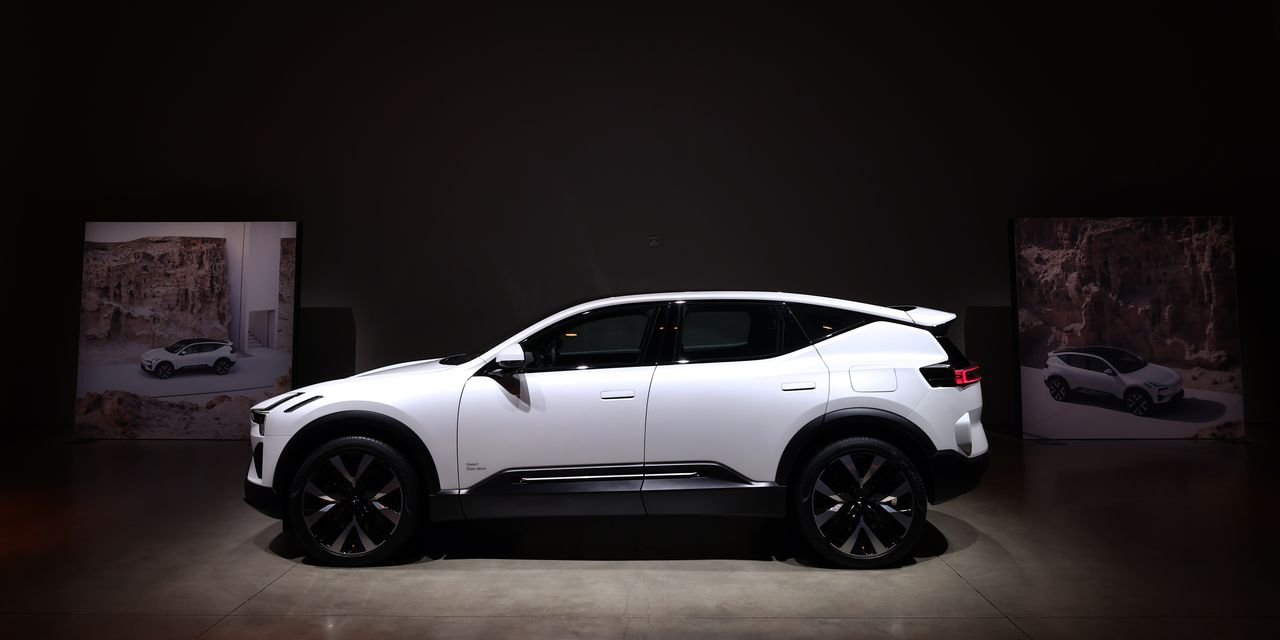
Tommaso Boddi/Getty Images for Polestar
It has been a tough week for EV makers, as a number of electric-vehicle start-ups said they won’t make as many vehicles in 2023 as they had hoped.
While investors might fear there’s a problem with EV demand, a potpourri of other issues is getting the blame.
Polestar Automotive
(ticker: PSNY) was the latest EV start-up to cut its production guidance for 2023. While reporting earnings Thursday morning, the company said it expects to make 60,000 to 70,000 vehicles this year, down from its prior guidance of 80,000 vehicles.
In addition, Polestar’s first-quarter sales came in at $546 million, a little lower than the $589 million consensus estimate in FactSet.
According to the company, the issue is software, and the economy.
“Polestar was recently informed that additional time for final software development of the new all-electric platform shared by
Volvo Cars
is needed and that the start of production of Polestar 3 is now expected in the first quarter of 2024,” reads part of the company’s news release. The Polestar 3 sedan was previously expected in late 2023. The “economic environment affecting the automotive industry” drove the reduction.
Polestar stock, however, is actually up in early trading Friday, about 1.1%. The
S&P 500
and
Nasdaq Composite
are both up about 0.3%. Coming into Friday, Polestar shares have been badly beaten up, off about 38% over the past three months and about 66% over the past 12 months.
Investors might have been ready for a weaker outlook from Polestar, as other EV start-ups are struggling to produce vehicles, too.
Lucid
(LCID) effectively cut its 2023 production guidance to about 10,000 units from 12,000 when it reported first-quarter numbers on Monday. The next day,
Fisker
(FSR) announced it expects to produce 32,000 to 36,000 for all of 2023, down from a range between 42,000 and 43,000 units the company provided in February.
Rivian Automotive
(RIVN) also reported earnings on Tuesday, and maintained its full-year production guidance of about 50,000 units. That was the best result of the bunch, but, coming into 2023, Wall Street was projecting more than 60,000 units for the electric truck maker.
It’s a troubling trend, but it goes beyond slowing economic growth. Polestar blamed software, while
Fisker
said it took longer than expected to get final certifications required to sell any car. Rivian has had trouble ramping production and securing semiconductors.
Lucid
was a little more vague in the reasoning for its cut, citing interest rates and macroeconomic conditions—but adding it will be ready to produce more if the outlook improves. Demand for the highest-end vehicles could be waning or suffering from
Tesla
‘s (TSLA) price cuts on its highest-priced vehicles, the Model X and S. Lucid’s vehicles cost north of $100,000 each.
Overall, demand for EVs looks solid. About 260,000 were sold in the U.S. in the first quarter, a record amount. Battery-electric vehicle sales also rose year over year in China and Europe.
Tesla
delivered a record number of vehicles in the first quarter: 422,875. And Chinese EV maker
BYD
(1211.Hong Kong) grew its battery-electric vehicle sales by more than 100% year over year during the period.
Even if demand isn’t the problem, investors appear to have little appetite for continued growing pains at EV start-ups. Lucid and Rivan shares have slid about 55% and 43%, respectively, over the past 12 months. Fisker stock has tumbled about 35%.
Those are EV start-ups with significant sales. Shares of
Lordstown Motor
(RIDE),
Faraday Future Intelligent Electric
(FFIE), and
Canoo
(GOEV)—which have almost no sales—all trade below $1.
Investors like the larger players. BYD stock is up about 7% over the past 12 months. Tesla stock is down 29% over that span, but shares are up about 40% year to date. Those two companies are the sole EV-only makers that are consistently profitable.
Life just isn’t easy for EV start-ups these days. It doesn’t look like it is getting any easier soon.
Write to Al Root at allen.root@dowjones.com