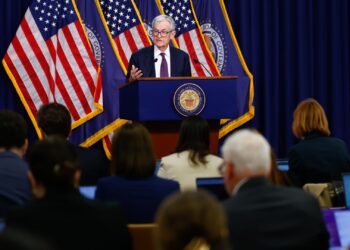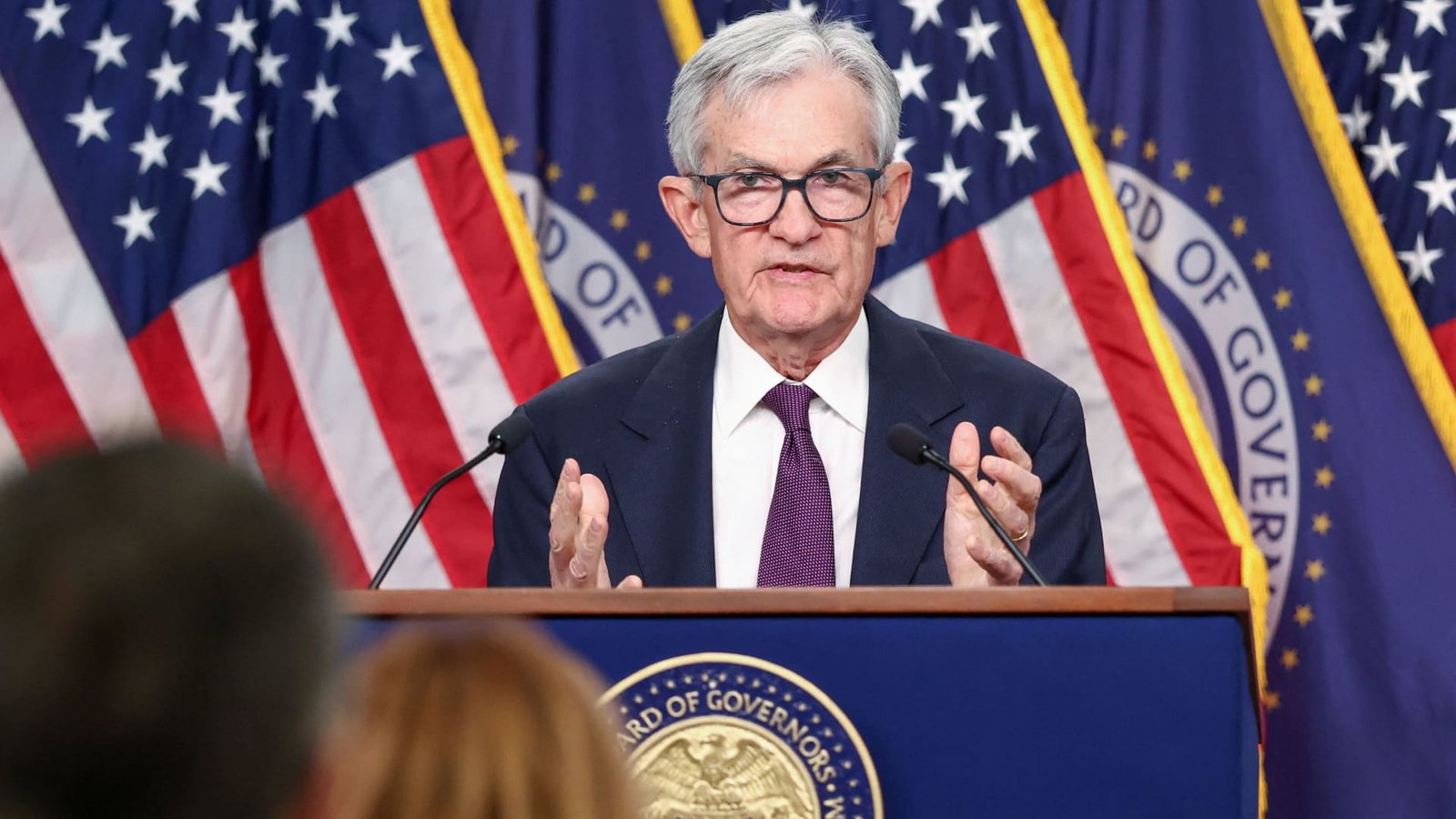
U.S. Federal Reserve Chair Jerome Powell holds a press conference following a two-day meeting of the Federal Open Market Committee (FOMC), at the Federal Reserve in Washington, D.C., U.S., March 18, 2026.
Kevin Lamarque | Reuters
1. Lots of uncertainty
While no one expected the Fed to cut — much less hike — at this meeting, the market always looks for clues about what’s next. Neither the post-meeting statement, the update on economic projections, nor Powell’s news conference provided much in that regard. The statement saw only minor tweaks, the “dot plot” saw a modest dovish shift, and Powell used some form of “uncertain” more than half a dozen times.
2. The war is a problem
Forecasting the future and modeling policy at a time when the U.S. is at war with Iran is nearly impossible, Powell said. He faced repeated questions about the oil shock, and mostly emphasized how much it has muddied the waters for the Fed. “The thing I really want to emphasize is that nobody knows,” he said. “The economic effects could be bigger, they could be smaller, they could be much smaller or much bigger. We just don’t know.”
3. Cuts coming, but timing is highly uncertain
The dot plot still pointed to one more cut this year and another next year. But the grid looked more like a maze than a consensus, underlining just how little underlying consensus exists on the Federal Open Market Committee. For instance: In 2027, one official sees a hike, three see no change from the current level, four expect another cut, six see two more cuts, three forecast three cuts, one official sees four cuts, and a final participant — presumably Governor Stephen Miran — is at five.
4. Powell leaves door open to staying
Each news conference, Powell is questioned on whether he will stay on as governor after his term as chair ends. He again said he hasn’t made up his mind, which, of course, doesn’t eliminate the possibility. But he also said he isn’t going anywhere as long as the investigation into him continues, adding that he’ll also stay on as sort of a “chair pro tem” until someone, presumably former Governor Kevin Warsh, is confirmed as his successor.
5. Powell rejects ‘stagflation’
Don’t use the term “stagflation” around Powell. The chair rejected the notion that the U.S. economy, with its solid growth and low unemployment rate, is heading toward a 1970s nightmare, despite an anemic hiring rate and inflation above the Fed’s target for going on five years. “It’s a very difficult situation, but it’s nothing like what they faced in the 1970s and [I would] reserve ‘stagflation’ for that,” Powell said. “Maybe that’s just me.”
They said it
“The Fed didn’t move today — but it didn’t need to. This is a central bank that’s comfortable waiting, watching, and staying flexible. One projected cut tells you everything: the Fed is not in a rush, and neither should investors be.” — Gina Bolvin, president of Bolvin Wealth Management Group.
“Although the move was widely expected, it underscores the difficult path ahead for the Fed, which now faces pressure on both sides of its dual mandate to keep employment high and inflation muted. Complicating matters further is the fact that Fed leaders are often basing hugely important decisions on weeks- or months-old data that may not fully capture the magnitude of rapid economic shifts, raising the risk that decisions may come too late or be based on outdated assumptions.” — Indeed economist Felix Aidala.
“I expect given the volatile situation that the committee would like to try and do as little as possible so as to not rock the boat ahead of the new Fed chair taking over.” — Stephen Coltman, head of macro at 21shares.