We may earn a commission from links on this page.
It’s amazing how many problems can be solved with a little sleep hygiene. If you often feel low on energy, one of the first things you should ask yourself is how much sleep you’re getting. Good sleep also helps our overall health, our recovery from exercise, our ability to focus, and more. And while there are plenty of gadgets and biohacks that claim to help, the fundamentals of sleep hygiene are basic and simple.
How to know if you need more sleep
Most adults need seven to nine hours of sleep, on average, each night. This varies: you might be a seven-hour person or a nine-hour person. (Young people usually need even more; older adults may be okay with less.) So if you’re feeling tired all the time, an easy gut check is to note how much time you spend in bed, on average. If it’s fewer than seven hours, it’s probably not enough. And even if it’s within that seven- to nine-hour window, try getting an extra hour or two of sleep for a few days in a row. If you feel a lot better, you have your answer.
Wearables like smartwatches and rings can help collect data, but remember that the main thing they can tell you is how much sleep you’re getting. (Sleep “quality” scores and even sleep stages are not necessarily reliable.) To call out a few of my favorites: the Oura ring is pricey ($349-$499) but comfortable to wear and presents data nicely. The Amazfit Helio Strap is a bargain at $99 and can track workouts, too. Garmin’s Index Sleep Band ($169) is built for comfort while you sleep, but gives the same data as Garmin watches, so you may just want to find a watch you like and stick with that.
If you have trouble waking up on time but easily fall asleep when you’re sitting quietly (like watching a movie), that’s another sign you’re probably not getting enough sleep. If you sleep in when you get the chance, your wake-up time is another hint. If you sleep in two hours or more past your normal time, that’s your body applying a short-term fix (getting enough sleep now) to a long-term problem (chronically getting too little sleep).
If you know you should sleep more, but you can’t seem to figure out how, below are the basics of sleep hygiene you need to master.
Stick to a sleep schedule
Set a wake-up time that you can stick to every day. Consistency is important here: don’t set the alarm for 6 a.m. on weekdays and sleep until noon on weekends. If you can’t be perfectly consistent—for example, if you work different shifts—adjust as needed, but try to do your best.
Next comes setting a bedtime. Figure out what time you need to hit the hay to get enough sleep before your alarm goes off. Then work backward from that to figure out when to start changing into jammies and whatever else your nighttime routine involves. (More on that routine below.)
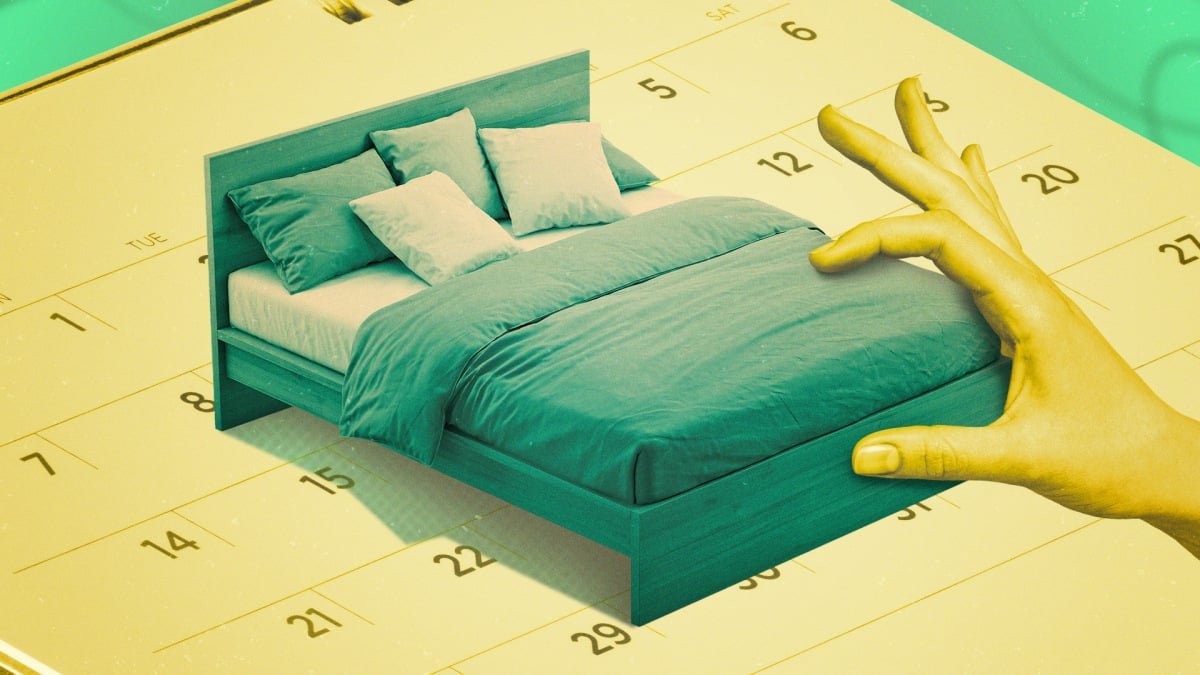
Crucial to both steps is prioritizing sleep so you can actually get yourself on schedule. If you’ve been having trouble getting enough sleep lately, give yourself a week or two to make your bedtime and wake-up time (and nine or so hours in between) the highest priority appointments in your calendar. Don’t go out too late, and don’t stay up revenge procrastinating. There will be time for occasional indulgences once your everyday schedule is more consistent.
Include these four things in your bedtime routine
Okay, so what goes into that routine? Feel free to personalize the specifics, but sleep experts recommend that you include the following as basic building blocks:
Sticking to this routine not only helps you get into a relaxed mood for sleeping, it also helps you stick to that sleep schedule you set in the first step. After all, you can’t be halfway through a movie at 10 p.m. if you refrained from starting it at 9 p.m.
Set your body clock during the day
Sleep and darkness aren’t the only things that set your body’s circadian rhythms. Daytime activities help to keep your internal clock on track, and these can help your overall health as well.
-
Get plenty of sunlight in the morning. (In the winter, a light box may help.)
-
Exercise during the day. You can combine this with sunlight by going for a morning or lunchtime walk. But any type of exercise will help you to sleep better.
-
Eat meals earlier in the day. We sleep best when we eat during the daytime; if a nice early breakfast fits your schedule, consider making it a regular thing. But at the very least, don’t eat right before bed.
Avoid caffeine and alcohol in the evenings
Caffeine keeps you up, and its effects linger longer than you may realize. Caffeine has a half-life of five hours, with some of us processing it a little faster or a little slower. To put this another way, If the average person has a 250-milligram cup of coffee at noon (such as a Starbucks Tall sized brewed coffee), they’ll still have about 125 milligrams in their system at 5 p.m. and 63 milligrams at 10 p.m.
What do you think so far?
The speed with which we break down caffeine varies from person to person, but in general: It’s affecting you more than you realize. If you think of yourself as a person who “can have an energy drink and then fall right to sleep” you are probably (a) in denial—hey, you’re the one who clicked on an article about getting better sleep—and/or (b) you have built up a massive caffeine tolerance because you drink so much of the stuff to stay awake, which in turn is because you don’t get enough sleep so you’re tired all the time. Do yourself a favor and break the cycle. An easy way to back off is to give yourself a cutoff time. No caffeine after 5 p.m., let’s say. Once that’s part of your routine, walk it back to 2 p.m. or noon.
Alcohol is another chemical that affects our sleep. A nightcap before bed may make you feel sleepy, but it tends to disrupt the quality of your sleep. If you aren’t convinced, just start keeping a sleep diary—on paper is fine if you don’t have a sleep-tracking gadget—and see if you don’t get more and better sleep on the nights you don’t drink.
Make your bedroom a dark little cave
A welcoming, cozy bed will help you get to sleep faster. Make it dark, with blackout curtains or an eye mask, if needed. Make it quiet, with a white noise machine or earplugs if you can’t completely silence your surroundings. And make it a comfortable temperature. Most people prefer a cool environment—usually around 66 degrees—but again, this varies from person to person.
Comfortable sheets and pillows can help. If you’re always tossing and turning, try to figure out if there’s something that physically bothers you. A new mattress might not be in the budget, but a mattress topper or a different pillow is an easy fix.
Experiment
While the tips here are the basic things you should at least try, you may not need every single aspect to be textbook. I freeze if my room is set to 66 degrees, for example, so I keep the thermostat a tick warmer and I make sure I always have a warm duvet, even in summertime.
You may find that you can bend certain rules but not others. I always have a crappy night’s sleep if I’ve been drinking, but late meals don’t bother me much. Once you’re getting a solid night’s sleep on the regular, you can start playing with the routine.
And if you’re doing everything you can for good sleep hygiene and you still feel tired all the time, consider seeking medical help in case you have sleep apnea or another condition that could be affecting your sleep or energy levels.