With Arctic cruising becoming increasingly popular, Greenland is the latest destination to receive the spotlight. The territory inaugurated the new Nuuk Airport with a four-and-a-half-hour direct flight to Newark in 2025, making it more accessible for travelers looking for an intrepid polar experience. It also promises something that Antarctica can’t: people. These are not untouched landscapes but ones that, for thousands of years, Indigenous and settler communities have found ways to live in despite the extremity of the elements. It was a privilege to meet them and learn of their ways of life, which feels uniquely important at this moment.
Logistics still pose a challenge. A whopping 80 percent of the landmass is covered by the Greenland ice sheet, meaning that, to get from one side to the other, your best bet is to go around. Unlike popular ports of call elsewhere in the Arctic, like Svalbard or Reykjavik, which already have well-established tourism infrastructures, there’s the palpable sense that the destination is still developing its offerings. Small tour operators within each port are rolling up their sleeves to accommodate the increasing number of international arrivals (in 2024 visitors to Greenland hit an all-time high of 150,000, nearly triple the nation’s population) by creating new land excursions and in-town experiences. But expedition cruise vessels, with their ability to move through shifting weather conditions and thick ice sheets, are still the most practical way to navigate the nooks and crannies of Greenland’s 27,000-plus miles of coastline and to connect tiny communities where roads and airports simply don’t exist.
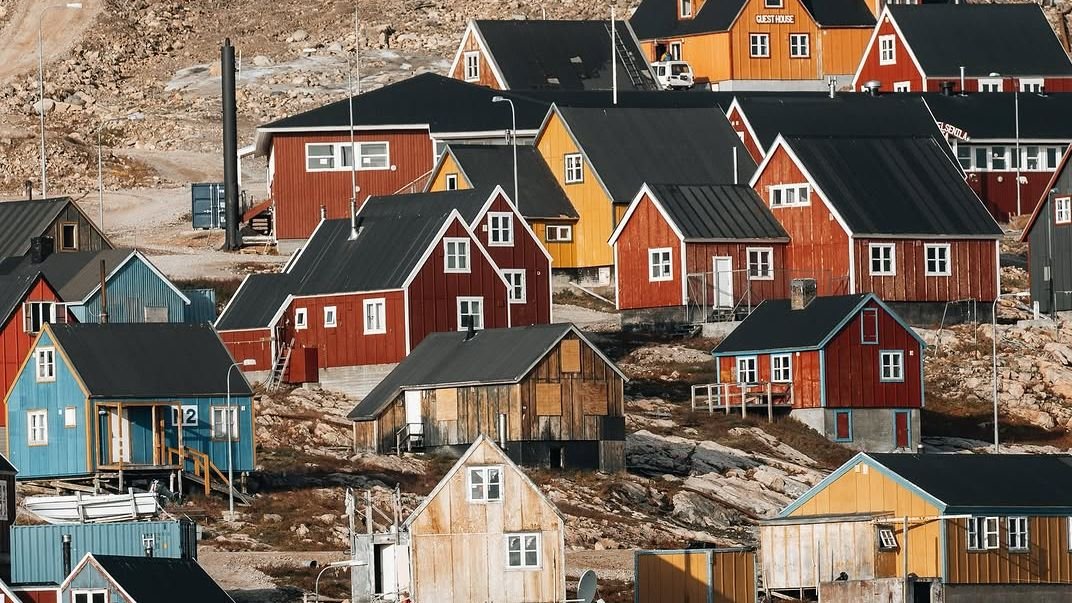
In Igaliku’s case there are more buildings and sheep than the 30 people who live here, most of whom are descendants of Anders Olsen, a Norwegian merchant, and his Greenlandic wife, Tuperna, who made their home here in the 1780s. Like a line of fire ants entering unfamiliar terrain, my fellow travelers and I file out of our tenders and toward the UNESCO-anointed site of Garðar, a Norse settlement on the outskirts of present-day Igaliku. Awaiting us is Garðar’s official tour guide, Arnajaraq Bibi Bjerge, the town’s schoolteacher and a mother of three, who leads us through Garðar’s tall grasses and dandelions to the stone remains of the first cathedral on the North America continent (circa 1126). We listen intently as Bjerge shares historical points of interest before asking our most burning question: What is life like in a town of so few people only reachable by boat? Says Bjerge: ready the children for school, teach school, tend the farm animals, rest, and repeat. As for free time? “We play cards,” she replies, as if it were the most obvious answer in the world.