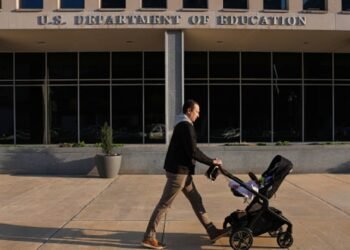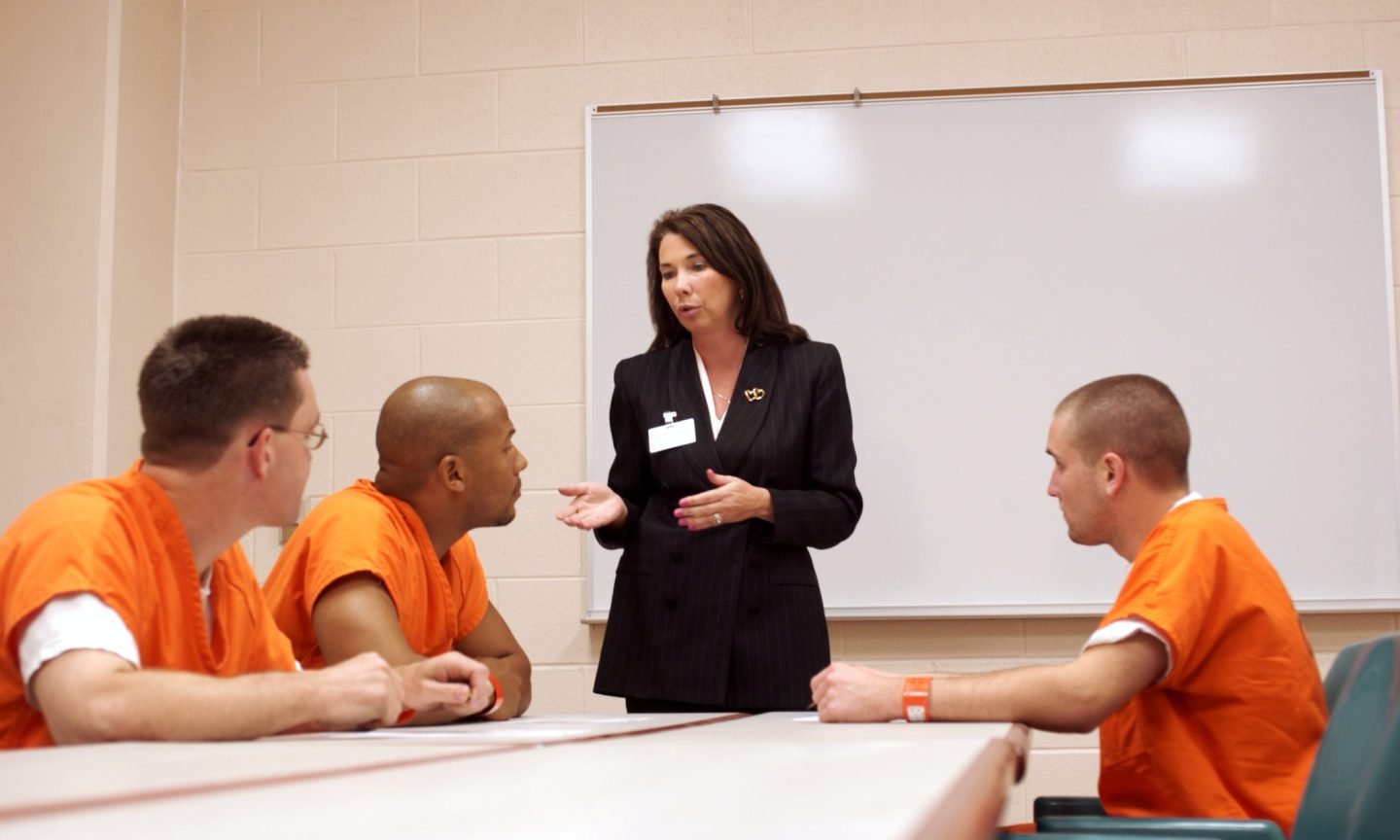
Higher education could soon become more affordable for more than 700,000 of the incarcerated people in the U.S. Starting July 1, they’ll become eligible for Pell Grants for the first time in nearly 30 years, regardless of sentence length or conviction.
Pell Grants are a type of need-based financial aid from the federal government that gives recipients up to $7,395 per academic year to cover college costs like tuition, books and other fees. Unlike a loan, the grants never need to be repaid; students qualify based on financial need.
Incarcerated people — those in juvenile justice facilities and local, state and federal correctional facilities — will be able to use these Pell awards to pay for prison education programs (PEPs), which can lead to credentials like a professional certificate, an associate degree or a bachelor’s degree from a partner university.
Though the change is effective July 1, students may not be able to enroll in a PEP using Pell Grants immediately, says Ruth Delaney, associate initiative director at the Vera Institute of Justice focused on education reform in prisons. Some programs may start this fall, she says, but even then, enrollment won’t begin until later in the summer.
Here’s what you need to know about the Pell Grant expansion for prison education programs and how incarcerated students can access these funds.
Impact of Pell expansion for incarcerated students
Without access to Pell Grants, higher education has been virtually out of reach for most incarcerated people, who earn an average minimum wage of 86 cents per hour in typical prison jobs, according to a 2017 analysis by the Prison Policy Initiative, a nonprofit public policy think tank. There were nearly 800 PEPs in the early 1990s, but after a 1994 crime bill blocked incarcerated students from receiving Pell Grants, the number of PEPs shrank to eight by 1997, according to the Vera Institute, a nonprofit that supports criminal justice reform.
Obtaining a higher education degree or certificate can help incarcerated students find stable careers and better pay when they reenter the workplace. People who participate in correctional education are also 43% less likely to return to prison within three years than those who don’t participate, according to a 2018 report by the Rand Corp., a public policy research organization.
Some incarcerated students have been able to access Pell Grants for years as part of an experimental program called Second Chance Pell established by President Barack Obama in 2015. As of 2022, incarcerated students had earned more than 7,000 credentials through the program. For example, Georgetown University launched its Prison Scholars Program in 2018 to bring higher education to incarcerated students in Washington, D.C., and Maryland.
“Financial aid is one piece of this puzzle,” says Rachel Rotunda, director of government relations at the National Association of Student Financial Aid Administrators. “This is a big change for students, but it’s also a big change for institutions and really the whole higher ed prison education community.”
Submit FAFSA to qualify for a Pell Grant
To be considered for a Pell Grant, incarcerated students must fill out and submit the Free Application for Federal Student Aid (FAFSA).
Because correctional facilities may offer limited or no internet access, students may need to submit a paper copy of their FAFSA application to partner college representatives at their facility. Then the partner college will submit the FAFSA on the student’s behalf to the office of Federal Student Aid, which will evaluate the application and determine the student’s eligibility and grant amount.
“A lot gets facilitated through the college, which means that the prospective student likely already knows what college they’re going to be applying to,” Delaney says. “The other side to that is that it’s rare to see more than one college program at a single prison.”
Though incarcerated students can legally submit the FAFSA as early as July 1, they may need to wait until their facility’s education staff is ready to accept applications and a PEP course is slated to begin.
Incarcerated students shouldn’t worry about filing the FAFSA months ahead of time; they’ll likely need to submit the FAFSA around the time they’re slated to enroll in a PEP, Delaney says. Deadlines will vary by program.
“There tends to be a bit more of a condensed timeline for enrollment [in prisons] compared to the more community-based timeline,” Delaney adds.
Other grants and scholarships to pay for prison education programs
Incarcerated students are blocked from receiving federal student loans, which can provide undergraduates with up to $12,500 in funds each year that must eventually be paid back.
But if a Pell Grant award is not enough to cover the cost of a prison education program, students may turn to other funding sources. This may also be necessary if a student embarks on multiple degrees or takes extra time to finish a program because Pell Grants can be used for no more than six years.
And in many cases, the colleges running PEPs are putting their own resources into making them affordable, Rotunda says, “to ensure that they’re able to offer high-quality programming and to provide students the same level of support that they would be providing for any other student.”
Where to get answers to your questions
If you’re incarcerated and have questions about the FAFSA, Pell Grants or PEPs, you can reach out to the following resources:
A financial aid administrator or other education representative at your correctional facility:
Varies by correctional facility.
Send questions to the Education Department by mail. Address letters to:
U.S. Department of Education
c/o Prison Education Programs
If you have internet access, send questions to the Education Department by email:
Incarcerated students with defaulted student loans
If you’ve defaulted on student loans in the past, you can sign up for a temporary government program called Fresh Start. This program will return your loans to good standing, allowing you to submit the FAFSA and receive a Pell Grant while incarcerated.
If you now have a loan in default, you’ll need to send a letter to:
In your letter, include your full name, Social Security number, date of birth and the following statement: “I am a confined or incarcerated individual. I would like to use Fresh Start to bring my loans back into good standing.”