No Result
View All Result
Global Finances Daily
  • Alternative Investments
  • Crypto
  • Financial Markets
  • Investments
  • Lifestyle
  • Protection
  • Retirement
  • Savings
  • Work & Careers
No Result
View All Result
  • Alternative Investments
  • Crypto
  • Financial Markets
  • Investments
  • Lifestyle
  • Protection
  • Retirement
  • Savings
  • Work & Careers
  • Login
Global Finances Daily
No Result
View All Result
Home Investments

Is High Inflation Always Bad?

July 2, 2023
in Investments
0
Is High Inflation Always Bad?


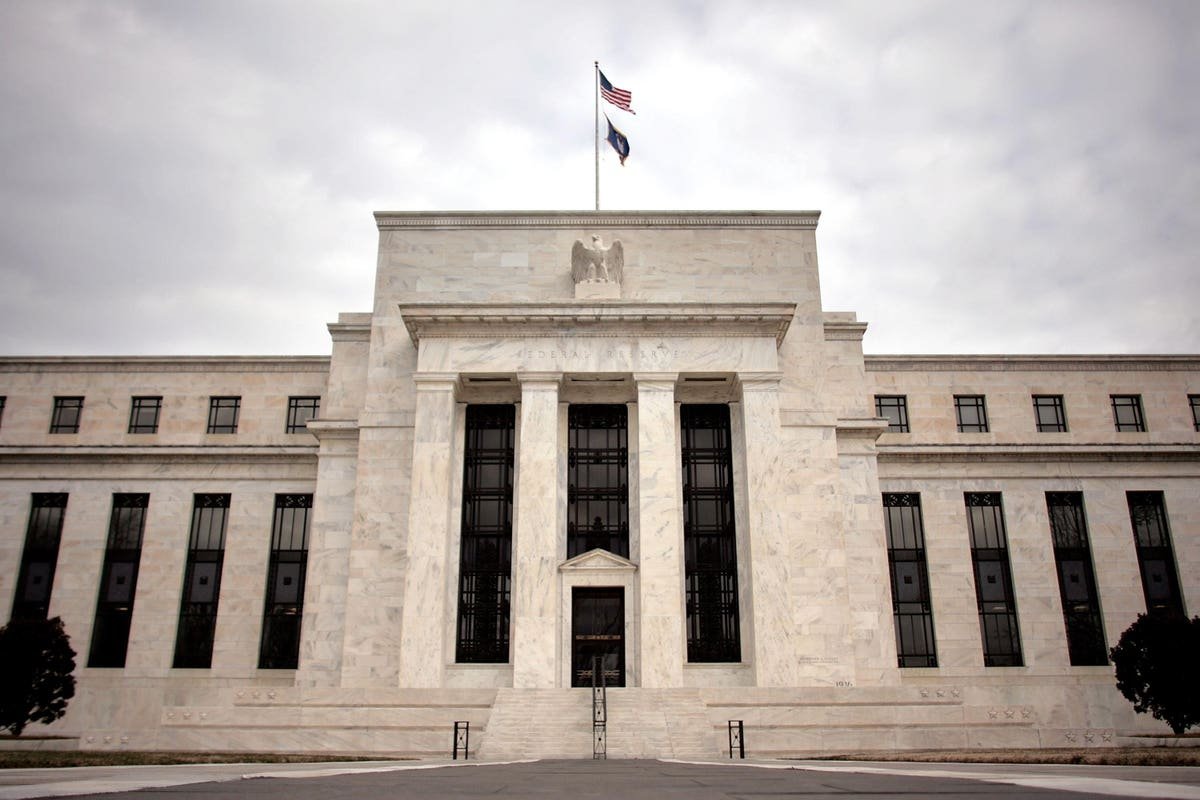
WASHINGTON – JANUARY 22: The Federal Reserve building is seen January 22, 2008 in Washington, DC. … [+] The Fed cut its benchmark interest rate by three-quarters of a percentage point after two days of tumult in international markets due to fear of a recession in the United States. (Photo by Chip Somodevilla/Getty Images)

Getty Images

The current efforts by the Federal Reserve Bank to bring down the rate of inflation by imposing a rapid rise in interest rates if a proven formula for a quick remedy for reducing that rate, albeit at the likely cost of a number of unintended consequences. Those consequences being; bringing on a recession, an increase in the unemployment rate, a decrease in government revenues, an increase in the cost of the national debt, an increase in bank failures and an increase in business bankruptcies, especially today in commercial real estate. Is this unintended economic damage worth the longer-term benefits? The answer to this question is nuanced at best and depends on what factors lead to the onset of the current inflationary burst.

The current inflationary burst is being widely attributed to the extraordinary spending by the U.S Government related to the Covid Pandemic. The presumption is that this spending was excessive. The war in the Ukraine is also given because of its effect on food and energy prices. A third explanation is that the Federal Reserve Bank was too slow in implementing its inflation fighting protocol because it perceived the problem as transitory. While all these factors are probably true, it’s not the whole story. What has been ignored in this picture is the effects of a pre-pandemic economy running for a number of years at interest rates at or near zero percent. Since we have never seen such a phenomenon, it is worth considering what were going to be the likely longer term economic consequences of this situation.

We know as an economic principle that cheap money leads to capital allocations into purposes with ever diminishing rates of return. Projects public and private that could not be justified at say a low 4% or 5% rate of return became attractive undertakings. For government this meant we could afford more generous support payments and programs for the poor or for environmental projects that could only be measured by notional benefits, all financed with cheap debt. For the private sector it meant more investment in higher risk ventures as well as inflated values in existing hard assets and in the securities markets. Clearly, this situation had to come to an end. Covid and the Ukraine war proved to be the triggering events. Note, what I am saying is that those two events were not the primary cause of the inflation, but rather, the triggering events to correct the misallocation of capital that had been ongoing for far too long. Criticizing the Fed for first considering the inflation that broke out as transitory is merely a misreading of the true problem which is that an extended period of interest rates below a 2% inflation level will build up the conditions for an eventual break out of inflation at higher than a mere 2%. The Fed can be forgiven for this misreading because the causation factors here were unprecedented. But they cannot be forgiven if they continue to pursue a remedy that will only make matters worse.

The present rate of inflation of 4% to 5% has so far been achieved at a relatively low cost to the overall economy, i.e. a few bank failures by imprudent banks. However, you have to ask yourself, since when has it been imprudent for a bank to fail for having invested too much in U.S Treasury bonds or solvent mortgage loans? Obviously, they were using the same playbook the Fed itself was using. Continuing with the current Fed goal of a 2% inflation rate is certain to bring on massive failures in the private sector as well as by governments in their current revenues and borrowing via the municipal bond market. Yes, these entities may or may not deserve the consequences of their errors in judgement but not if it ends up costing all of us a faster economic recovery. The good side of inflation is that it bails out many mediocre investments by diminishing their capital cost and, with time, providing a better opportunity to recover via an increase in the projects value and its cash flow. The bad side is that it hurts the poor more severely than the middle and upper classes.

There is nothing magical about 2% inflation. We hear sage advice that low inflation stimulates faster economic growth. We hear counter advice that high economic growth occurred in many fast growing, developing countries despite their high inflation. Also argued is that low inflation benefits mainly the wealthy. I won’t opine on this debate other than to say that there are times when economic growth will do better if we allow time for a misallocation of capital to work itself out in an inflationary environment. This is such a time. See my companion article titled “Rethinking Federal Reserve Bank Policy.”


Editorial Team

Editorial Team

Related Posts

National Australia Bank to cut 170 jobs amid offshore expansion
Investments

National Australia Bank to cut 170 jobs amid offshore expansion

March 26, 2026
Woman pleads not guilty to attempted murder of singer Rihanna
Investments

Woman pleads not guilty to attempted murder of singer Rihanna

March 26, 2026
US FEMA resumes key disaster prevention program that it canceled last year
Investments

US FEMA resumes key disaster prevention program that it canceled last year

March 26, 2026
Taiwan indicates next US arms sale is on track after receiving guarantee letter
Investments

Taiwan indicates next US arms sale is on track after receiving guarantee letter

March 26, 2026
RBA warns prolonged Middle East war could hit growth, unmoor inflation expectations
Investments

RBA warns prolonged Middle East war could hit growth, unmoor inflation expectations

March 25, 2026
Kennedy allies petition to broaden US vaccine injury list
Investments

Kennedy allies petition to broaden US vaccine injury list

March 25, 2026
Load More
Next Post
Jaime Hanson

IHG Cards Boost Sign-Up Bonus With Statement Credit [Limited Time]

Popular News

  • Oil prices fall on reports of a U.S. ceasefire proposal with Iran

    Oil prices fall on reports of a U.S. ceasefire proposal with Iran

    0 shares
    Share 0 Tweet 0
  • BlackRock’s Fink on why he won’t cash out private-credit investors: ‘Those are the rules, live with it.’

    0 shares
    Share 0 Tweet 0
  • How to Contact Hilton Customer Service

    0 shares
    Share 0 Tweet 0
  • Majority of Fitch-rated sub lines have AA+ rating

    0 shares
    Share 0 Tweet 0
  • L&G enters $1bn strategic partnership with Enosis Capital

    0 shares
    Share 0 Tweet 0

Latest News

Interactive Brokers lets clients move crypto from external wallets without liquidating

Interactive Brokers lets clients move crypto from external wallets without liquidating

March 26, 2026
0

Interactive Brokers now lets clients transfer supported crypto from external wallets into IBKR accounts without selling first, extending its low-fee,...

National Australia Bank to cut 170 jobs amid offshore expansion

National Australia Bank to cut 170 jobs amid offshore expansion

March 26, 2026
0

National Australia Bank to cut 170 jobs amid offshore expansion

The Garmin Forerunner 265 Is a Pretty Good Buy During Amazon's Big Spring Sale

The Garmin Forerunner 265 Is a Pretty Good Buy During Amazon’s Big Spring Sale

March 26, 2026
0

We may earn a commission from links on this page. Deal pricing and availability subject to change after time of...

Metanova Labs: Bittensor revolutionizes drug discovery with decentralized virtual screening, combinatorial reactions expand possibilities to 65 billion, and dual incentives drive innovation

Metanova Labs: Bittensor revolutionizes drug discovery with decentralized virtual screening, combinatorial reactions expand possibilities to 65 billion, and dual incentives drive innovation

March 26, 2026
0

Key takeaways Bittensor is a decentralized network that uses crypto incentives to reward contributions to AI models and compute. The...

Global Finances Daily

Welcome to Global Finances Daily, your go-to source for all things finance. Our mission is to provide our readers with valuable information and insights to help them achieve their financial goals and secure their financial future.

Subscribe

  • About Us
  • Contact
  • Privacy Policy
  • Terms of Use
  • Editorial Process

© 2025 All Rights Reserved - Global Finances Daily.

No Result
View All Result
  • Alternative Investments
  • Crypto
  • Financial Markets
  • Investments
  • Lifestyle
  • Protection
  • Retirement
  • Savings
  • Work & Careers

© 2025 All Rights Reserved - Global Finances Daily.

Welcome Back!

Login to your account below

Forgotten Password?

Retrieve your password

Please enter your username or email address to reset your password.

Log In
This website uses cookies. By continuing to use this website you are giving consent to cookies being used. Visit our Privacy and Cookie Policy.