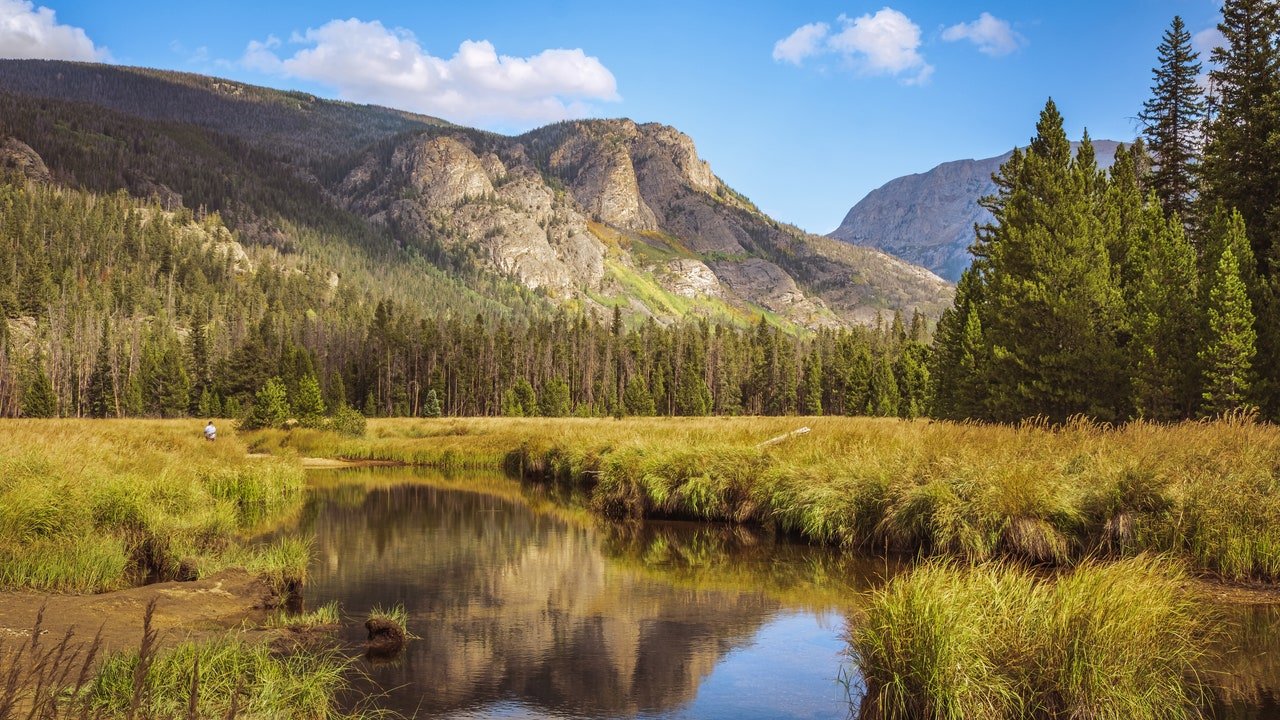
Cathedral mountains, quiet forests, clear blue mountain lakes: John Denver might as well have been singing specifically about Rocky Mountain National Park in his Colorado anthem “Rocky Mountain High.” Straddling the Continental Divide, this alpine Colorado park encompasses peaks of up to 14,000 feet in elevation, extensive swathes of tundra, glimmering lakes, and aspen-shaded streams home to black bears, elk, moose, and bighorn sheep. Prehistoric mammoth hunters roamed here for thousands of years, followed by the Ute and Arapaho people who summered within the current park bounds until the early 1800s. Today, Rocky Mountain represents the best of its namesake range—a place of stunning extremes and beauty, with enough trails, lodging, and dining options nearby to enchant every kind of traveler.
Below, we cover everything you need to know for a visit to Rocky Mountain National Park—from the best time to go, to the mountain hikes with views you won’t soon forget. Pay a visit, and you’ll know why many consider if one of the best national parks in the US.
All listings featured on Condé Nast Traveler are independently selected by our editors. If you book something through our links, we may earn an affiliate commission.
How to get to Rocky Mountain National Park
Rocky Mountain National Park is an hour-and-a-half to two-hour drive from Colorado’s major Front Range spots, including Denver, Fort Collins, and Denver International Airport. To reach the primary entrance at Beaver Meadows, on the park’s east side, take U.S. Highway 36 (from the south) or 34 (from the north or east). Or opt for the slightly longer, even more dramatic Peak-to-Peak Scenic Byway, a worthy detour with excellent Continental Divide views running through the high elevations west of Boulder. You can also come in on the park’s quieter west side through the Kawuneeche Entrance via U.S. Highway 34, a convenient option for travelers driving in from the west. A few other, lesser-used entrance stations grant access to specific locations, such as Wild Basin and Longs Peak.
Entry permits
During the busy season from late May to late October, visitors must reserve a timed-entry permit through recreation.gov to enter the park during peak daytime hours. Sixty percent of permits are released in batches about a month ahead of time, while 40 percent become available the day before a desired start date. Two options provide access to different areas of the park. If you snag reservations for a campground or outfitted trip, then you won’t need to worry about a permit.
The best time to visit
The busy season at Rocky Mountain falls from summer into mid-autumn, and no wonder: July through October bring blooming wildflowers, (mostly) snow-free trails, golden aspen foliage, and active wildlife. The weather is typically lovely during this period, with warm, sunny days and crisp nights (though snow can begin falling in September, particularly in the high country).
Winter and spring (which looks a lot like winter) can also be wonderful times to visit for snowshoeing, cross-country skiing, and backcountry skiing, though you might be dealing with frigid temperatures, fierce winds, and abundant snow. The park’s main thoroughfare, Trail Ridge Road, usually shuts down between late October and late May, depending on the weather. By May, snow has typically begun to melt in the lower elevations, which are still around 8,000 feet, and wildlife babies, like elk and moose calves, can be seen grazing on the new greenery.
The best things to do in Rocky Mountain National Park
It’s right there in the name: Rocky Mountain National Park is all about the grandeur of the Rocky Mountains. Soak it in by foot, car, horseback, snowshoe, or all of the above.