BBVA is the latest entrant to the European bank consortium gearing up to launch a euro-pegged stablecoin in the second half of 2026.
BBVA Has Joined Banking Consortium Behind Qivalis
According to a website announcement, BBVA has joined a consortium of eleven European financial institutions that have created a joint venture to launch a stablecoin tied to the euro. This consortium was first formed in September 2025 with the goal behind it being the creation of a European alternative to the currently USD-dominated stablecoin market. Initially, it consisted of nine banks: ING, Banca Sella, KBC, Danske Bank, DekaBank, UniCredit, SEB, CaixaBank, and Raiffeisen Bank International.
In the months that followed the consortium’s inauguration, two more banks, BNP Paribas and DZ BANK, joined the fray. Now, it seems the group has gained a twelfth member with BBVA also signing up. Alicia Pertusa, head of partnerships & innovation at BBVA CIB, said:
Collaboration between banks is key to create common standards that support the evolution of the future banking model and deliver financial innovation to our clients in a consistent and practical way.
BBVA, standing for Banco Bilbao Vizcaya Argentaria, is a Spanish multinational financial services institution that mainly operates in Europe and South America. It’s Spain’s second-largest bank in terms of assets.
Previously, the bank has had involvement in projects related to digital assets, including a collaboration with SWIFT to develop a blockchain platform to serve as a shared digital registry for banks globally. With its entry into the consortium, BBVA is now also backing the euro stablecoin.
The consortium has created a new company called Qivalis to handle the issuance of the stablecoin. The firm is headquartered in Amsterdam and is currently waiting on approval from the Dutch Central Bank to operate as an electronic money institution.
Jan-Oliver Sell, Qivalis CEO, noted:
Having BBVA join the banking consortium marks an important step forward. With their addition, our network now brings together twelve European banks committed to building a secure, MiCAR‑compliant euro stablecoin framework.
Currently, Qivalis has slated the commercial launch of the euro-pegged stablecoin for the second half of this year, after the regulatory and technical hurdles are overcome.
Stablecoins have been gaining momentum around the world lately, with positive legislation related to them occurring in many jurisdictions. So far, however, users have shown a continued preference for USD-based tokens. As CoinMarketCap‘s stablecoin leaderboard shows, there isn’t a single non-USD coin inside the top ten.
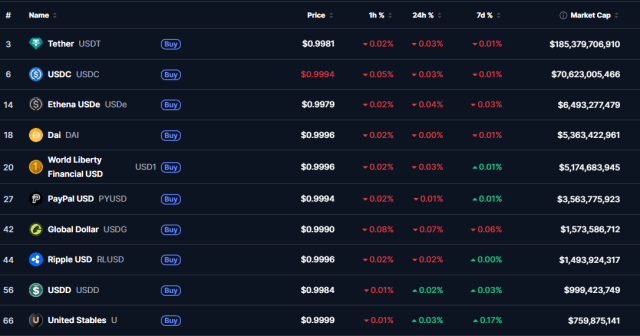
Tether's coin continues to be the most dominant in the space | Source: CoinMarketCap
The largest non-USD stablecoin is Circle‘s EURC right now, but its market cap of $432 million is pretty small when compared to the USD stablecoins. For perspective, Circle’s USD token, USDC, boasts a market cap of more than $70 billion.
BTC Price
Bitcoin has continued to slide recently as its price has come down to the $69,400 level.

Looks like the price of the coin has plunged | Source: BTCUSDT on TradingView
Featured image from Dall-E, chart from TradingView.com

Editorial Process for bitcoinist is centered on delivering thoroughly researched, accurate, and unbiased content. We uphold strict sourcing standards, and each page undergoes diligent review by our team of top technology experts and seasoned editors. This process ensures the integrity, relevance, and value of our content for our readers.