Kuwait Airways: Commercial arrivals and departures at Kuwait International Airport (KWI) are currently on hold. Kuwaiti citizens with existing bookings with the airline are being flown to Jeddah as part of an emergency repatriation plan. From Saudi Arabia, passengers are required to complete the final leg of their journey to Kuwait by land. Travelers have until Friday, March 6 to register their travel preferences.
Air Canada: Air Canada has announced it will cease operating flights to Dubai and Tel Aviv until Sunday, March 22.
Which countries have closed their airspace?
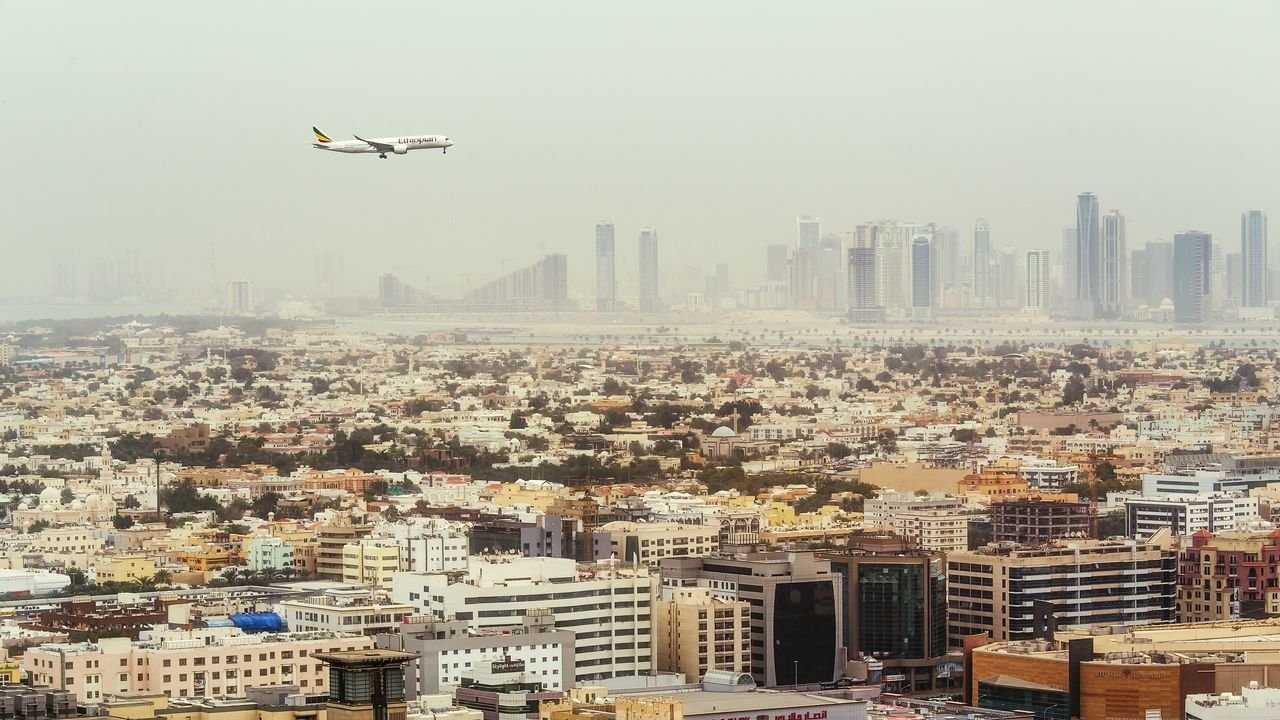
The United Arab Emirates has partially reopened its airspace, with a limited number of repatriation flights currently operating from the country’s main airports as of 6 p.m. on Monday, March 2. Dubai Airports, the authority that oversees both Dubai International (DXB) and Dubai World Central – Al Maktoum International (DWC), has confirmed that a “small number of flights” are permitted to operate at this time. Passengers are urged to not go to the airport unless they have been directly contacted by their airline about rebooking.
Iran, Iraq, and Israel have all closed their airspace, alongside Bahrain and Qatar.
Kuwait has also closed its airspace, and has reported a drone attack on its airport. In a statement published by the Public Authority for Civil Aviation, it was confirmed that the attack caused “minor injuries to several employees and limited material damage to Terminal 1.”
Saudi Arabia’s airspace is also partially closed, although not all flights have been grounded. Passengers with flights from King Khalid International Airport in Riyadh, Jeddah Airports, and Dammam Airports are being advised to “check directly with their airlines for the latest flight updates before leaving for the airport.”
Which destinations are impacted?
The impact has widened to include major regional hubs and key transit corridors:
Tel Aviv: Israeli airspace remains heavily restricted, with many international carriers continuing to suspend services or pause routes.
Dubai and Abu Dhabi: UAE airspace has partially reopened, with a limited number of flights operating from Dubai International (DXB), Dubai World Central (DWC), and Zayed International Airport (AUH). Services remain restricted and passengers are being contacted directly by airlines if booked on confirmed flights.
Iran and Iraq: Airspace remains closed or largely avoided by international airlines, with most carriers continuing to reroute around both countries.
Kuwait: Airspace remains closed and commercial operations at Kuwait International Airport are suspended following a drone strike that damaged Terminal 1.
Doha: Qatari airspace remains closed, with Qatar Airways suspending operations until the Civil Aviation Authority confirms it is safe to reopen.
Bahrain: Bahraini airspace remains closed, with Gulf Air and other carriers suspending services until aviation authorities approve a reopening.
How will this impact my flight?
Travelers should expect a range of practical disruptions, including:
Technical stops: Particularly on low-cost carriers, with unscheduled fuel stops in southern Europe
Flight cancellations: While airspace is closed, airlines have no choice but to ground flights
Schedule shifts: If and when flights resume, expect there to be knock-on impact on flight schedules as airlines scramble to get passengers back in the air
Rerouting delays: Longer flight durations even on services that remain operational
Airlines are offering refunds and flexible rebooking options, though policies vary by carrier.