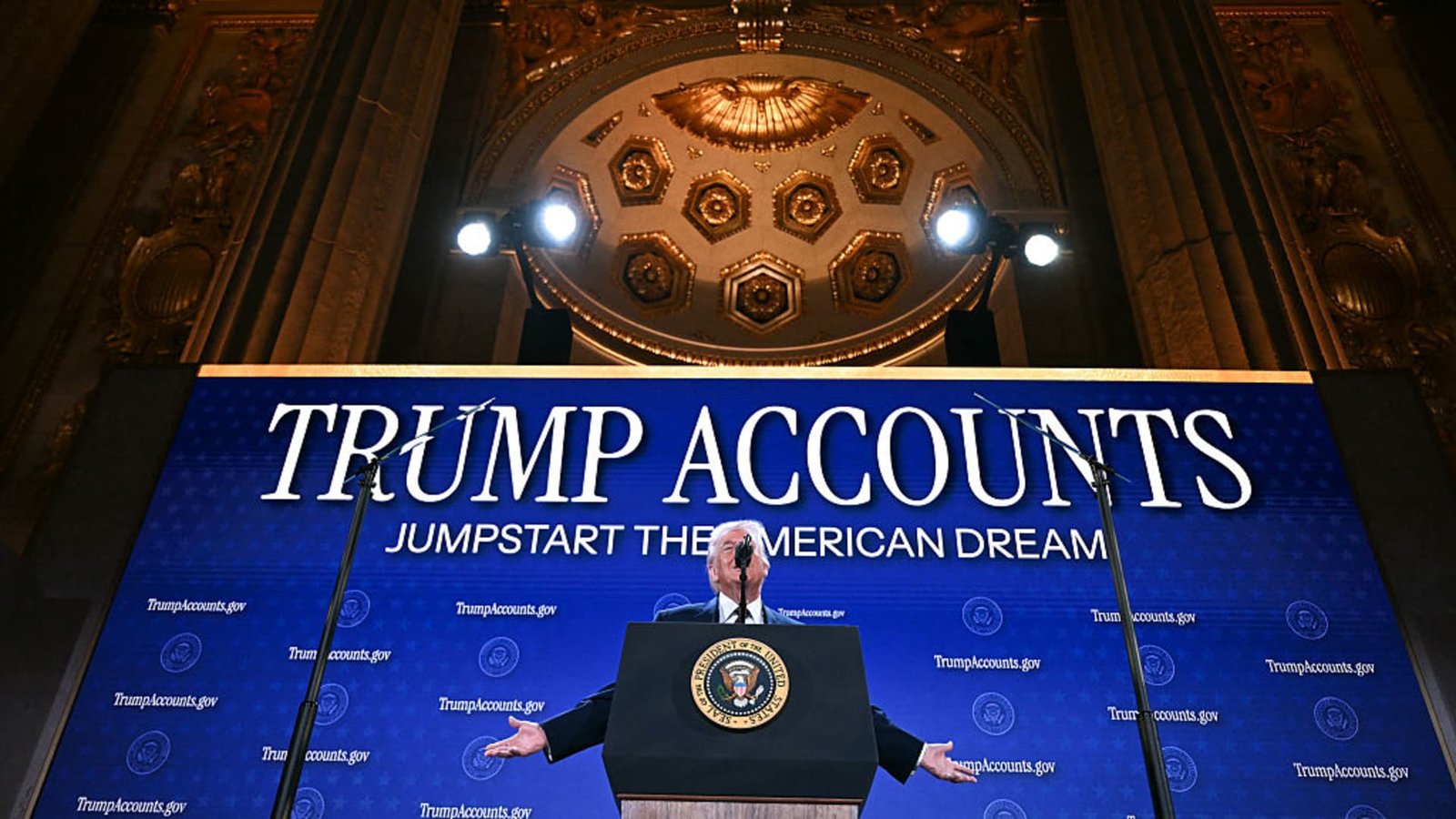
In his State of the Union address, President Donald Trump described soon-to-launch Trump accounts as “tax-free investment accounts for every American child.”
“This is something that’s so special, has taken off and gone through the roof,” Trump said in the annual speech before Congress.
The accounts, created under Trump’s “big beautiful bill,” function largely like a traditional individual retirement account once a child turns age 18, according to December guidance from the U.S. Department of the Treasury and IRS.
The tax rules for Trump accounts are complicated, but they are taxed.
“There’s not really any sense in which Trump accounts are tax-free,” said Ben Henry-Moreland, senior financial planning nerd for advisor platform Kitces.com. “People pay tax on the dollars that they contribute to the account, and they pay tax on any additional growth when they withdraw from the account.”
Trump accounts are set to launch on July 4, and most funds generally can’t be withdrawn for many years — meaning it could be a long time before account holders face any tax consequences. In the meantime, it’s difficult to predict how Congress could change the tax rules before withdrawals begin.
White House spokesman Kush Desai told CNBC in an email that “the President is right: every American child is eligible to receive a $1,000 seed investment from the federal government, on top of other potential contributions from philanthropists, that will grow tax-free in Trump Accounts.”
How Trump accounts are taxed
The Treasury’s $1,000 seed money and any philanthropist gifts go into the account before taxes are paid. Those pretax funds will be subject to regular income taxes upon withdrawal, according to the Treasury guidance. The same tax treatment applies to company matches of up to $2,500 per employee and to worker salary deferrals of up to $2,500.
Meanwhile, contributions made by parents, guardians, the beneficiary or others are after-tax dollars — money that has already been taxed. These contributions create “basis” in the account, according to the Treasury guidance. This shouldn’t be taxed at withdrawal if families track deposits, experts say.
Regardless of the type of contribution, Trump account earnings grow tax-deferred. That means no taxes are owed while the money remains in the account.
Although the growth would not incur yearly taxes on capital gains and dividends like you may have in a brokerage account, when funds are withdrawn, earnings are taxed as regular income, according to the Treasury guidance.
Because of the different contributions, withdrawals could also be a mix of taxable and nontaxable money.
“These accounts are effectively traditional IRA accounts for minors. With a traditional IRA, taxes are deferred, not forever tax-free,” said Tommy Lucas, a certified financial planner at Moisand Fitzgerald Tamayo in Orlando, Florida.
“The child will recognize taxable income at some point in the future when they take a withdrawal from the account,” Lucas said. Moisand Fitzgerald Tamayo ranked No. 69 on CNBC’s Financial Advisor 100 list for 2025.
Families will need to plan for that tax bill.
“I would certainly welcome anyone to put their money in there for my kids, but I can find a few other vehicles that are much more tax advantageous,” certified financial planner Marianela Collado, CEO of Tobias Financial Advisors in Plantation, Florida, said in an email.
For example, families could also consider a 529 college savings plan, brokerage account for minors or Roth IRA once the child earns income, said Collado, who is also a member of CNBC’s Financial Advisor Council.
How much Trump accounts could grow
Once an account is set up, babies born in 2025 through 2028 are eligible to receive a one-time $1,000 contribution from the Treasury.
“With modest additional contributions, these young people’s accounts could grow to over $100,000 or more” by age 18, the president also said Tuesday.
TrumpAccounts.gov forecasts that accounts could grow to $6,000 by age 18, starting with an initial $1,000 Treasury deposit and no further contributions. This estimate is based on the S&P 500 historical annual average return of more than 10%.
Future growth projections depend on annual contributions and investment performance, among other factors. Plus, taxes, custodian fees or fund expense ratios could reduce returns, experts say.
For example, to reach a six-figure balance by age 18, parents would need to contribute $1,882.81 a year, starting when the child is born, according to Lucas’ calculations, assuming the same high U.S. stock market rate of return.
For some households, saving more than $150 a month may be considered “modest,” he said. For others, “this would be impossible, especially when you factor in multiple children.”