A fact that surprises most people when I tell them is that I am half Iranian. I also share my name with Darius the Great, Darius II and Darius III, all kings of Persia, or ancient Iran.
My mother was born in Tehran, the capital of Iran, and myself and my family still uphold some Iranian traditions.
I enjoy my mother’s Iranian cuisine, which she cooks now and then. It was my mum and sister’s birthday recently (they share the same birthday) and we went to an Iranian restaurant in Lee, London, called The Caspian. I recommend this place to anyone keen to sample Iranian food.
Currently, I am reading a book called ‘Darius the Great is not Okay’ by Adib Khorram, which is about a half-Iranian teenage boy called Darius who lives in America and visits Iran for the first time with his family.
Seeing as my name is Darius, I am half Iranian and I have never visited Iran, I feel like I have a few similarities with the book’s protagonist.
Recently, my family and I celebrated Nourouz, the Iranian new year. It fell on 20 March this year and celebrates the first day of Spring.
Nourouz means New Day and dates back to the Persian religion Zoroastrianism, one of the world’s oldest organised faiths.
You may have even noticed the Google doodle that celebrated Nourouz, which was published on the search engine on 19 March.
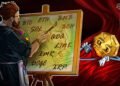
To celebrate Nourouz, Iranians place seven symbolic items on a table, which all begin with the letter ‘s’ in Farsi, the Iranian language.
The seven items are: Sabzeh – sprouts of lentils or wheatgrass cultivated in a plate; Samanu – wheat germ is used to make a delicious pudding; Senjed – dried oleaster; Sir – garlic; Sib – apple; Sumac – a crushed spice; and Serkeh – vinegar.
Sabzeh symbolises rebirth and growth, Samanu – power and strength, Senjed – love, Sumac – sunrise, Serkeh – patience, Sib – beauty and Sir – health and medicine.
One tradition tied to Nourouz is spring cleaning, which I feel has important links to financial planning. ‘Spring cleaning’ your finances might include reviewing your budget, setting up automated savings, checking your emergency fund and optimising your pensions savings.
Another aspect of Nourouz, giving gifts, also has a link to advice – the idea of financial gifts, making investments or contributing to a savings account.
Indeed, advisers could use the Iranian New Year as a jumping board to discuss such topics with their clients, or take the opportunity to reach out to the Iranian community in the UK during Nourouz.
A new year is always a good time to catch up with someone about their financial objectives or plans, and how to help achieve them. It’s also a chance to talk to an Iranian about retirement or investment strategies, potentially through workshops.
Nourouz also signifies resilience and hope. During a period of market volatility and higher than usual inflation, an adviser can reiterate the importance of maintaining a long-term perspective during uncertain times.
Advisers can enforce discipline, to make sure clients diversify their investments, and focus on their long-term financial objectives despite short-term market fluctuations.
Finally, Nourouz is a time of generosity and charitable giving, reflecting values of compassion and social responsibility.
Advisers can do their bit by highlighting the significance of philanthropy and community involvement in wealth-management discussions. Remember that charitable donations are tax free, as the tax either goes to the person donating the gift or the charity itself.
So as Iranians, and potentially some advisers after reading my Weekend Essay, would say, “Eid Nourouz Mobarak” (Happy New Year).