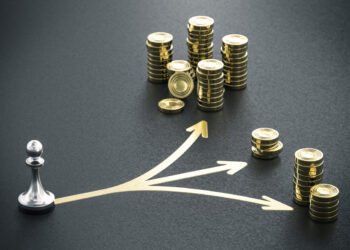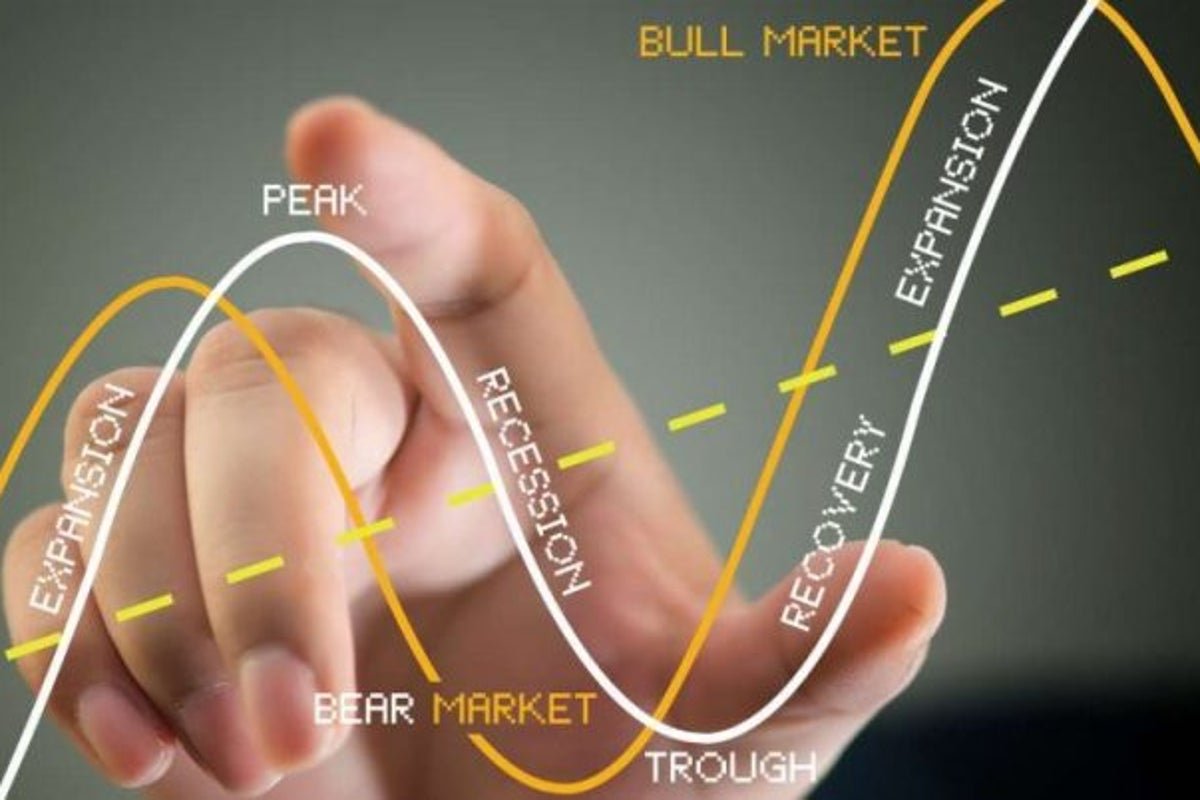
Although it’s no easy task, correctly timing the market can open the doors to positive gains. To do so, investors and traders look at various metrics, economic news, and other insights to predict how the stock market may change in the following weeks, months, and years. While investors and traders can only make educated guesses, market cycles remain consistent. A complete stock market cycle has four phases: the accumulation phase, mark-up phase, distribution phase, and mark-down phase. Knowing its pattern can help individuals trade stocks with higher returns.
What Are Market Cycles
The market is hardly ever flatlined. Rather bull markets will give way to bear markets eventually, and bull markets find a way to rise against bear markets. While these fluctuations may seem like random coincidences, the infinite loop of bullish and bearish markets all follow four distinct stages:
- Accumulation
- Markup
- Distribution
- Mark-Down
These stages form a market cycle, each of varying lengths. Knowing the elements of a market cycle can make it easier to anticipate the direction of asset prices within the following months. It can also help you with trades, as market cycles have no minimum or maximum duration. Traders can apply these phases for their weekly trades.
Bull Market vs. Bear Market
The difference between a bull and a bear market revolves around asset prices. During bull markets, stock prices go up and reward long-term investors. During bear markets, these same stock prices go down and hurt long-term investors. A bear market is identified as a sustained 20% drop and a bull market is identified as a sustained 20% increase.
Why Do Markets ‘Cycle’
Simply put markets cycle because of economic cycles and human psychology. For instance, greed can propel stock prices during the best of times, and a strong economy can make investors feel justified in buying more shares. But as the economy weakens, greed eventually turns into fear, influencing investors to exit the market.
Cycles also shift as the economy strengthens or weakens. Low-interest rates, stable inflation, and a rising GDP are some macroeconomic indicators that indicate a strong economy and result in bullish market cycles. However, the economy cannot remain strong forever. The economy can get too hot and prompt higher interest rates, elevated inflation, and less consumer spending. These events point to a weakening economy that can manifest itself through bad inflation readings and rising unemployment among others. A slowing or declining economy can hurt the stock market since companies are projected to report lower earnings. Since company forecasts and expectations fluctuate, they impact stock prices and market cycles.
In addition, differences in opinion and current moods can exasperate market cycles. Valuations become drastically high during good times and can get extremely undervalued during bad times. Fear of missing out (FOMO) is another element of human psychology that impacts market cycles, as some will buy shares in the middle of a rally or rush out of the market when they see losses accumulate. Economic growth and human psychology are two of the main drivers that create market cycles.
How Are Market Cycles Formed
Market cycles start with a change in the economy’s direction. A bullish market may give way to a bearish market if unemployment rises and consumer spending decreases. This bearish market cycle may continue until unemployment declines and consumers buy more goods and services.
Market cycles may not be apparent right away. It can take several months or years to recognize the moment the market cycle shifts. Market cycles can remain in place even when the economy indicates a change is necessary. Investors may continue to feel bearish after a few years of losses even if the economy shows several signs of a recovery. Market cycles and economic cycles align with each other in the long run, but one of them can get a head start. An economic recovery may happen before a market recovery as stock market participants question the strength of the economic recovery. The stock market can also continue on its bullish run as the economy shows signs of weakness. Investors in this scenario may believe the economy won’t have any long-term issues and will quickly get back on track.
Importance of Market Cycles in Trading
Learning to pay attention to market cycles isn’t just important for long-term investors to plan their moves during bull and bear markets. Day traders can also use market cycles to potentially generate higher returns. Traders look for catalysts that spark changes, monitor the market, and adjust accordingly.
Some catalysts have a long-term impact on the market, while others can yield an immediate payoff for traders. Federal Reserve meetings have become catalysts for short-term volatility in light of interest rate hikes. This sharp volatility can create smaller market cycles that provide profits for traders. Suppose the Fed announces a 0.75% interest rate hike, an event meant to slow down businesses. The stock market indexes may rally on this news if traders believe an interest rate hike was “priced in” or feel optimistic about the Fed’s remarks.
A sharp increase in asset prices from a Fed meeting can cause FOMO and make more traders feel bullish. However, some traders in this example may have doubts about how long the gains from the Fed meeting will last. After enough people buy shares and have had more time to digest the news, some investors may sell shares to take profits. This selling can decrease stock prices and cause other investors to panic, creating a chain reaction in the process. Eventually, bulls get the upper hand based on another catalyst, or sellers stop selling for that moment, and the cycle continues.
Some market cycles result in small changes where stock prices don’t move up or down by more than 5% of where they were previously. Understanding mini-market cycles is more important for day traders who thrive on short-term volatility. Investors with a long-term perspective may benefit more from analyzing indicators for long-term market cycles, such as changes to consumer spending, interest rates, and inflation.
The 4 Stages of the Market Cycle
Every market cycle follows these four stages: accumulation, markup, distribution, and mark-down. Although there might be a pattern it is impossible to know for certain which stage your investment is in at any given moment. Investors and traders have to review the information and make an educated guess about the current phase to determine their next steps. However, having an understanding of each stage gives you the framework for planning your strategy around market cycles. These are the stages you should know before using market cycles to guide your stock-trading strategy.
1. Accumulation Phase
The accumulation phase occurs when experienced traders, value investors, and other individuals believe the worst is over. They tend to accumulate stocks while other investors and traders sit on the sidelines. For example, many investors fled the market during the Great Recession, but the trough presented an incredible opportunity. Investors who bought shares at that bottom (Q2 2009) participated in the accumulation phase of the longest bull market in history. Accumulation phases can last days, weeks, months, or years depending on the assets and timing.
2. Markup Phase
The markup phase occurs when investors who stayed on the sidelines notice that asset prices have been rising for some time. Bearish investors may question the rally, but bullish investors may get consumed by FOMO and start buying shares. FOMO begets more FOMO, and investors who sat firmly on the sidelines end up embracing the irrational exuberance and buy shares. For example, the stock market rally during the pandemic had a long markup phase fueled by the Federal Reserve’s stimulus. Many people were skeptical about the stock market during the early days of the pandemic.
Those worries faded for most people by the end of 2021 as bullish investors came out on top that year.
3. Distribution Phase
Some investors start to feel bearish and sell shares. This isn’t enough to trigger a bear market or result in significant declines, but investors and traders may start to wonder whether the current bull market is running out of steam. Some investors sold shares at the start of 2022 believing the stock market did not accurately reflect economic conditions and forecasts. Investors who sold the indexes at the start of 2022 protected themselves from losses, but a strong 2021 meant fewer people were rushing for the exits. Most people will hold onto stocks during the distribution phase but may become more cautious.
4. Mark-Down Phase
Similar to how FOMO grips many investors during the markup phase, the fear of losses creates panic and causes many investors to sell out of their positions. This panic creates the mark-down phase. This part of the market cycle hurts long-term investors who hold onto their positions. While long-term investors can wait for the stock market to recover, not all of them have the patience or emotional strength to resist the urge to sell their shares. Investors and traders endured the mark-down stage throughout 2022 as the S&P 500 fell by 18.11% (including dividend returns). Many of the top stocks in 2021 fell by over 50% in the 2022 markdown.
Some investors believe the path to recovery from 2022’s losses has already started, while others believe the market is due to fall below its 2022 lows. The current market environment demonstrates the difficulty of predicting market cycles, but knowing the stages can guide some of your decisions.
Monitoring Market Cycles as an Investor
Market cycles tend to repeat themselves and learning about the market’s history can offer a glimpse into the stock market’s direction. Using market cycles alongside various metrics can help you make better investing and trading decisions. In addition, recognizing human psychology’s impact on these cycles can help you keep your emotions in check and stay focused on the big picture.
Frequently Asked Questions
Q
How long does a market cycle last?
A
It’s hard to predict how long cycles last, as some of them last weeks, months, or years.
Q
What are the 4 market cycles?
A
They are the accumulation phase, markup phase, distribution phase, and mark-down phase.
Q
Is the market cycle the same as the business cycle?
A
No. Market cycles reflect asset prices, while business cycles reflect companies. Business results eventually impact market cycles, but there can be a delay.
Disclaimer: Benzinga was commissioned for this article and is not affiliated with the moomoo app or it’s affiliated companies. This includes Moomoo Technologies Inc. (MTI) provider of the app and Moomoo Financial Inc. (MFI) Member FINRA/SIPC, which offers securities in the U.S. Any comments or opinions provided herein are Benzinga’s. MTI, MFI, or their affiliates do not endorse any trading strategies that may be discussed or promoted herein. Investing involves risk and the potential to lose principal.