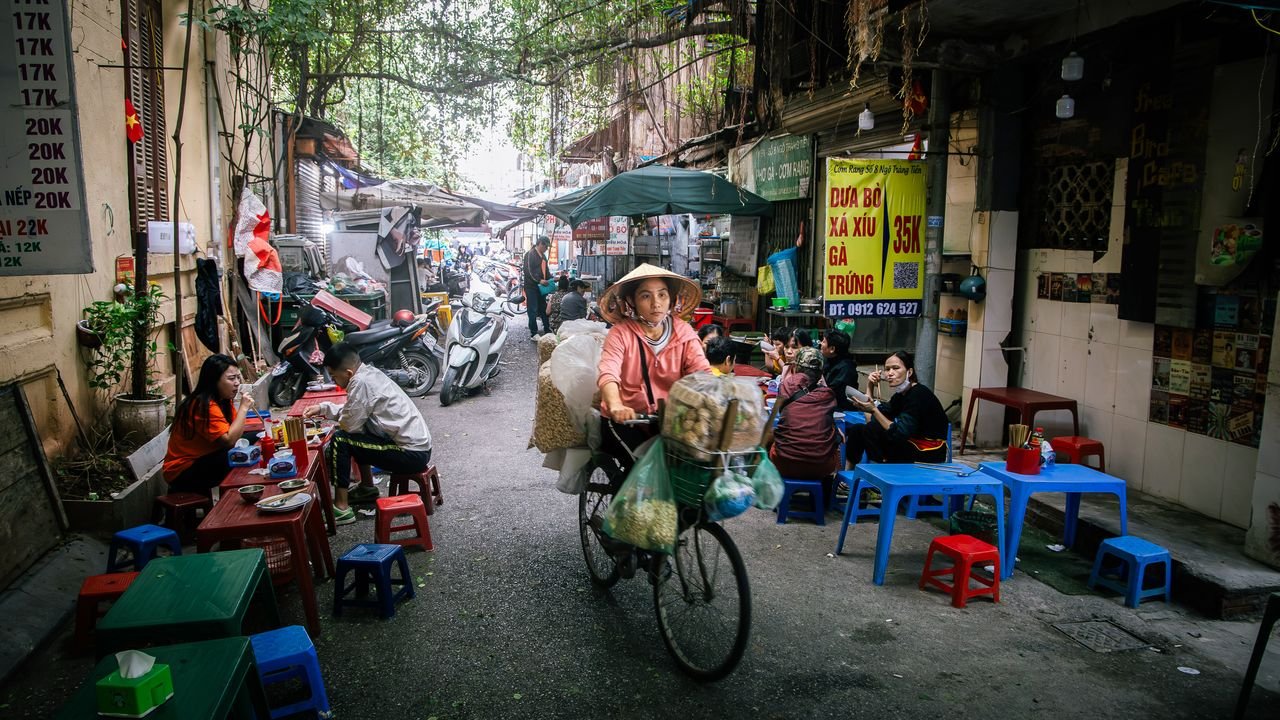
For many, the city of Hanoi is a gateway to northern Vietnam’s great adventures—the emerald islets of Ha Long Bay, the terraced hills of Sapa, the karst valleys of Ninh Bình—but it’s well worth pausing here before venturing on. Over more than a thousand years, the country’s capital has seen imperial dynasties raising Confucian temples, French colonists carving out tamarind-shaded boulevards and yellow-walled villas, and revolutionaries leaving behind slogans, statues, and scars of self-determination—resulting in a gritty yet graceful second city.

Though there are currently no direct flights from US cities to Hanoi (though there have been rumors of new routes to come), growing numbers of visitors are discovering why Hanoi deserves more than just a quick stop, whether for misty dawns at Hoan Kiem Lake, the clatter of spoons in pho stalls at sunrise, or the narrow, nerve-tingling thrill of Train Street, where locomotives pass close enough to ruffle your shirt.
Travelers come, too, for the craft—the centuries-old silk, pottery, and lacquer traditions still alive in the villages just beyond the city limits—and for a street food-driven culinary scene that remains defiantly local yet endlessly inventive thanks to the city’s mix of French flair and Vietnamese ingenuity. From classic culture beneath the Opera House’s striking domed ceiling and cutting-edge art at Manzi, to boutique hotels and speakeasy-style cocktail bars lighting up the backstreets, here’s where to begin to eat, stay, and play in Hanoi, Vietnam.
Jump to:

What to see in Hanoi
It’s near impossible to visit Hanoi without hearing about the city’s Train Street. There are two of them, both tucked between narrow rows of homes where the railway line slices straight through residential alleys. The more famous one runs through the Old Quarter, a tight corridor of pastel facades, bunting and rail-side cafes that fall silent a few times a day as the train thunders past close enough to brush your knees. The other, near the station itself, is quieter and feels more authentic—a place to sip condensed-milk coffee with locals and watch daily life unfold just inches from the tracks.
Hoan Kiem Lake is the calm heart of the city, where retirees practice tai chi at dawn and couples circle the water under the trees at night. Cross the scarlet-hued Huc Bridge to Ngoc Son Temple, dedicated to a 13th-century general who once defended the capital, and you’ll catch reflections of red lacquer and temple eaves mirrored in the lake. From there, wander north into the Old Quarter, a tangle of 36 medieval guild streets still named for their original trades—silversmiths on Hang Bac, paper sellers on Hang Ma, silk merchants on Hang Gai.