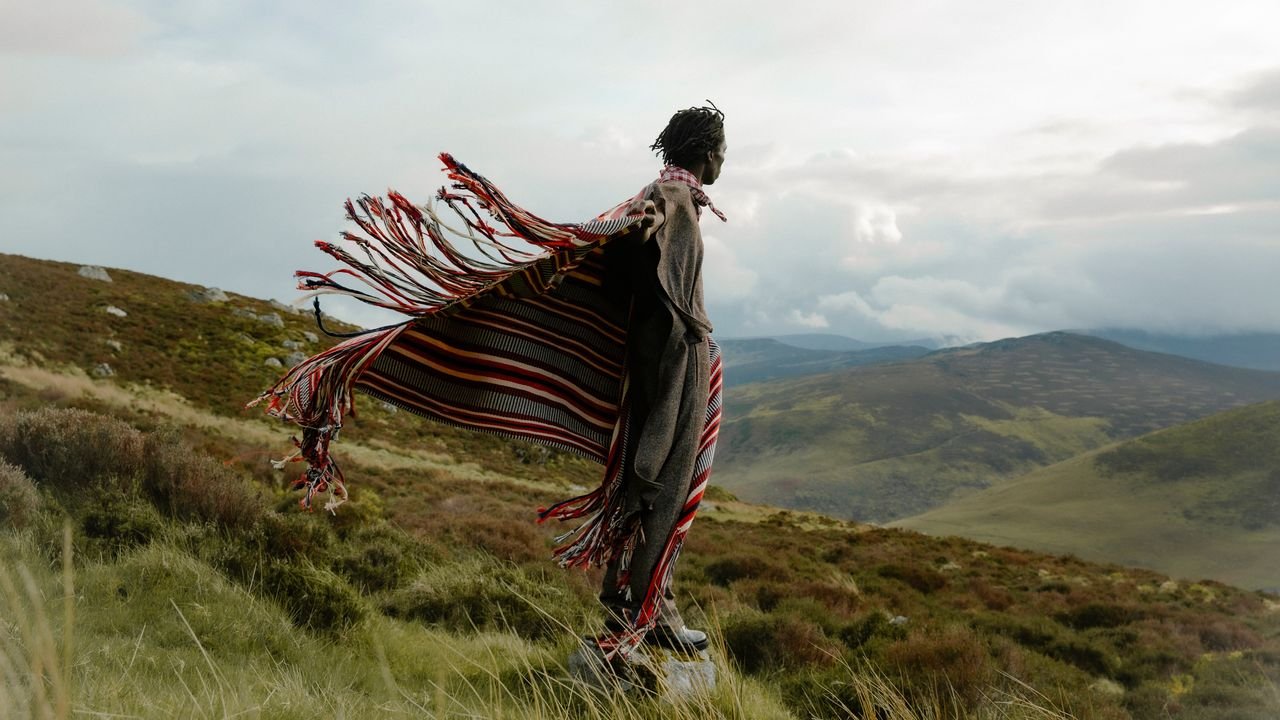
That didn’t stop the nation’s weavers working with wool, though: sweaters embedded with meaningful patterns and intricate Crios belts continued to be knitted quietly inside cottages, a homegrown effort to keep the craft alive. Take aran, which is arguably the most recognizable expression of this history, and was spotlighted in the Oscar-nominated film Banshees of Inisherin by costume designer Eimer Ní Mhaoldomhnaigh, who sourced striking wool designs that stole the show. These kinds of pieces continue to be crafted in the Aran Islands by the likes of the 50-year-old Inis Meáin Knitting Company, which is stocked in over 60 stores worldwide including Bergdorf Goodman in New York.

And among the windswept hills of Donegal, efforts are underway to fortify another Irish fabric for the future: Donegal Tweed. The region is home to the largest concentration of tweed and wool weavers in Ireland, and they are currently in the final stages of securing Protected Geographical Status from the EU for the natural fibre twill—just as Champagne from the Champagne region of France has. This will eventually mean that only tweed made in Donegal will be allowed to be marketed as such, helping to prevent imitations and retain jobs. It’s a shift that directly supports the makers themselves—something Stable of Ireland has long prioritized through its partnerships with producers like Eddie Doherty, Molloy and Sons, and Studio Donegal who create cloth for their tweed jackets, gilets, and coats.
For Reynolds and Duff, the work is never over, and a great sense of optimism unfolds whenever they hit the road again in search of new makers. Even more so when they encounter the next generation of weavers embracing their craft. “The wealth of creative talent in this country is incredible,” says Reynolds. “The number of people learning new skills in craft in Ireland has grown exponentially. It is very exciting to see.”