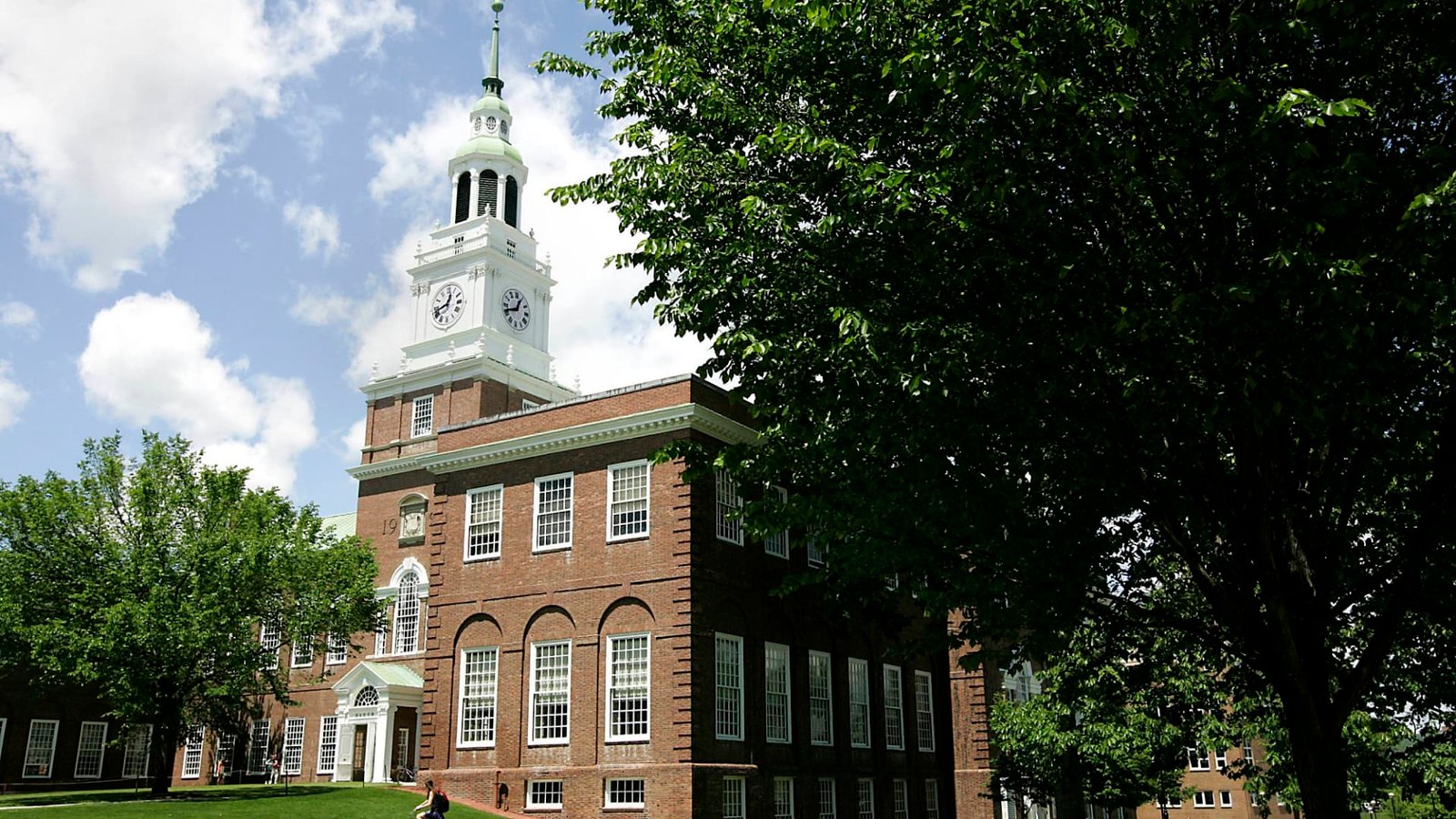
Dartmouth College
Cheryl Senter/Bloomberg | Getty Images
Fears that artificial intelligence will upend students’ future career plans are reverberating across college campuses.
“Higher education needs to do better,” said Joseph Catrino, the inaugural director of Dartmouth’s Center for Career Design. “We need to do better for our students — we need to step up and help students be prepared.”
The Ivy League college recently raised $30 million in endowed funds to support internship opportunities. Now students can access up to $6,500 during any term to help finance unpaid or underpaid internships. “This allows the student to explore and engage in a field that they normally wouldn’t be able to,” Catrino said.
Many other colleges and universities are launching similar initiatives to make students more employable amid a rapidly changing labor market. Additional internships, externships and hands-on work, these schools say, could better position their students to land jobs after graduating.
Graduates of Baruch College participate in a commencement ceremony at Barclays Center in Brooklyn, New York, June 5, 2017.
Bebeto Matthews | AP
Last year, the City University of New York kicked off a sweeping effort to improve career outcomes for its 180,000 undergraduates by integrating career-connected advising, paid internships, apprenticeships and collaborations with industry specialists across every academic concentration.
“Success depends on our ability to change and adapt,” said CUNY’s chancellor, Félix Matos Rodríguez, in a statement about the announcement. “It’s not enough for students to graduate with a degree … they must leave with direction, preparation, experience and connections.”
The AI effect puts immense pressure on schools to address students’ concerns about the labor market at a time when many people were already questioning higher ed’s return on investment.
“We have to be on it, and we have to be nimble and quick,” Catrino said. “Higher education has a big task at hand.”
Two-thirds of students are pessimistic about the job market, and 4 in 10 students have considered changing their field of study due to AI, according to the CNBC and SurveyMonkey Quarterly AI and Jobs Survey.
Roughly 36% have considered changing their target industry, and 49% have considered changing the skills they are focused on developing, the survey found. In April, the firms polled about 3,600 people, including nearly 800 students in the U.S.
While the percentage of students changing majors is substantial now, it will likely be even higher in the coming years, according to Eric Greenberg, president of Greenberg Educational Group, a New York-based consulting firm.
“What particularly complicates choosing a major now is the unpredictability regarding which majors will be most and least impacted by AI, which can, of course, dramatically change job prospects,” he said.
Other recent reports also show students are scrambling to switch majors, largely due to concerns about AI’s impact on the job market and their employment prospects.
Where the jobs aren’t
“There’s a lot of noise,” Dartmouth’s Catrino said, referring to a recent slate of large-scale layoff announcements and reduced entry-level job openings, which some experts said could be the start of an AI-driven jobs apocalypse.
However, some industries are more prone to disruptions than others. Jobs in technology and finance, for example, are at greater risk largely due to generative artificial intelligence, which can supplant a human’s analytical skills, according to a 2025 report by Indeed.
Already, early-career workers in jobs exposed to AI, such as software development and customer support, have experienced employment declines, another 2025 Stanford report found.
A January Federal Reserve Bank of Dallas analysis of government data also found significant declines in employment in the most AI-exposed occupations, including technology.
Nonetheless, the overall impact of AI on early-career roles was still small, the Fed researchers said.