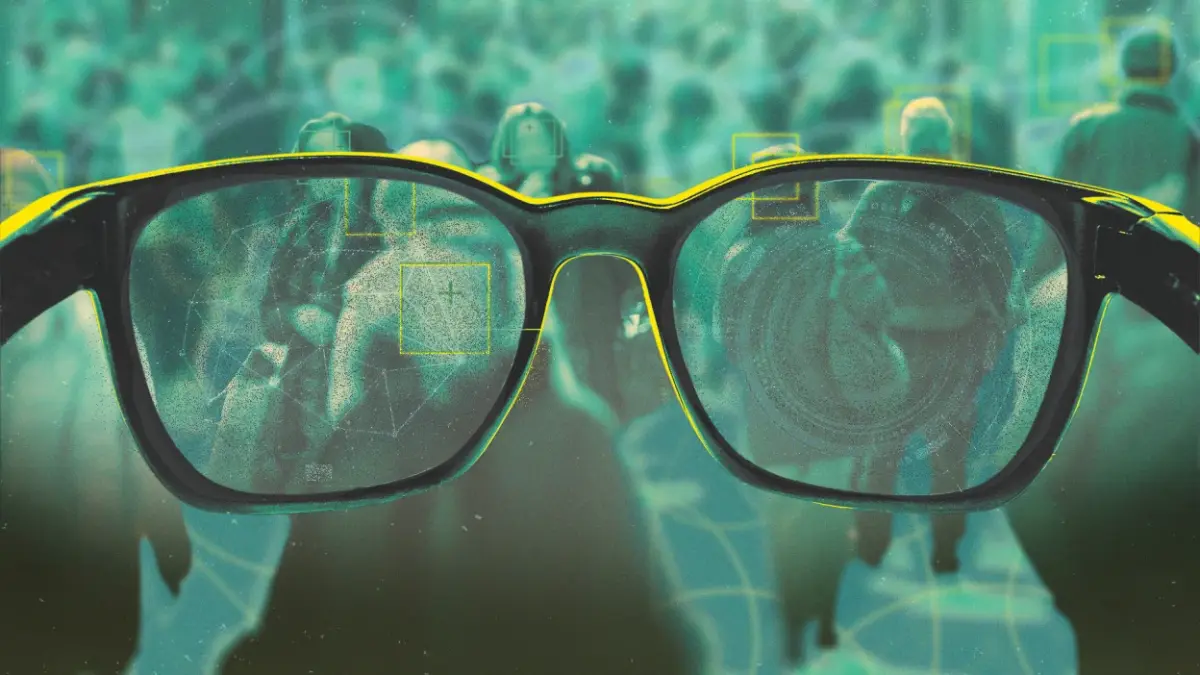
According to a report from Wired, Meta has been quietly installing facial recognition in its Ray-Ban Meta and Oakley Meta smart glasses for the last few months. Internally called “NameTag”, the feature, if activated, will use AI to identify people captured by Ray-Ban Meta’s camera, alert the wearer when it recognizes someone, and store faceprints on users’ phones.
The software has not been switched on, but if it is, it will use Meta’s AI app to transform images of anyone photographed with Meta glasses into a biometric faceprint, and check against a database of faceprints stored locally on the user’s Meta AI mobile app. If it finds a match, the user will be notified. If it doesn’t, the faceprint will be indexed into a folder named “pending.” So everyone who the wearer encounters in public could become an unidentified target waiting for a name in a stranger’s private databases.
“The feature is not yet exposed to consumers but seems nearly ready to go,” Cooper Quintin, a security researcher and senior public interest technologist with the nonprofit Electronic Frontier Foundation’s Threat Lab told Wired. “Despite the billions of reasons not to, Meta seems to have created the capacity to turn their customers into a distributed surveillance machine.”
Back in February, documents obtained by the New York Times revealed Meta was weighing the “safety and privacy risks” of adding facial recognition to its smart glasses. In April, the company said it was taking a “a very thoughtful approach” to the technology. But the first component of facial recognition software was installed in January, without consumers being aware of it (which seems less than thoughtful to me).
It goes deeper than that, though. According to the company memo leaked to the Times, Meta’s potential strategy was to roll out facial recognition “during a dynamic political environment where many civil society groups that we would expect to attack us would have their resources focused on other concerns.” In other words, Meta is well aware of the general disdain for facial recognition, but seems intent on developing the technology anyway.
The unpopularity of facial recognition software in smart glasses
In April 2026, in response to the New York Times’ story, over 70 organizations, including advocates for domestic violence survivors, worker rights, bodily autonomy, consumer privacy, and civil rights, and the ACLU, demanded Meta halt its NameTag facial recognition plans. In an open letter, the coalition wrote: “Facial recognition technology built into inconspicuous consumer eyewear represents a serious threat to privacy and civil liberties for every member of our society, and particularly for historically marginalized and vulnerable groups.”
Privacy advocates aren’t the only people who hate the idea of facial recognition in smart glasses. According to a YouGov survey, nearly half of all adults are in favor of a total ban on all smart glasses in public places due to concerns over built-in cameras and internet connectivity.
What do you think so far?
Meta’s long history with facial recognition technology
Despite being extremely unpopular with consumers, Meta/Facebook has been in a long-running relationship with the concept of using technology to capture and categorize people’s faces. Facebook identified and tagged people on its social media sites as early as 2010, but the company pulled the feature in 2021, citing “many concerns about the place of facial recognition technology in society.” The $650 million class-action settlement might have had something to do with it as well. Meta debated adding facial recognition to the first generation of its Ray-Ban smart glasses in 2021, but decided against it at the time, citing privacy concerns.
According to Meta, you don’t have to worry about what Meta is doing. “Regardless of any sensational reporting, the facts are simple: We’ve said before we’re exploring these types of features, and what you’re seeing is just evidence of that exploration,” Meta spokesperson Ryan Daniels said in statement. “Nothing has shipped to consumers and no final decision has been made on what to do here, if anything. If we do decide to roll something out, we will take a thoughtful approach and do so with full transparency. One decision we can be clear about—we are not building a central face database.” Meta is, however, installing the groundwork for millions of private face databases that it controls and administers.
While the dystopian possibilities of the widespread adoption of facial recognition software are immediately obvious, there are non-nefarious uses for the technology. Some advocates for the blind, like non-profit Vision Aid, argue that facial recognition is a matter of accessibility and social equity—being able to recognize people’s faces is a privilege sighted people take for granted, and it shouldn’t be denied to the blind over privacy concerns that could be handled through legislation.
Theoretically, the protection of personal information and the needs of blind people (and people like me, who don’t like being embarrassed when they forget someone’s name at a cocktail party) aren’t mutually exclusive. In a perfect world, privacy protection guidelines and laws would be developed alongside technology, and companies that breach the public trust would suffer real consequences. But sadly, we live in the real world, where our privacy is often only protected by strongly worded letters and left in the hands of Meta, a company that paid $650 million to settle a lawsuit over a facial recognition scheme and then immediately started building the next one.