Indy’s current momentum may feel recent, but the frictionless experience visitors encounter today stems from a nearly five decades-long campaign to make the city a leading sports destination. In 1979 the city became the home of America’s first sports commission when a coalition of local government officials and business leaders established the Indiana Sports Corp, a not-for-profit organization dedicated to bringing big sports to the city. Over the past 47 years, it’s brought a Super Bowl, the NBA and WNBA All-Star Games, and the Olympic Trials, to name just a few of the more than 500 events hosted by the commission.
Infrastructure was key to this mission. Before the city landed the Baltimore Colts in 1984, it invested in the construction of the Hoosier Dome to help lure in the franchise. Just across the river, the NCAA has called Indy home since 1999, after the city built a new headquarters in White River State Park to entice the organization to relocate from Kansas. It was a big net cast to catch a big fish, if you will. “Build it, and they will come,” explains Michael Kaltenmark, vice president of marketing at the IMS. “Several decades later, and it’s still paying dividends. The men’s basketball championships are estimated to have brought a $400 million impact to the region, 70,000 visitors. Other cities would kill to have that.”
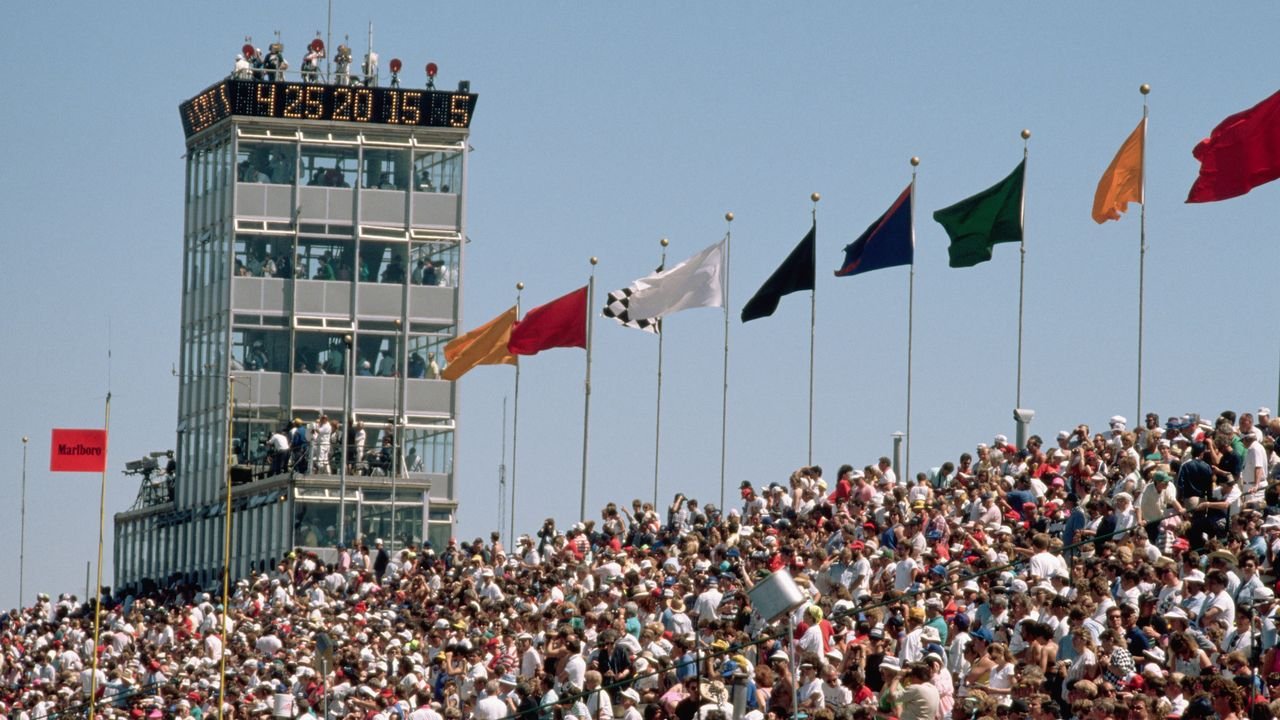
If there’s one event that captures the city’s identity, it’s the 110-year-old Indianapolis 500—a testament to the fact that doing things bigger and better has long been part of Indy’s DNA. “Over 350,000 people from 40 different countries and every US state come to Indianapolis just for this day,” says Kaltenmark. “Every year we still sing ‘Back Home in Indiana,’ and at some point I always cry.”
The happy medium between complete reinvention and tradition is where Indianapolis sports thrives. Regarding the city’s recent hot streak with sports, Pacer Sports and Entertainment president Mel Raines reflects on the results with grounded optimism. “I don’t ever want to take it for granted,” she shares, “so I don’t want to say I’m surprised, because I think it’s a lot of intentional hard work to get to where we are today and where we want to go, but I know that everybody’s in it together.” Having held the role for 17 years, Raines credits the “folks that have been doing this for 30, 40, 50 years” with guiding her through what she still considers a relatively early chapter in her Indianapolis sports career when she returned to Indianapolis in 2009 to help oversee operations for Super Bowl XLVI, the city’s first.