Particularly over the last 10 years, retiring federal employees have faced the question of what to do with their Thrift Savings Plan (TSP) accounts when they retire or leave federal service.
Most departing and retiring employees can and do leave their TSP accounts with the TSP, eventually withdrawing at least their traditional TSP account at some point during their retirement years. Starting when they reach their required beginning date (RBD, currently April 1st following the year they become age 73), retired TSP participants must take a required minimum distribution (RMD) each year from the traditional TSP. A Roth TSP account is not subject to RMDs, can remain in the Roth TSP account indefinitely, and continue to grow tax-free until the Roth TSP participant dies.
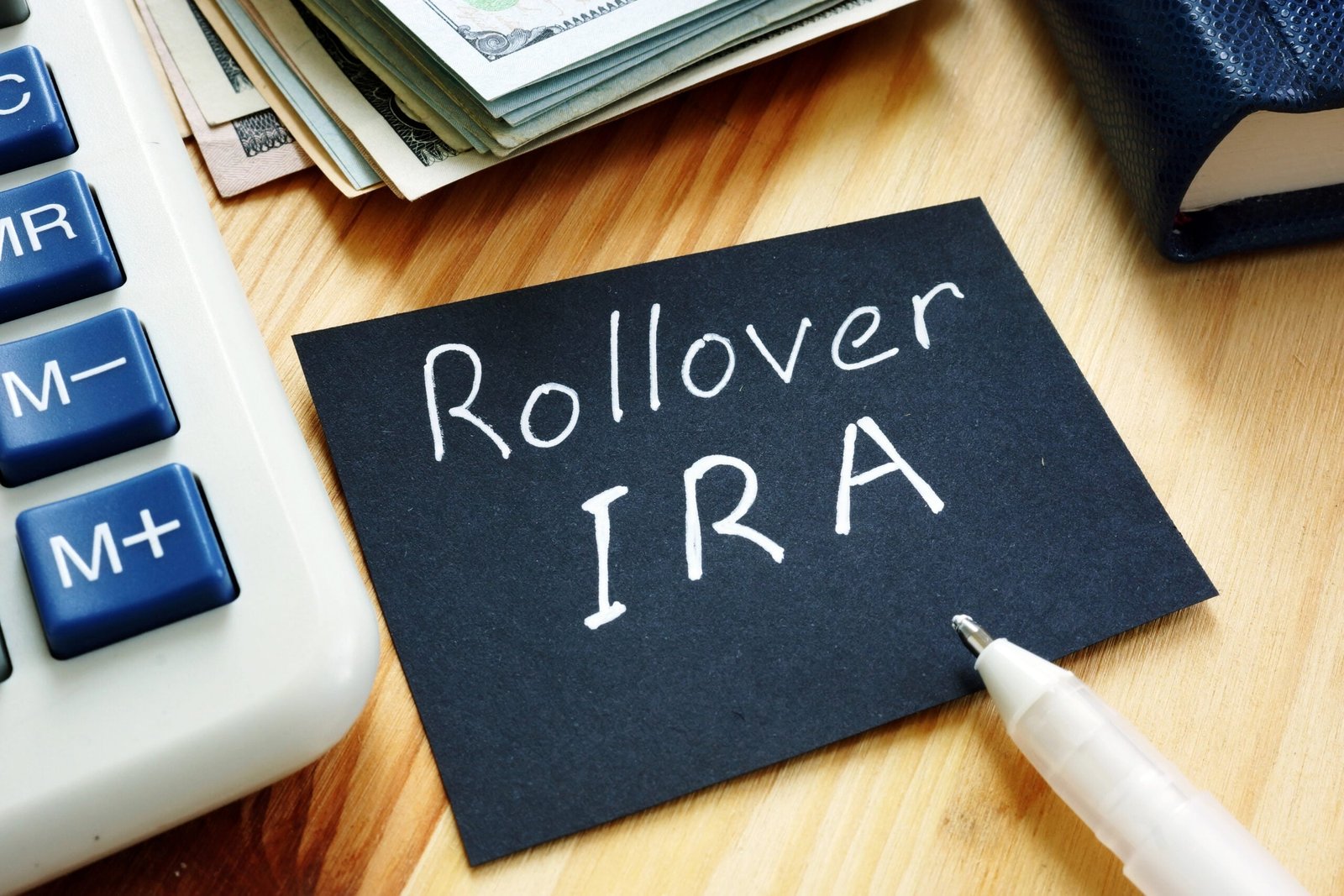
TSP participants have other options as to what to do with their TSP accounts upon retiring or leaving federal service. One option is to directly rollover their TSP accounts to an IRA (traditional TSP rollover to a traditional IRA or a Roth TSP rollover to a Roth IRA). Some TSP participants may have qualified retirement accounts such as a 401(k), 403(b) or 457 retirement plans that they use to contribute to when they worked for private companies. Although they can no longer contribute to these retirement plans, they have left these retirement plans with the private company they previously worked for. These qualified retirement accounts may also be directly rolled over to a traditional IRA or to a Roth IRA.
Rolling over a TSP account and qualified retirement accounts to a “rollover” IRA thereby putting a federal retiree’s retirement investments “under one roof” can make a lot of sense for some TSP participants. But the issues associated with rolling over the TSP and/or qualified retirement plans to an IRA are somewhat complicated and challenging to understand. The rollover decision depends on many factors including the TSP participant’s financial situation as well as how the TSP and the qualified retirement plan administrators handle the rollover process.
Reasons to Rollover the TSP and Qualified Retirement Plan Funds Into an IRA
Consolidating retirement accounts can be advantageous for federal retirees who want to see all of their retirement funds (TSP and qualified retirement accounts) invested under one retirement account. There is more investment possibilities with IRAs compared to the TSP and qualified retirement plans. Another advantage with IRAs is that IRAs do not have as many restrictions on withdrawals as the TSP has. Consolidating retirement accounts simplifies the process of calculating and taking required minimum distributions (RMDs). Note that the traditional TSP and each traditional qualified retirement account a federal retiree owns is subject to its own RMD. Consolidating the traditional TSP and each traditional qualified retirement account into a “rollover” traditional IRA means only one RMD has to be taken each year from the “rollover” traditional IRA.
The Advantages and Disadvantages of Rolling Over a TSP Account to an IRA
Another important advantage for consolidating qualified retirement accounts into an IRA applies to retirees who may have forgotten about qualified retirements like 401(k) plans that they previously participated. A 2022 study reported that $1.3 trillion remains in “forgotten” qualified retirement plans. All of the $1.3 trillion belongs to former employees who left their companies and have not contacted their former companies as to where they are now living. The $1.3 trillion in 2022 has probably increased to close to $10 trillion in 2026. Rolling over 401(k) retirement plans into a self-directed IRA means that the IRA owner will not lose track of their retirement monies which are residing in an IRA account. This is because the IRA custodian sends the IRA owner quarterly and annual statements about the IRA account.
Advertisement

Reasons for Not Rolling Over the TSP and Qualified Retirement Plans Into an IRA
If a TSP participant rolls over their TSP account to an IRA, they will lose the ability to take out TSP loans from the TSP account. Under TSP rules, only an active employee can take out a TSP loan. An active employee can also rollover portions of their traditional TSP account to a traditional IRA if they are age 59.5 or older. Loans are not an option for traditional TSP funds that are rolled into a traditional IRA.
Those TSP participants who own a former employer’s stock in their 401(k)-retirement plan and have a net unrealized appreciation (NUA) should be aware that rollovers from that 401(k)-retirement plan can be especially complicated. In particular, if the entire 401(k) retirement plan is rolled into an IRA, the net unrealized appreciation capital gain tax benefit cannot be utilized.
Another disadvantage with respect to rolling over any retirement plan into an IRA is fees. Fees may be higher in an IRA compared to the fees associated with the TSP (the fees associated with the TSP are minimal) and fees associated with employer-sponsored retirement plans. IRA fees include annual custodial fees and investment fees.
In short, the issue of whether a TSP participant should rollover their TSP accounts to a “rollover” IRA should be consistent and in line with the participant’s short-term and long-term financial goals. TSP participants who are using a financial planner to help them accomplish their short-term and long-term financial goals are advised to discuss their goals on a regular basis with the financial planner and to have a written financial plan in place.
 Edward A. Zurndorfer is a CERTIFIED FINANCIAL PLANNER®, Chartered Life Underwriter, Chartered Financial Consultant, Registered Health Underwriter and Enrolled Agent in Silver Spring, MD. Tax planning, Federal employee benefits, retirement and insurance consulting services offered through EZ Accounting and Financial Services, located at 833 Bromley Street Suite A, Silver Spring, MD 20902-3019