June 2026 was brutal for the crypto market. Bitcoin (BTC) fell more than 20%, hitting a 21-month low, while spot Bitcoin ETFs saw a record $4.5 billion in outflows.
That did not stop users from spending a record $324 million on onchain gacha during the month, according to Blockworks Research. A year earlier, the monthly figure was closer to $50 million.
Spending hit a new all time high in the depths of a bear market. While crypto prices were tanking, people were opening more and more packs of tokenized Pokémon cards — driven by the thrill, the hope of a profit or the urge to expand a collection.
It’s an entire randomized Real World Asset (RWA) sector that’s flown under the radar… until now.
Onchain gacha spending hit an all-time high in June 2026. Source: Blockworks.
Booster packs, grades and slabs
Gacha is a mechanism borrowed from Japanese vending machines, where a fixed payment yields a random item. In the trading card game (TCG) market, it usually works through booster packs: sealed packs holding a random assortment of cards. The buyer does not know in advance what they will get.
The cards inside a booster are not created equal. Print run, rarity, condition and year of release drive prices orders of magnitude apart: from cents for an ordinary card, to hundreds of thousands of dollars for a rare copy in pristine condition. A market has grown up around those collectibles, which Global Market Insights values at $9.2 billion and Mordor Intelligence at $15.11 billion.
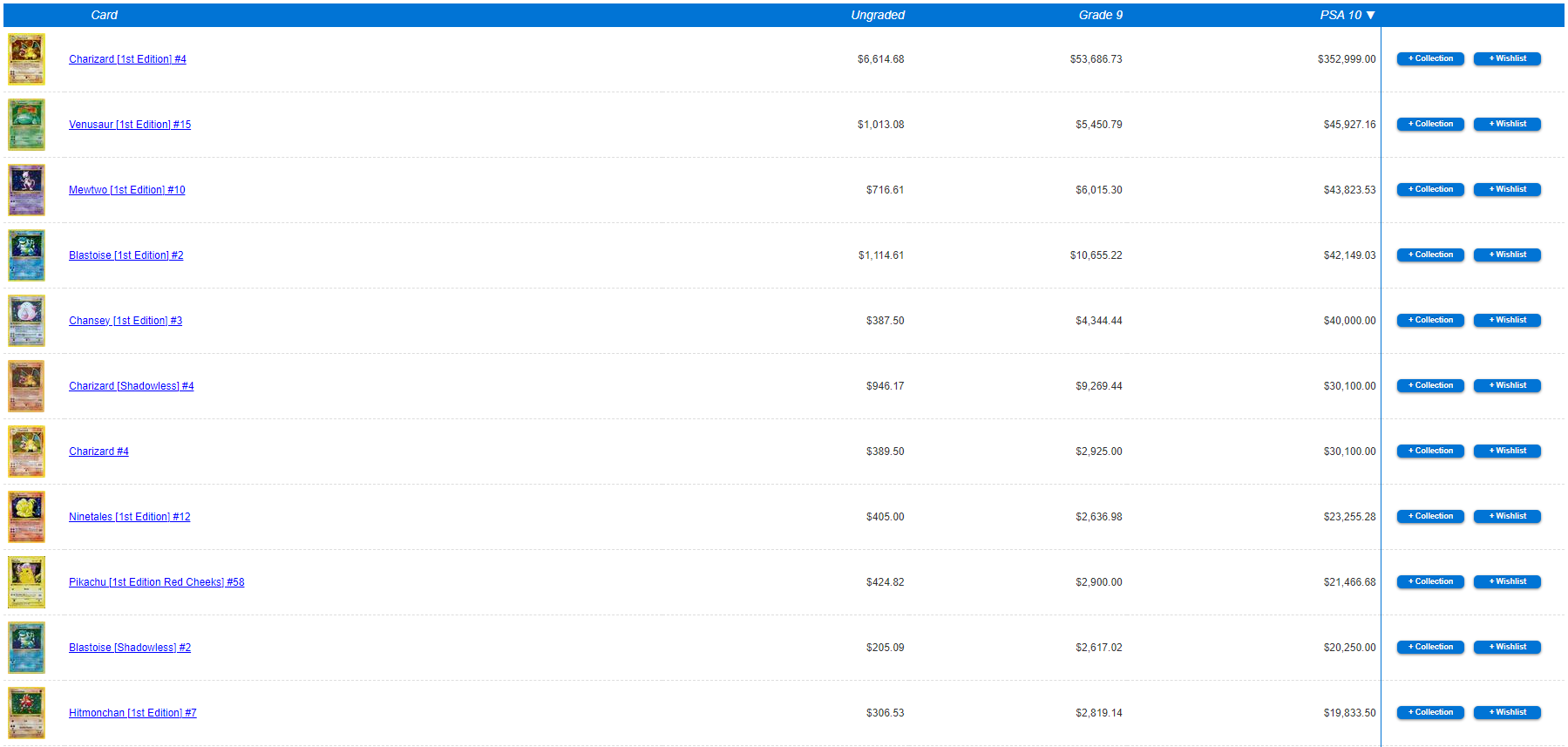
Some cards can fetch several hundred thousand dollars. Source: PriceCharting.
When a card can cost as much as a car, its authenticity and condition have to be assessed.
Related: Logan Paul sells Pokémon card for $16.5M, years after fractional NFT row
That is what grading is for — a process in which an independent company such as PSA, Beckett or CGC checks a card against several criteria. The card is inspected for image centering, the condition of its corners, edges and surface, and for scratches and stains, after which it is assigned a grade and sealed in a plastic case known as a slab.
The grade directly affects the price: two identical cards can be worth completely different amounts, while a raw, ungraded card sells as a riskier asset.
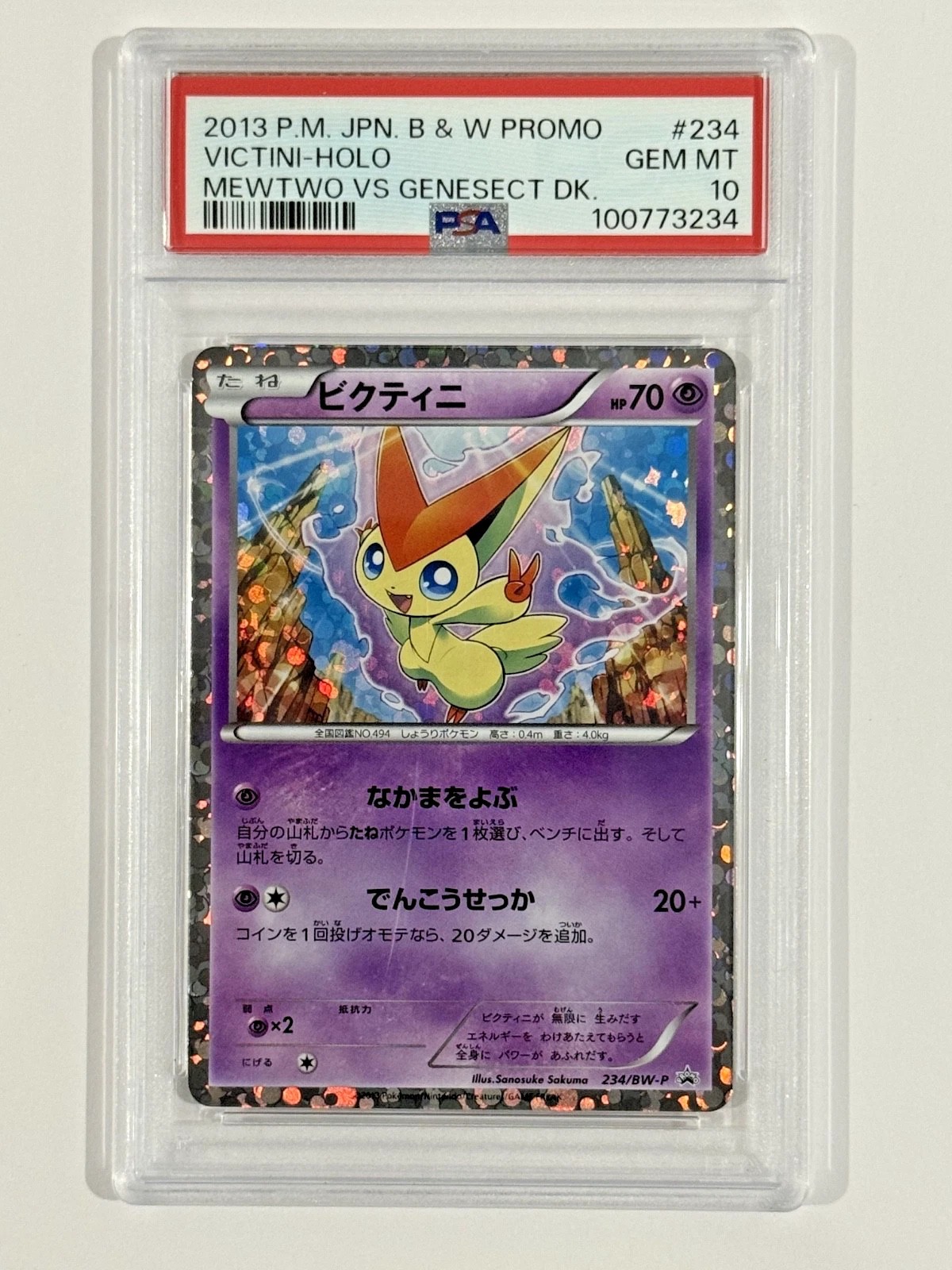
A Pokémon card sealed in a PSA slab. Source: eBay.
Projects such as Collector Crypt and Courtyard are moving these real world assets onto the blockchain. They accept physical cards — usually ones that have already been graded — hold them in vaults and issue NFTs tied to a specific copy.
When a user buys and opens a pack, they receive a token backed by a real card in a real vault. The token can be kept, listed on a marketplace, sold back to the platform or redeemed for the physical card.
Crucially, the value of these NFTs rests on the assumption that the partner vault really does hold that exact card in the stated grade. The user takes on custodial risk — the safety of the asset, the integrity of the authentication and the durability of the platform itself — and with grading companies themselves reporting a rise in counterfeits, that assumption is far from trivial.
Why now?
The growing popularity of onchain gacha, and of TCG-focused blockchain platforms more broadly, is probably down to several factors.
Pokémon cards are the core product for many of these projects, and the franchise is on a roll right now.
According to research firm Circana, Pokémon became the most popular toy brand in the US in 2025, with $2.5 billion in sales, up 87% from a year earlier.
The interest is not coming from children alone. Wealthier members of Generations Y and Z sometimes prefer cards to expensive paintings. Demand for grading is so high that in June, PSA temporarily suspended card submissions across four basic service levels as it tried to work through a backlog of almost 10 million cards.
Tokenization simply plugged into this frenzy by providing a useful service and removing friction.
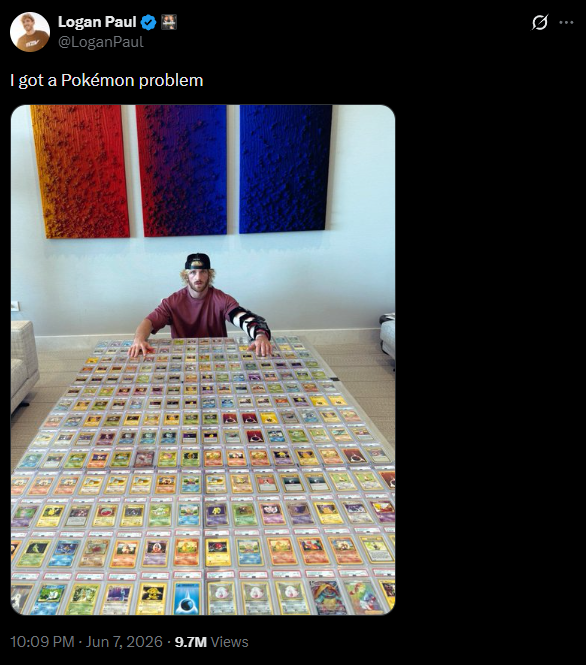
High-profile buyers like Logan Paul have helped push Pokémon cards into the spotlight. Source: Logan Paul.
The real world trading card market suffers from a problem common to all collectibles markets: the absence of instant liquidity. To sell a card offchain, the owner has to find a counterparty, verify its authenticity and grade, and ship the item.
Related: The 5 types of real world assets being tokenized fastest onchain
“Traditional marketplaces are slow and expensive,” Dakota Campbell, head of marketing at Collector Crypt, told Cointelegraph. “With tokenized trading cards, collectors can buy, sell, trade, and verify ownership instantly while the physical asset remains securely vaulted until they want it shipped.”
Collector Crypt has tokenized roughly $40 million worth of cards and comic books, according to Campbell. About $23 million of that inventory belongs to the platform itself, while the rest sits in user wallets or has already been redeemed. To keep up with demand, the company buys around $2 million worth of cards every week.
Gambling on collectibles
As with the NFT boom, it’s hard to deny that price speculation and gambling-style dopamine hits from the random prizes are part of the appeal.
The instant buyback mechanism, available on most platforms, creates an almost perfect “gacha loop”: Buy a pack, and if the card is unappealing or not worth much, sell it back for, say, 85% of its value and go open the next one. Pull something rare, and either list it on a marketplace or keep it. Unlike with physical cards, there’s no searching for a buyer, no shipping, no waiting.
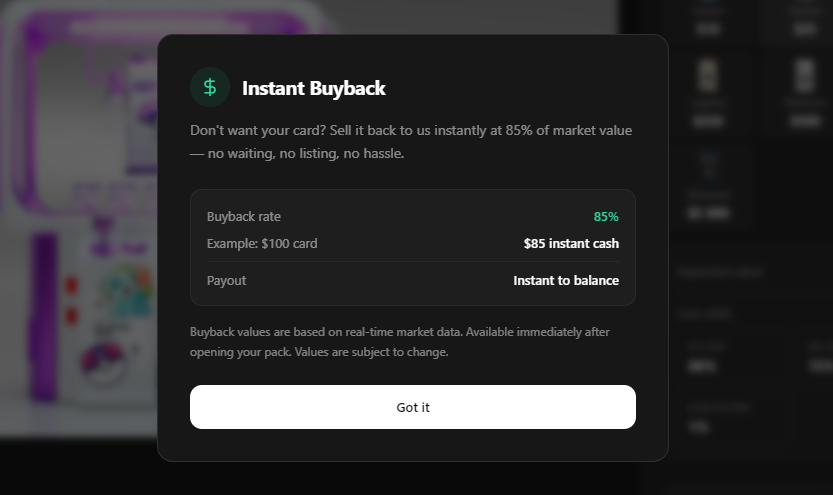
The “instant buyback” option is available on nearly all TCG platforms. Source: Phygitals.
The gagcha mechanism is similar to loot boxes within video games: The user pays for a random outcome, knowing only the odds. Some jurisdictions have already tried to bring loot boxes under gambling regulations. Whether that logic will reach tokenized TCGs probably depends on how big the sector grows.
Either way, this is exactly how the traditional TCG market works. The only difference is speed: Offchain, closing the gacha loop takes weeks. Onchain, it takes a few seconds.
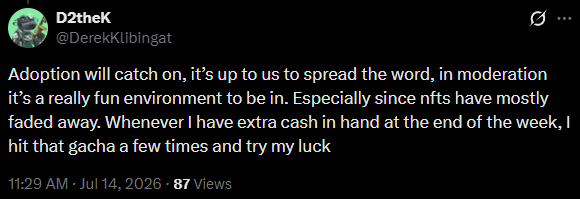
Sometimes users are driven by nothing more than the desire to “try their luck.” Source: X.
“There is always speculation in an emerging market, especially in the crypto sector,” Campbell said, while arguing that the platform benefits most from committed collectors hunting for their next “grail.”
No country for collectors?
Genuine collectors of physical cards still make up a proportion of the market. According to Dune, users burn 5% to 8% of the NFTs issued on Courtyard each week, with each burn representing a real physical claim.
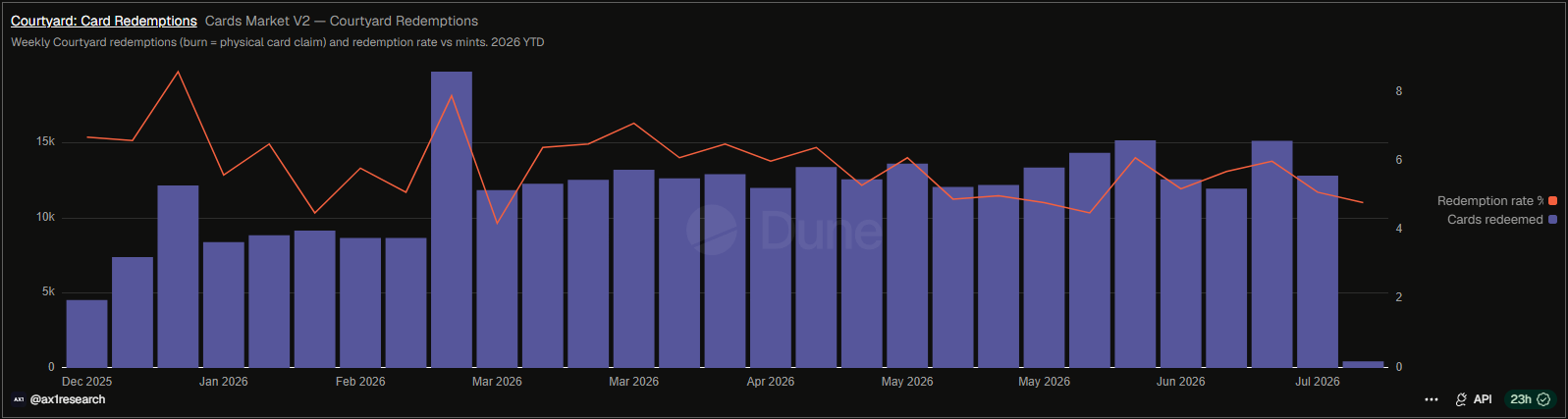
Users burn 5% to 8% of Courtyard’s issued NFTs each week for physical cards. Source: Dune.
Collector Crypt reports that around 30% of its users eventually redeem a card, according to Campbell, and many more hold their cards in their onchain inventory past the 72-hour buyback window rather than flipping them.
“In just the last 30 days, 5,400 assets shipped to 634 unique users at $3.29 million insured value,” he said.
New tracks for an old train
Essentially, blockchain startups are running the classic tokenization play: moving a proven business model onto more efficient rails and removing some of the friction.
Concerns about the speculative nature of this market, or the role of gambling in it, are warranted to the extent that platforms build their marketing around this aspect.
Beyond that, this is simply how gacha works. People sift through the “junk” in pursuit of a rare card. And if there are complaints to be made, they should be addressed to the entire TCG industry, not just its onchain segment.
As for June’s records, they are the result of several factors converging. The traditional card market is booming, tokenization has proved mature enough to plug into it, and the gacha mechanic sits neatly on blockchain rails.
How sustainable that is remains an open question. The gacha loop runs fast in both directions, and record inflows can reverse just as fast.
Features: Will the crypto lobby’s $189M campaign get CLARITY over the line?