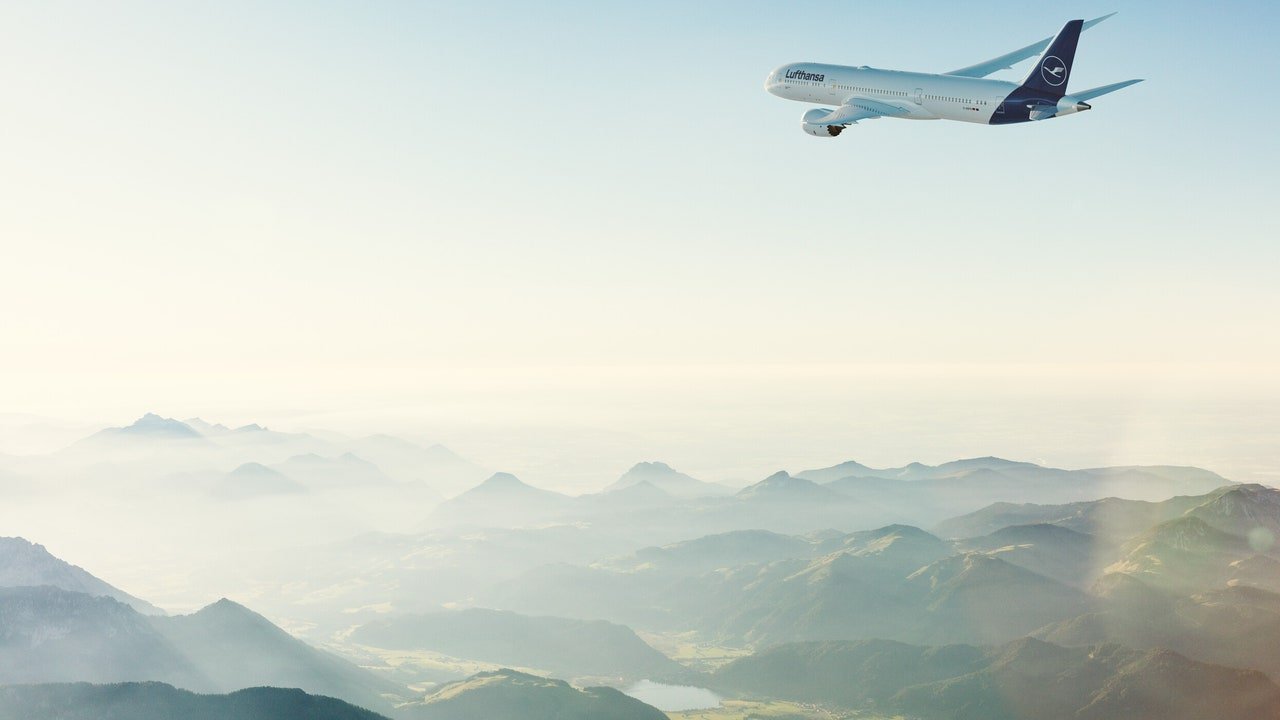
Sweeping investments in alternative-fuel technology; slashing plastic waste; making crew uniforms from recycled marine detritus: These are just a few of the steps airlines have taken in recent years to help minimize their environmental footprint in the face of a worsening climate crisis. But so-called “green airfares”—a dedicated fare class aimed at reducing carbon impacts—are the latest attempt at greening the industry.
In February, Lufthansa Group (which owns Lufthansa, SWISS, and Brussels Airlines, among others) began offering Green Fares, which build carbon reduction and offsetting measures directly into the ticket price. According to the airline, the cost falls roughly between that of Economy Classic and Economy Flex fares (though a search for flights from Berlin to Paris later this month showed a $30 difference between Classic and Green fares, which were priced identically to Flex fares). Specifically, they’re meant to offset 100 percent of the CO2 emissions associated with the flight booked; 20 percent of that offset is devoted to funding the airline group’s sustainable aviation fuel (SAF) use, with the remaining 80 percent contributing to various “climate protection projects,” like supporting biogas development in rural Nepal and forest management efforts in Europe.
First tested last year on flights from select Scandinavian countries, they’re now available throughout Europe and in select North African destinations like Morocco, Tunisia, and Algeria, across economy and business class. The fares, which the airline has billed as the first ones dedicated wholly to sustainable travel, saw 200,000 purchases in their first 100 days on the market.
Scandinavian airline SAS followed suit in April with their own Bio fares. The premium-priced tickets, which are currently available for flights within Europe (with plans to extend to more international flights in 2024), factor in the equivalent use of approximately 50 percent SAF for the route flown—though the airline has up to a year to make the actual SAF purchase. This follows a 2019 measure that allows customers on all flights the chance to pay an optional fee to support SAF use, starting from $10 per 20-minute flight block.
Increasingly, major airlines, including United Airlines, JetBlue, British Airways, and Air France, are adopting the use of these supplementary fees, which eco-minded passengers can opt to tack on to standard ticket prices in support of SAF usage and development. SAF, which is derived from various waste- and plant-based products like fats, greases, oils, and corn grain, can curb carbon emissions on flights by as much as 80 percent and is heralded as the centerpiece of the aviation industry’s broader decarbonization goals to reach net-zero emissions by 2050.
The move points to a broader trend away from more typical—and controversial—carbon offset programs that many airlines have offered consumers on top of ticketing, allowing passengers to compensate for their flight emissions by investing in carbon-reduction initiatives elsewhere (e.g., via tree planting); Delta was the first airline to offer them in the U.S. back in 2007. But the offset offerings have been criticized by environmental groups for their lack of regulation around substantiated results and accountability, and for permitting airlines and travelers to continue flying with a business-as-usual mindset.
Real sustainability effort or greenwashing?
Some sustainability experts, like Sola Zheng, an aviation researcher at the nonprofit International Council on Clean Transportation, say that in comparison, the newer SAF programs make a more positive impact by encouraging the adoption of cleaner jet fuel, which creates less carbon at the outset and are “definitely getting closer to real sustainability efforts.” But she notes that in order for the SAF products to be truly eco-friendly, the fuel must be responsibly developed and its use must translate to substantial and verifiable emissions reductions.