Though San Marino is part of neither the European Union nor the Eurozone, it uses the euro as its currency. Coins with San Marino’s designs on the national side are highly sought after by collectors; you can find them exchanged locally, especially at souvenir shops. Another thing you can collect when you visit the country: passport stamps. Since landlocked San Marino doesn’t have an airport or a train station (the closest ones are in Rimini), the only ways into the country are land routes from Italy via car or bus. And because Italy has open borders with San Marino, Sammarinese passport stamps have no official use. However, they’re a fun novelty and available for purchase at local tourist offices.
Once you make it to San Marino, much of your sightseeing can be done in one long day. The country’s tourism revolves around the City of San Marino, where you can find most of the restaurants, cafés, hotels, and shops catering to tourists. For an expansive view of the country and the Adriatic Sea, take the cable car that climbs Monte Titano and connects the Sammarinese commune of Borgo Maggiore to the city’s historical center.
There, check out the Palazzo Pubblico in the Piazza della Liberta—literally the ‘public palace’ in the ‘place of liberty,’ fittingly named sites in this Most Serene Republic. The views from the piazza are truly awe-inspiring: green hills roll into the horizon and as flags of San Marino fly in the breeze, their two bands of white and light blue representing peace and liberty. The Palazzo too is beautiful, but what’s especially cool is watching the ceremonial changing of the guard, the Guardie di Rocca, who wear distinctive green and red uniforms as they patrol the nation’s borders.
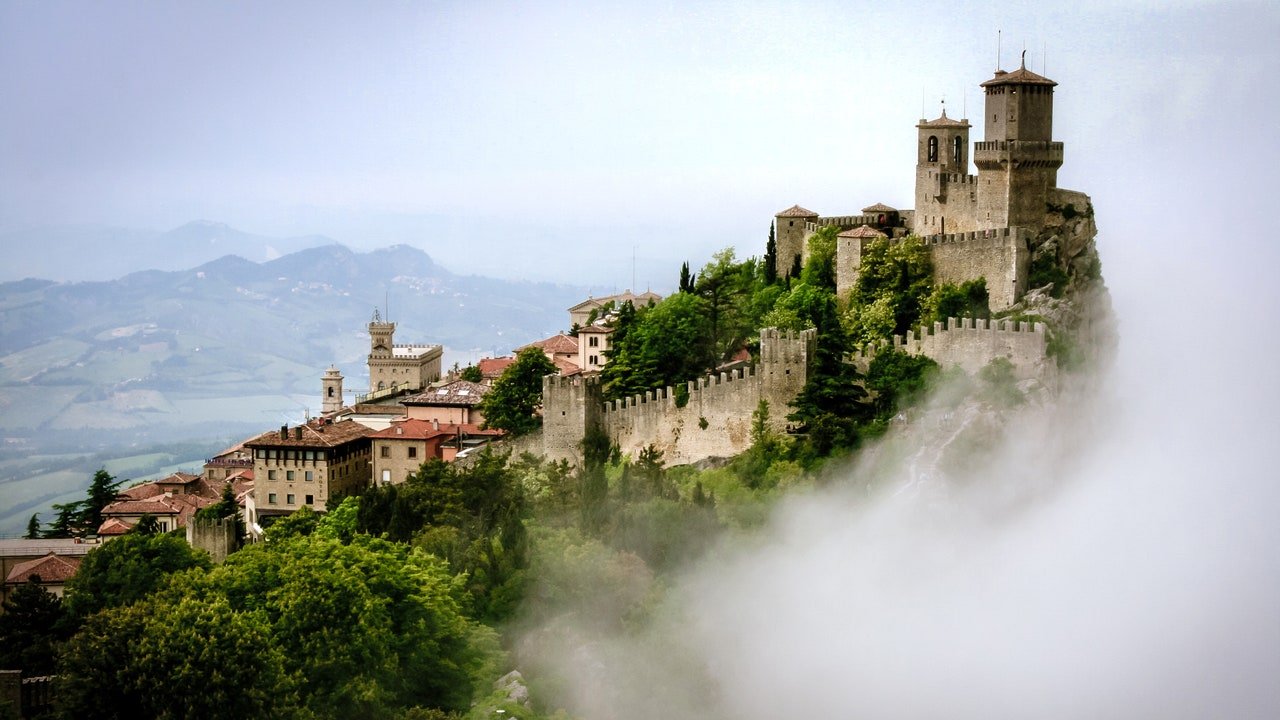
From the city center, you can easily visit all three of San Marino’s towers, which are connected by a pedestrian path with panoramic views of the country. The interiors of only Guaida and Cesta are open to the public, but you can still take photographs of Montale’s exterior. As for museums, San Marino is in no short supply, befitting a country that has lived for nearly two thousand years: check out the Galleria Nazionale San Marino (exhibiting contemporary art from the 1950s onward), the Museum of Ancient Arms (weapons and armor through the ages), and the Stamp and Coin Museum (self-explanatory).
Most tourists just hop in and out when seeing San Marino, but if you stay for a night or two, you’re in for a real treat. When the sun has set and the night is quiet, when most of the visitors have returned to Rimini, Bologna, or even Florence, stroll through those stone streets and take in that delightful stillness in this old city, this ancient and proud nation. It’s as close as you might get to time traveling in the oldest country in the world.