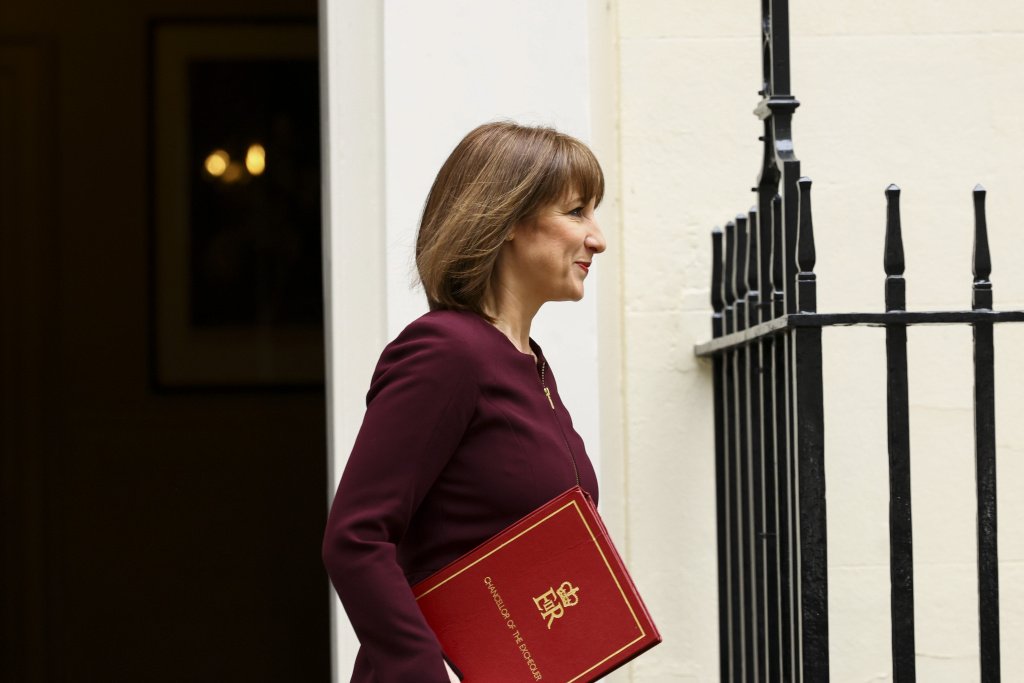
This government likes to give us plenty of early warning of Budget days; we got a clear 12 weeks’ notice of chancellor Rachel Reeves’ second Budget to be held on 26 November. And gosh, have those weeks dragged.
By setting such a late Budget date, we have been existing in a twilight world full of rumours for the last two months, where the government seems determined not to comment on ruling anything in or, unfortunately, anything out.
Most of the rumours so far have centred on pensions tax relief and cutting the maximum pensions tax-free cash lump sum. In practice, such a move is unlikely because of the outcry it would cause, including among the public sector who (quite rightly) treasure their superior pension provision.
Plus, it would be unprecedented if it wasn’t accompanied by robust protection, meaning pension savers’ current entitlements would unlikely be cut.
However, there are other rumours doing the rounds. Up to very recently, the government seemed wedded to its manifesto promise not to increase income tax, national insurance contributions, VAT or corporation tax. That promise doesn’t seem as strong now with Reeves’ statement that ‘each must do their bit’ threatening future income-tax rises.
With receipts predicted to reach £9.1bn for the Treasury in 2025-26, IHT may still make an appearance in the Budget
But even if Reeves pulls on the income-tax lever to fill in part of the UK’s economic black hole, she may still look for increased receipts from other taxes.
After last year’s proposals to cut allowances for farmers and bring pensions into its net, it initially seems unlikely there’s more to squeeze out of inheritance tax (IHT). But with receipts predicted to reach a record-breaking £9.1bn for the Treasury in 2025-26, IHT may still make an appearance in the Budget papers.
The Treasury may view it as a ‘benign’ change; after all, it only affects the ‘wealthy’ and is already hated in the UK. Would tightening up some elements even hit the front pages?
There are a couple of rumours surrounding IHT. The first is to change the tapering period for potentially exempt transfers. Currently, the amount of tax due on gifts may be reduced on a sliding scale if made within seven years of death.
Rachel Vahey: The clock is ticking on IHT reform
That scaling could be made more severe, meaning it’s possible gifts will become liable for a higher rate of IHT if clients pass away between three and seven years.
Alternatively, the seven-year period could be extended, say to 10 years, or removed entirely. The seven-year rule has its critics, with some arguing it’s a bit too generous, especially to the wealthy who ‘only’ have to survive seven years to wipe out a potential IHT bill.
The second rumour centres on a possible introduction of a lifetime cap on the amount of money that could be gifted from someone’s estate.
Gifting is currently at the forefront of advisers’ and their clients’ minds. The changes to include pensions in IHT calculations from April 2027 means some clients are considering reducing the amount held in their pensions, by spending the excess or gifting it to their loved ones, either directly or indirectly through tax wrappers such as pensions and Isas, or through trusts.
If a lifetime cap was introduced, it seems likely that, instead of giving Brits a four-month warning, this would be an immediate change
If changes to the seven-year period were announced, it’s likely that the changes would only apply to gifts from the start of the next tax year. If so, that could create a rush to gift over the next four months under the current rules.
But if the more seismic intervention of a lifetime cap was introduced, it seems more likely that, instead of giving Brits a four-month warning, this would be an immediate change. Otherwise, there would be little to stop people from gifting excessive amounts of money over the winter to wriggle out of IHT.
In that situation, advisers will have to not only work with clients currently considering or carrying out gifting strategies, but also with those who may be freshly drawn into the IHT net, depending on exactly where the lifetime cap is set.
All these clients will need help to ensure the next generation can benefit in the most tax-efficient way.
Rachel Vahey is head of public policy at AJ Bell