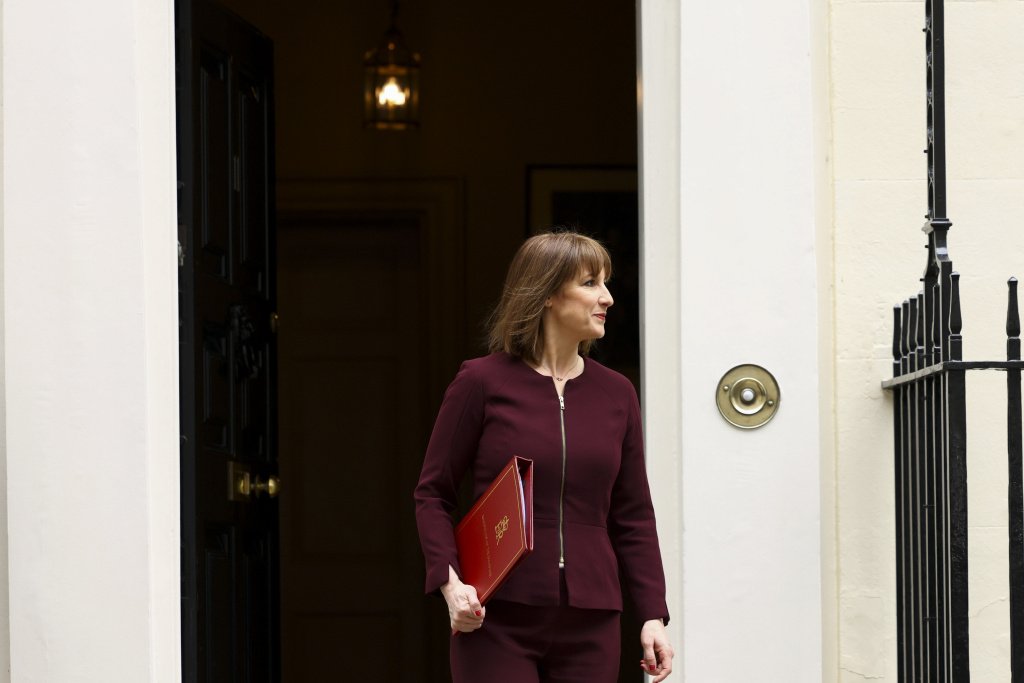
Chancellor Rachel Reeves has reportedly abandoned plans to break Labour’s manifesto pledge by raising income tax in this month’s Autumn Budget, sending officials back to redraw proposals as the government confronts a significant hole in the public finances.
The chancellor had been widely expected to announce a 2p rise in income tax while cutting national insurance by the same amount, a move that would have breached Labour’s commitment not to raise taxes on “working people”.
Senior ministers had recently hinted at a softening of that stance, citing a fiscal gap estimated at around £30bn.
However, according to the Financial Times, the first list of “major measures” submitted to the Office for Budget Responsibility this week did not include an income tax rise.
The apparent retreat follows warnings from within Labour that breaking a central manifesto promise would risk alienating both voters and backbench MPs.
Deputy leader Lucy Powell previously said such a move would damage “trust in politics”.
The shift leaves Reeves facing narrower options to raise substantial revenue while sticking to her fiscal rules on debt and borrowing, and without resorting to the “deep cuts” to public investment she ruled out earlier in the week.
Sarah Coles, head of personal finance at Hargreaves Lansdown, said the government had “apparently U-turned on its income tax U-turn – effectively coming full circle”.
She added: “It means the government can avoid the associated drama of going against a manifesto promise, but it will need other options to close the gap in its finances.”
Only 2% of advisers confident in government’s economic agenda
One option under consideration is extending the freeze on income tax thresholds. Coles warned this has already acted as a powerful “stealth tax”, dragging millions into higher tax bands.
“Fiscal drag has hauled over six million more people into paying income tax, and 3.36 million more into paying higher or additional rate tax,” she said.
“We’ve had to hand over an extra £89bn in income tax this year – compared to 2021/22 – as a result.”
Hargreaves Lansdown calculations suggest that freezing thresholds for two further years could leave someone earning £60,000 paying an additional £1,529 by 2029/30.
Cuts to thresholds are also reportedly being explored.
While reducing the personal allowance of £12,570 is viewed as politically difficult, lowering the higher-rate threshold of £50,270, or the additional-rate threshold of £125,140, remains on the table.
Coles cautioned that such moves “would force more people over each of these thresholds” and expose more income to higher rates.
For example, she said: “If the higher rate tax threshold fell to £46,000, it would cost someone on £50,000 an extra £800 a year.”
However, she warned that threshold changes alone “would bring more tax pain but wouldn’t be enough to close the gap for the government”, meaning they would likely feature alongside a wider package.
Further measures could include higher taxes on more expensive properties.
Options floated by think-tanks include national surcharges on the highest council tax bands, or the creation of new bands for high-value homes, though the latter would require a costly revaluation exercise.