At passport control in Istanbul last month, I watched a border officer look at my passport, then at my face, then back at my passport. His eyebrows knit together. He called over a colleague. Then another. Within seconds, I had a small panel of Turkish officials studying the seven-year-old photo in my passport and comparing it to the person standing in front of them: me, but 88 pounds lighter than I’d been when the picture was taken.
My weight loss had been gradual, over three and a half years, and achieved without GLP-1 medication. But it was still enough to make me look like a different version of myself in that little blue booklet. The exchange lasted only a minute or two, but it left me wondering: If a slow transformation could raise questions, what happens when someone’s appearance changes faster?
As GLP-1 medications like Ozempic, Wegovy, Zepbound, and Mounjaro become commonplace, more travelers are confronting a wrinkle of major weight loss: their government ID may no longer resemble them. In online forums, travelers trade stories about failed e-gates, TSA double takes, and the strange validation of realizing an airport kiosk no longer recognizes their old face.
After major weight loss, should you renew your passport?
The U.S. State Department does, in fact, address this: Its passport photo guidance says travelers may need to apply for a new passport if their appearance has substantially changed, including after “significant weight loss or gain.” If you can still be identified from your current photo, you need not apply. That leaves plenty of room for interpretation: How much weight loss is enough to matter? And can you simply update the photo, or do you have to renew the entire passport?
“There’s no specific number on the scale,” says Shahad Atiya, an attorney at Atiya Law in Royal Oak, Michigan, whose practice includes helping clients obtain identity documents. “Appearance changes affect people differently depending on their build, age, and facial structure.” Instead of fixating on pounds lost, she says, ask whether a border officer looking at the photo would reasonably recognize you today. “If there’s any doubt,” she says, “that’s your answer.”
That distinction matters because travelers can’t simply swap out a passport photo mid-cycle. Dyeing your hair, growing a beard, or looking a little older is unlikely to warrant a new passport. But if your appearance has changed enough that the photo no longer reliably identifies you, you generally need to apply for a new passport with a new photo, even if the current one is still years from expiration.
What happens when facial recognition can’t ,atch your passport photo?
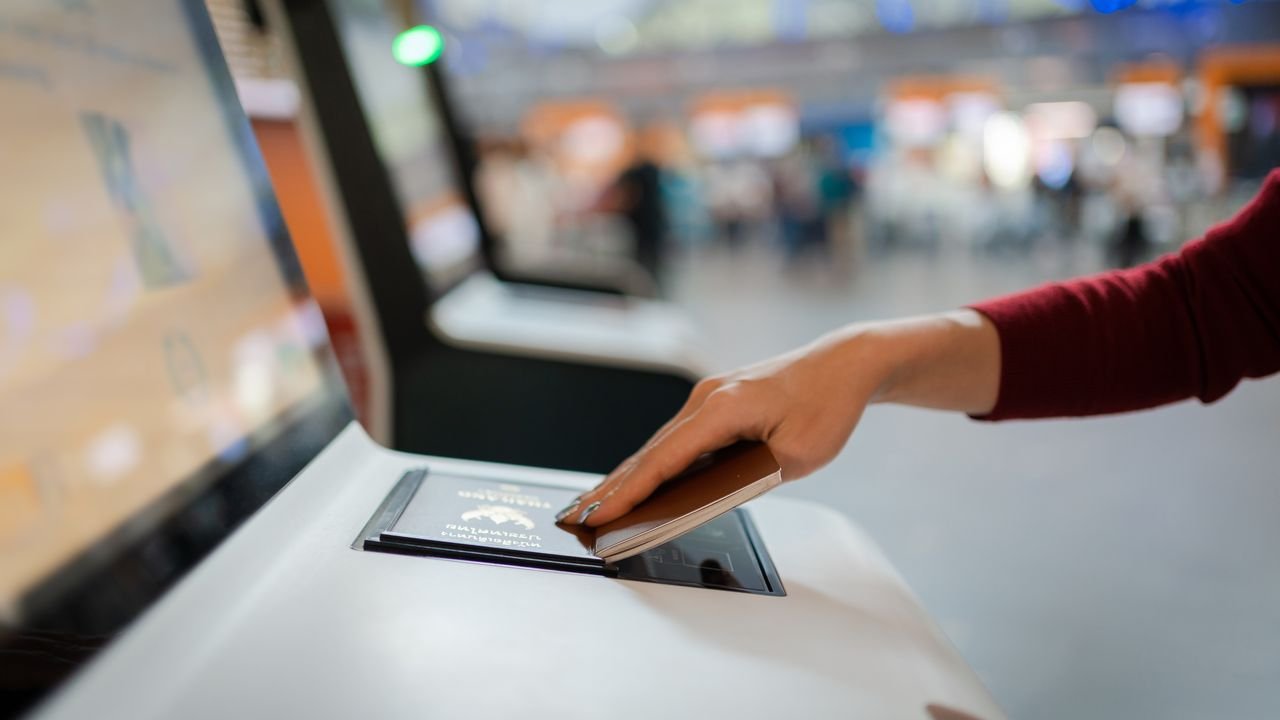
The issue is not limited to human officers squinting suspiciously at your face. U.S. Customs and Border Protection says its Traveler Verification Service compares a traveler’s live photo to the image in their passport or travel documents; if the system can’t confirm someone’s identity, officers manually check documents. U.S. citizens can also opt out and request manual verification, according to a CBP spokesperson.
But facial recognition is more nuanced than a camera simply rejecting newly visible cheekbones. John Splain, president and principal consultant of Biometrics Guru in Springfield, Virginia, says these systems don’t rely on one or two features in isolation; they mathematically convert an image into a multidimensional “face vector” that can be compared against another image.
In other words, losing weight does not magically change the distance between your eyes. But pronounced appearance changes can still matter. Splain says major weight loss or gain can affect biometric matching accuracy, especially if the match falls into a gray area: not clearly wrong, but not strong enough for the system to approve automatically. In those cases, travelers may be sent to a human officer.