We may earn a commission from links on this page.
When it comes to DIY projects, my enthusiasm and willingness to dive in have always compensated for a certain lack of what some would call “skill”—I’m a guy who has to cut twice no matter how many times I measure. Finding studs in the wall is a perfect example: This should be the easiest part of any project, but fancy digital stud finders have always let me down—in fact, the fancier they are, the less useful I find them to be.
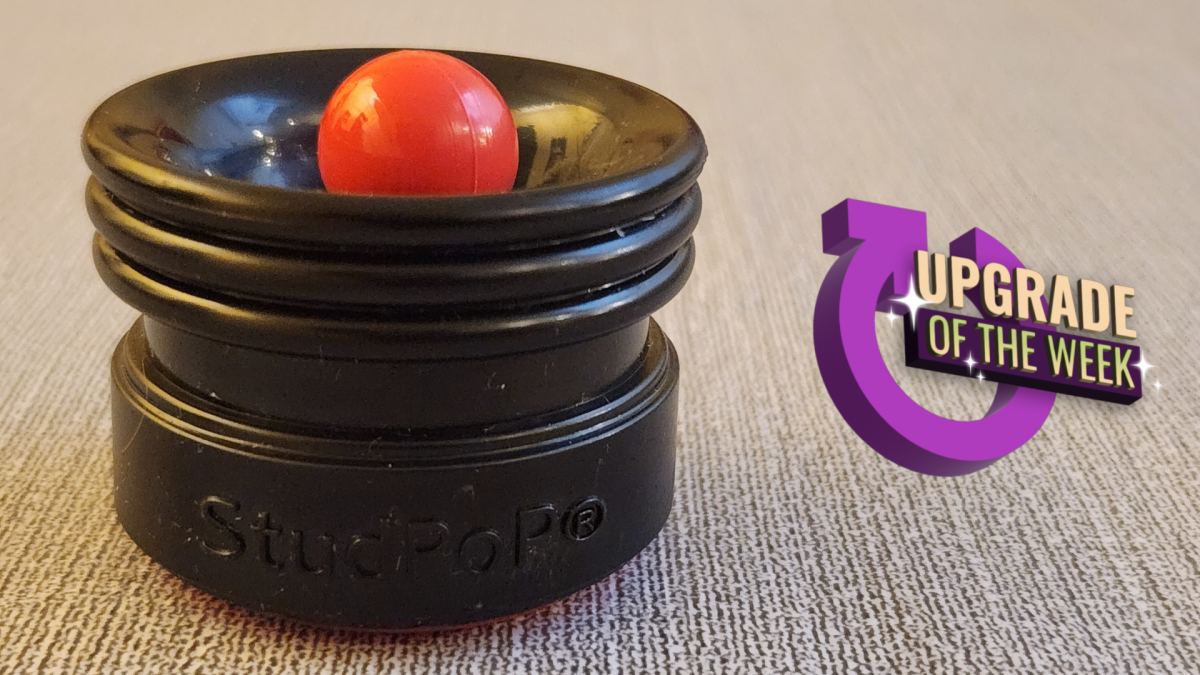
That’s why the StudPop is so great. It’s an incredibly simple stud finder—and incredibly cheap. It’s made locating the studs in my walls such a breeze that I’ve tossed those digital stud finders into the trash.
StudPop uses powerful magnets to locate studs
Using expensive, fancy stud finders was always a confusing experience—they always seemed to light up right after I’d swept past a screw, or mysteriously indicated there were no studs in my house at all. The StudPop ditches all the fancy stuff and uses a simple system: A powerful magnet attached to a plastic indicator. I’ve had magnetic stud finders before, but their magnets were usually pretty weak, and they were as frustrating as the fancy electronic finders because they would give a lot of false positives.
In contrast, the StudPop is so powerful, it will stick to the wall when it hits some metal. This makes it easy to identify the studs. You move the StudPop along the wall in a lazy S-shaped pattern until the indicator pops up (you’ll feel it when it hits something—the magnet is pretty strong). Once you have one mark, you move the StudPop down vertically in the same S-shaped motion until you hit a second spot. This is how you know you’ve got a stud instead of a safety plate or a wire—three hits along the same vertical means you’ve got your stud.
What do you think so far?
Marking off a stud on the wall
Credit: Jeff Somers
The whole process takes about a minute, with (in my experience) zero false positives. The fact that it sticks in place when it hits a nail or screw is awesome, leaving your hands free, and the simple plastic indicator is easy to interpret—it’s either standing up or it’s not. Tools just don’t get any easier than this, and there are no batteries to replace or charge up, no user manual to read, and it’s tiny, so it doesn’t take up precious storage space. I haven’t drilled into an empty space since picking this up.