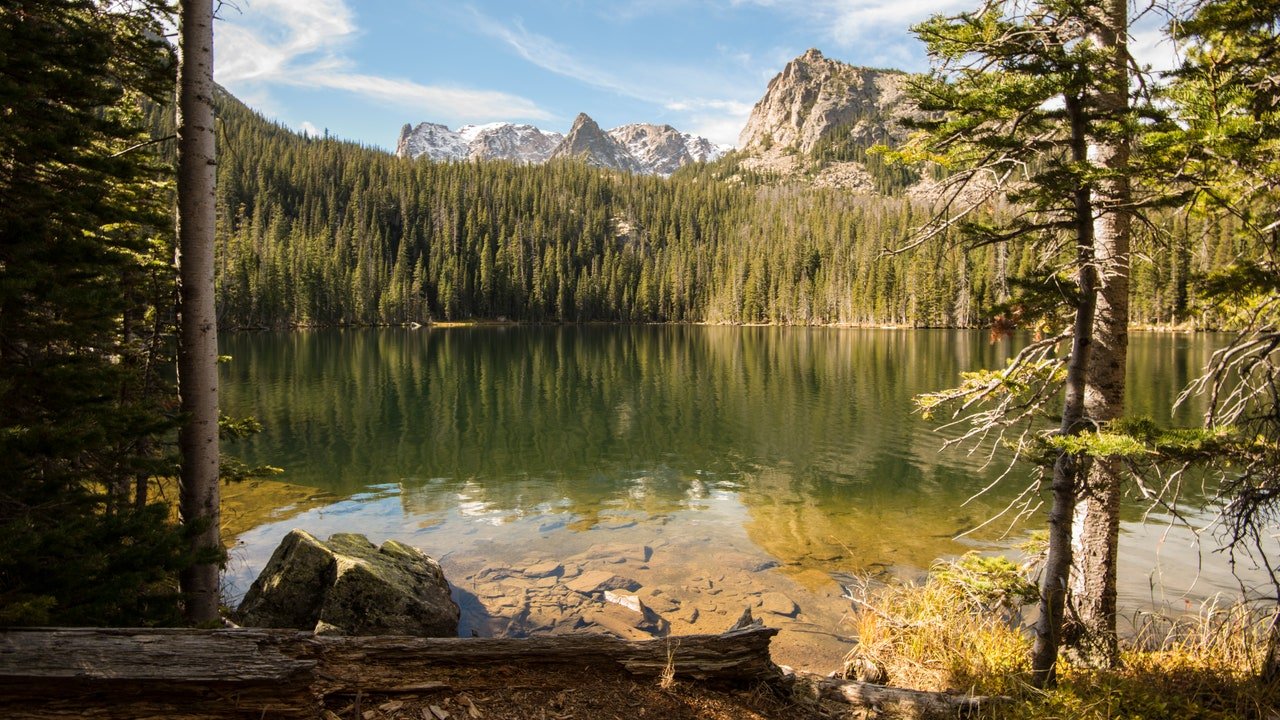
Rocky Mountain National Park camping is beloved for a reason. Shimmering sapphire lakes, winding drives through delicate alpine flora, and jagged 14,000-foot mountains that seem to clutch the stars are all hallmarks of any visit to this northern Colorado’s destination. And with over 350 miles of hiking trails, and an ear-splitting fall elk rut, there’s plenty to do and see in between sleeping under the constellations.
As stunning as it is, Rocky Mountain, which is on the homelands of the Ute, Arapaho, Eastern Shoshone, Apache, Comanche, and Cheyenne people, can be a tricky area to plan a camping trip to, given its remote location and immense popularity. We’ve got the skinny on when, where, and how to book a coveted campsite at this park. Whether you’re looking to pitch a tent right beside your vehicle or fully immerse yourself on a wilderness backpacking trip, read on for our top-down guide to Rocky Mountain National Park camping.
What to know before you go
Rocky Mountain is a high-altitude marvel, primarily accessed by the sky-high Trail Ridge Road that winds to a lofty 12,183 feet above sea level. As such, it’s home to a wide variety of temperatures and ecosystems; visitors might experience warm sunshine down low and late-season snow near craggy peaks, even in July. Always check road closures and conditions before heading out.
Most travelers will arrive to Rocky Mountain via the Denver International Airport (be sure to wave hello to Blucifer), rent a car, and cruise north for roughly 90 minutes to stay in Estes Park before their big camping extravaganza. If the road is plowed and you’d rather skip the crowds, you could motor over the Continental Divide to stay in quieter Grand Lake, on the park’s western edge.
All campers will have to make considerations for the black bears that reside within the park. Bear spray is not needed, but food must be stored inside the provided storage lockers at car campsites or in an approved bear canister, if you’re backpacking. Stage one fire restrictions are always in place within the park (only in developed campfire rings), and may be raised in late summer and fall depending on current risk factors.
Like many busy parks, Rocky Mountain has begun implementing a timed-entry reservation system for day use visitors during its busiest months (late May through late October). The general Park Access pass grants visitors the opportunity to travel to all areas of the park between 9:00 a.m. and 2:00 p.m., except within the Bear Lake Corridor. Park Access+ allows access to all areas of the park (including Bear Lake) from 5:00 a.m. to 6:00 p.m. Car campers without timed entry reservations may enter the park beginning at 1:00 p.m. on first the day of their trip, and backpackers may enter at any time on their first day.
Planning a last-minute getaway? The park sets aside 40 percent of timed entry reservations for a first-come, first-served release at 5:00 p.m. the night before your desired arrival date.
When to go camping in Rocky Mountain National Park
Due to its high-altitude perch among the mountains (the park’s lowest point is 7,630 feet), summer and fall are your best bets for comfortable camping and easy access to Rocky Mountain’s incredible trail system. It should be no surprise, then, that these are also the busiest months to visit.