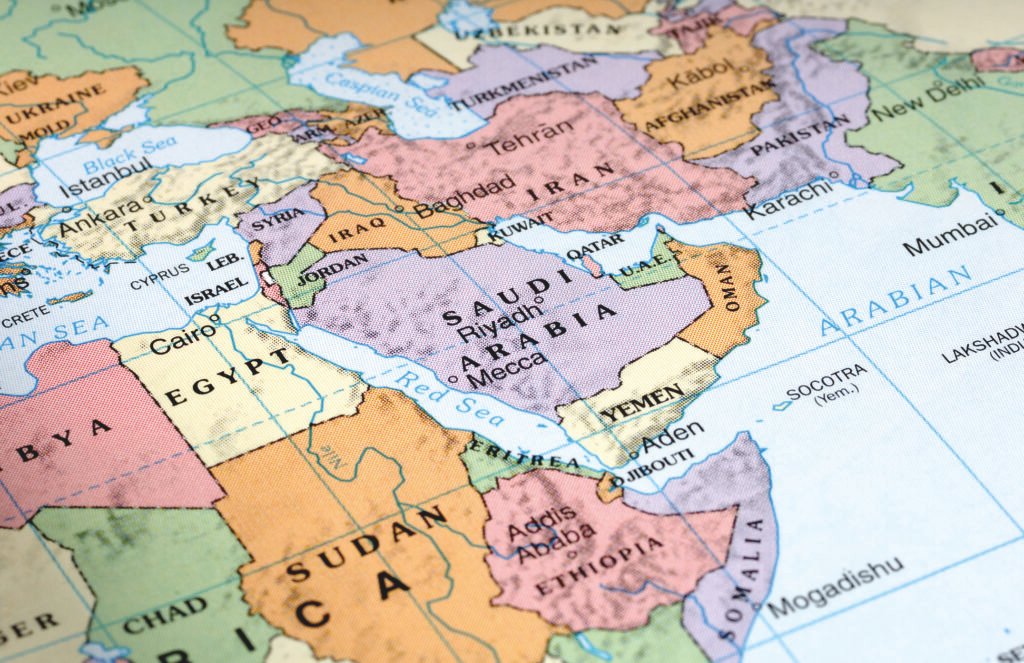
As the US private credit market battles its own challenges amid investor jitters over software exposure, more stakeholders are turning their attention to emerging markets. Despite the war currently raging in the Middle East, managers still see opportunities in the region.
“It would be too naïve to say what’s happening in the region is not impacting us,” said Alper Kilic, head of alternative credit at Ninety One. “Of course it’s impacting us, like everyone else. But in terms of the focus for the mid-term, I do expect the Middle East to remain a major growth region.”
Read more: Barings opens Abu Dhabi office
One of the asset manager’s strategies focuses on lending to infrastructure, such as energy, telecoms, transportation and healthcare. And for Kilic, Saudi Arabia and the United Arab Emirates are two markets where the economies have been driven by infrastructure.
Despite concerns about the current geopolitical situation in the region, Kilic said that the team has not taken its “foot off the pedal” and is still going full steam ahead with its plans to expand in the Middle East, following the opening of offices in Abu Dhabi and Riyadh last year.
He also says they are starting to get more calls from investors who want to diversify their private credit exposure away from the US. Some of the features that make emerging markets credit attractive, despite the heightened geopolitical risks, are that they have much lower leverage – about 3x to 4x on average – as well as strict covenants on most deals. In contrast to more developed markets, payment-in-kind loans are rarely used.
Ninety One is currently raising its emerging markets infrastructure debt fund, which is expected to have a first close in the summer with half its total $1bn (£0.74bn) target raised.
Conversations ongoing
It is a similar story at Janus Henderson, which is still eyeing opportunities in the Middle East.
Erdem Kilic, who is a principal on the Emerging Market Private Investments Team at the global asset manager, said that initially there was a shock in the region but processes that had already started and pre-agreed commitments to funds have not stopped or pulled back.
“Private credit performance in the region has not been bad,” he added. “Limited partners are making money and are satisfied. The returns are in the mid to high teens, so the interest continues.
Read more: Bain Capital opens Abu Dhabi office following strategic partnership
“Are there new investors knocking on the door? No, not right now. Nobody says ‘let’s rush in and invest right now’ when things like this are happening. But the conversations we were already having are continuing.”
He also noted that deployment is continuing and there has not been a major impact on borrowers. But as oil prices continue to rise due to the war, he says at a certain point, everyone will be affected – even in the sectors Janus Henderson focuses on, which are healthcare, education, business services and consumer goods.
Meanwhile, Illya Zyskind, senior portfolio manager on the BlueBay fixed income team at RBC Global Asset Management said that the team was actively looking at the Middle East but currently does not have any investments there. This is because the spreads were low and prices were high.
“Within oil and gas and oilfield services, some of the infrastructure participants are obviously in the eye of the storm,” he explained. “That being said, it’s a region that has quite substantial buffers – with the ability of governments to support multiple industries. It has deep pockets and headroom to withstand certain stresses.”
Read more: Muzinich opens Abu Dhabi office amid Middle East conflict