If you are hunting for strategies to take your forex trading to new heights and unlock the full potential of market trends, consider adding pullback trading to your arsenal. Pullback trading strategies are powerful tools for capturing lucrative opportunities in the turbulent forex markets.
This comprehensive guide will explore the ins and outs of pullback trading, from spotting prime entry points to managing risk effectively. Learn how to ride the waves of market trends with confidence and precision.
What is a Pullback in Forex Trading?
A pullback in forex trading is a temporary reversal in the prevailing trend of a currency pair where the price moves against the direction of the trend before resuming its original trajectory.
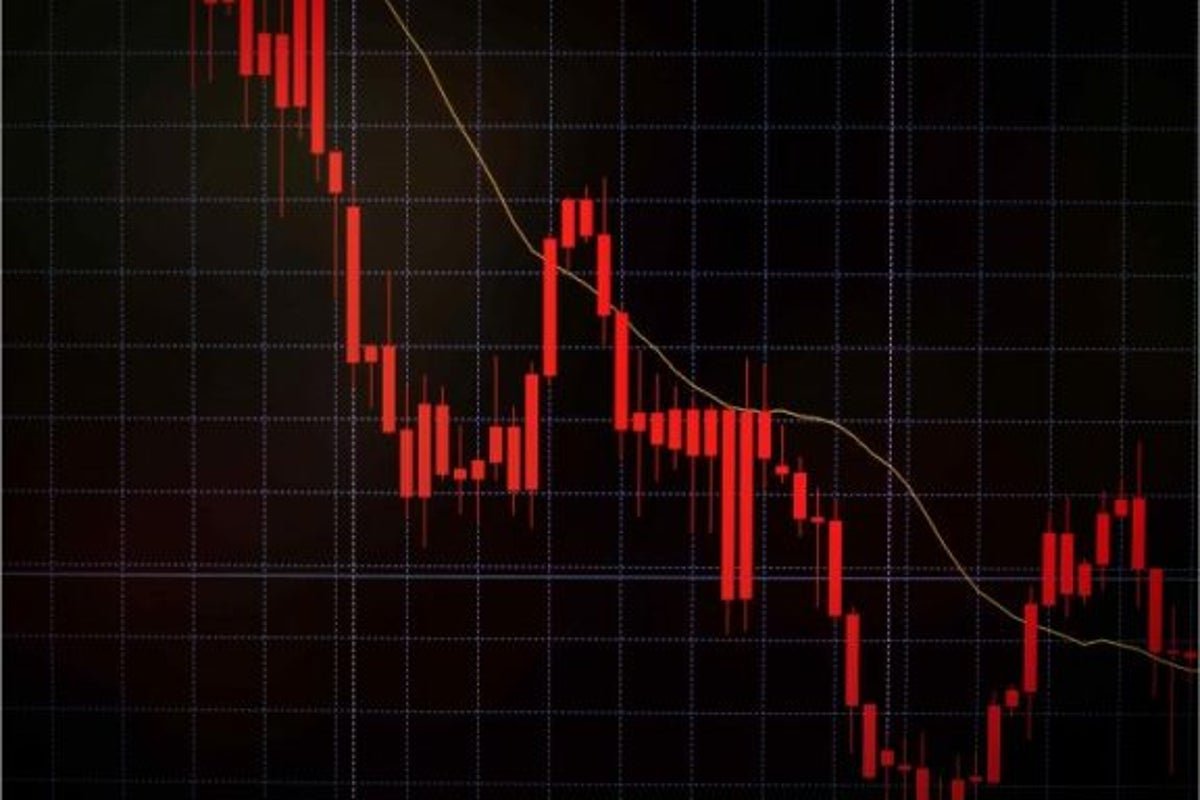
A pullback appears in an uptrend as a series of lower highs and lower lows as the currency pair’s price temporarily moves against the prevailing trend. Conversely, in a downtrend, a pullback features a sequence of higher highs and higher lows as the price retraces upward.
Pullbacks are an intrinsic feature of financial markets, often triggered by short-term profit-taking, reaction to economic news or market uncertainty, providing an opportunity for traders to enter or exit positions at more favorable prices.
Importance of Recognizing Pullbacks in Forex Trading
Recognizing pullbacks is crucial for understanding and anticipating price movements, as it offers traders the chance to enter the market at a more favorable price, aligning with the prevailing trend before it resumes its original direction. With pullbacks, you can fine-tune your entry points, increasing the potential for higher returns and enhancing risk management by setting adequate stop-loss levels.
Understanding pullbacks also helps you differentiate between temporary retracements and full-fledged trend reversals. This crucial distinction enables you to adapt your strategies by maintaining current positions or adjusting your approach to take advantage of the changing market conditions.
Example of a Market Pullback
Assume the USD/EUR has been in a strong uptrend for several weeks, with the price consistently making higher highs and higher lows, reflecting increased demand for the U.S. dollar. The currency pair’s price has climbed from 1.1 to 1.15 during this bull run. Many traders bet on long positions, expecting the trend to continue.
But at some point, the price peaks at 1.15 and starts to retrace, moving downward against the uptrend. This retracement could be the result of profit-taking by traders who have already made gains or some unexpected unsavory economic news that temporarily weakens the U.S. dollar.
The price declines to 1.135, creating a series of lower highs and lower lows over several hours or days. This decline is a pullback within the broader uptrend.
As the pullback reaches the 1.135 level, the price finds support, and buyers start to dominate sellers, pushing the price back toward the original uptrend. The price resumes its ascent, making higher highs and higher lows, confirming that the pullback was a temporary retracement and not a trend reversal.
Traders who recognized the pullback and entered long positions during the retracement could capitalize on the favorable entry point and profit from the resumption of the uptrend.
Reversal vs. Pullback
Market reversals and pullbacks are two distinct types of price movements in financial markets. Pullbacks are short-lived, counter-trend movements within an overarching trend, occurring over a shorter timeframe. Traders often use tools like trendlines and moving averages to identify pullback entry points and anticipate the resumption of the trend. In pullback trading, traders aim to capitalize on the trend resumption by entering the market in the direction of the prevailing trend during the brief retracement.
In contrast, market reversals signify a more significant and long-lasting change in the trend’s direction. Reversals are identified using chart patterns, reversal candlestick patterns and technical indicators. In reversal trading, traders seek to identify the end of the current trend and the start of a new trend, entering positions in the recent trend’s direction.
Best Practices and Strategies for Pullback Trading
Best practices and strategies for pullback trading involve technical analysis, risk management and emotional control. Here are some essential steps to follow:
- Identify key levels of support and resistance: Analyze historical price data to find significant levels where the price has previously reversed or consolidated. Use tools like trendlines, moving averages and Fibonacci retracement levels to identify potential support and resistance levels.
- Use stop-loss and take-profit orders: Set a stop-loss order below the swing low in an uptrend or above the swing high in a downtrend to protect your capital. Determine a suitable take-profit level based on the risk-reward ratio and previous price action.
- Patiently wait for confirmation of trend resumption: Look for candlestick patterns, trendline breaks or indicator signals to confirm the end of the pullback and resumption of the trend. Avoid entering trades prematurely, as this can lead to losses if the pullback continues or turns into a reversal.
- Maintain discipline and avoid emotional trading decisions: Develop a trading plan with clear rules for entry, exit and risk management. Stick to your plan and avoid impulsive choices.
Common Mistakes to Avoid When Trading Pullbacks
When trading pullbacks, there are common avoidable mistakes you should steer clear of:
- Failing to use proper risk-management techniques: Always use stop-loss orders to protect your funds in case the market moves against you. Determine a suitable risk-reward ratio to balance potential gains and losses.
- Overtrading and chasing profits: Avoid jumping in and out of trades too frequently, as this can lead to increased trading costs and decreased profitability. Focus on quality trade setups rather than chasing every perceived opportunity.
- Ignoring fundamental market conditions: Stay on top of economic news and events that may impact the currency pair you are trading. Be ready to tweak your strategy in the event of significant changes in the market environment.
- Misinterpreting technical indicators: Cautiously interpret signals from technical indicators, as they can sometimes generate false signals. Combine different indicators and tools to confirm your analysis and validate trade setups.
Conquer the Market with Pullback Trading Expertise
Mastering pullback trading strategies can significantly enhance your trading performance in the forex market. By understanding the nature of pullbacks, identifying key support and resistance levels and implementing proper risk-management techniques, you can capitalize on temporary price retracements within a larger trend. Avoid common mistakes, such as overtrading and misinterpreting technical indicators, to increase your chances of success. Stay disciplined and patient to maximize your pullback trading game.
Frequently Asked Questions
Q
Is pullback trading profitable?
A
Yes, when executed correctly, pullback trading can be a profitable strategy by allowing traders to enter or exit positions at better prices.
Q
How do you identify a pullback in trading?
A
A pullback can be identified by observing a temporary counter-trend movement in price that remains within the boundaries of the prevailing trend, often followed by resumption of the original direction.
Q
What are the types of pullback trading?
A
Common pullback trading strategies include trendline pullbacks, moving average pullbacks and Fibonacci retracement pullbacks.
Disclosure: Benzinga was commissioned for this article and is not affiliated with CedarFX. Any comments or opinions provided herein are Benzinga’s. CedarFX does not endorse or promote any trading strategies that may be discussed or promoted herein. The broker makes no representation or warranty as to the article’s adequacy, completeness, accuracy or timeliness for any particular purpose of the above content.
This presentation discusses technical analysis, other approaches, including fundamental analysis, may offer very different views. The examples provided are for illustrative purposes only and are not intended to be reflective of the results you can expect to achieve. This article is for informational and educational use only and is not a recommendation or endorsement of any particular investment or investment strategy. Investment information provided in this content is general in nature, strictly for illustrative purposes, and may not be appropriate for all investors. Investing involves risk regardless of the strategy selected and past performance does not indicate or guarantee future results. Trading leveraged products such as Forex and Cryptos may not be suitable for all investors as they carry a degree of risk to your capital.