
Tether’s latest move in South Korea goes beyond protecting a product name. The company behind the world’s largest stablecoin filed seven trademark applications with the Korea Intellectual Property Rights Information Service on May 19, covering not just its tokens but its company name, official logo, and gold-backed asset Tether Gold, known as XAUT.
A Shift In Strategy
That’s a departure from how Tether has approached South Korea before. Earlier filings were limited to stablecoin product names. Covering the broader brand signals something bigger — a possible push toward establishing an actual business presence in the country, not just protecting a label.
Timing is everything here. South Korea is in the middle of drafting new rules under the second phase of its Digital Asset Basic Act.
Tether is quietly trademarking itself in South Korea before the rules land@tether filed seven trademarks in South Korea, covering its name, logo, and Tether Gold (XAUT), per Seoul Economic Daily citing the Korean IP office’s KIPRIS database.
It’s a strategy shift. Tether’s… pic.twitter.com/WASjdNc2AF
— BSCN (@BSCNews) May 19, 2026
One proposal under discussion would require foreign stablecoin companies to set up a local branch before they can legally offer their tokens to South Korean users.
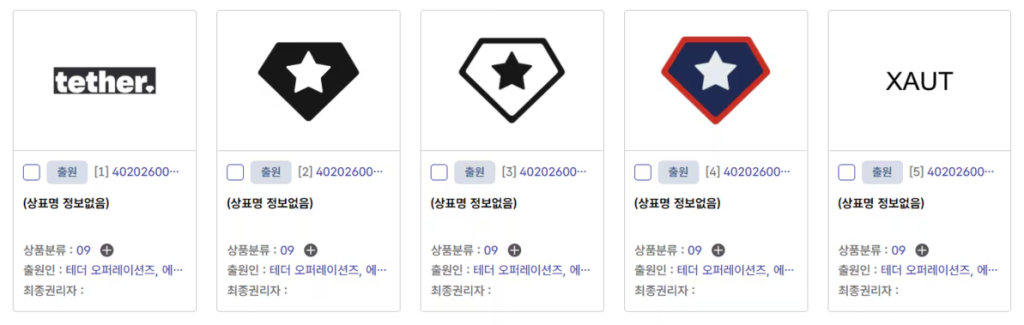
Trademarks for Tether's company name and logo filed with KIPRIS.
Tether’s trademark filings, some observers say, look like early preparation for that kind of requirement.
South Korea is not a small market. The country has one of the most active retail crypto trading populations in the world, which makes it a place no major stablecoin issuer can afford to ignore.
Circle Already Has A Head Start
Tether is not alone in moving on South Korea. Circle, the company behind USDC, filed 11 local trademarks last year and has already seen results — USDC’s market share in the country grew by 10%.

Tether now has seven active trademarks in South Korea, a number that has been growing as competition between the two stablecoin giants heats up.
Earlier this year, Circle CEO Jeremy Allaire traveled to South Korea and held meetings with major banks and crypto exchanges, exploring possible partnerships.
That kind of ground-level relationship building puts Circle ahead in terms of local ties, at least for now.

Seoul, South Korea. Image: Silversea
Payments, Not Just Trading
The trademark filings also fit into a wider ambition Tether has for South Korea. The country runs a significant export economy, and businesses there regularly move money across borders.
Tether sees that as an opening. Using blockchain-based payments instead of traditional bank transfers through systems like SWIFT could offer faster, cheaper transactions for South Korean exporters.
That vision — stablecoins as a real payment tool, not just a trading instrument — reflects where the bigger competition between Tether and Circle may eventually play out, well beyond crypto exchanges and into mainstream finance.
Featured image from Unsplash, chart from TradingView

Editorial Process for bitcoinist is centered on delivering thoroughly researched, accurate, and unbiased content. We uphold strict sourcing standards, and each page undergoes diligent review by our team of top technology experts and seasoned editors. This process ensures the integrity, relevance, and value of our content for our readers.