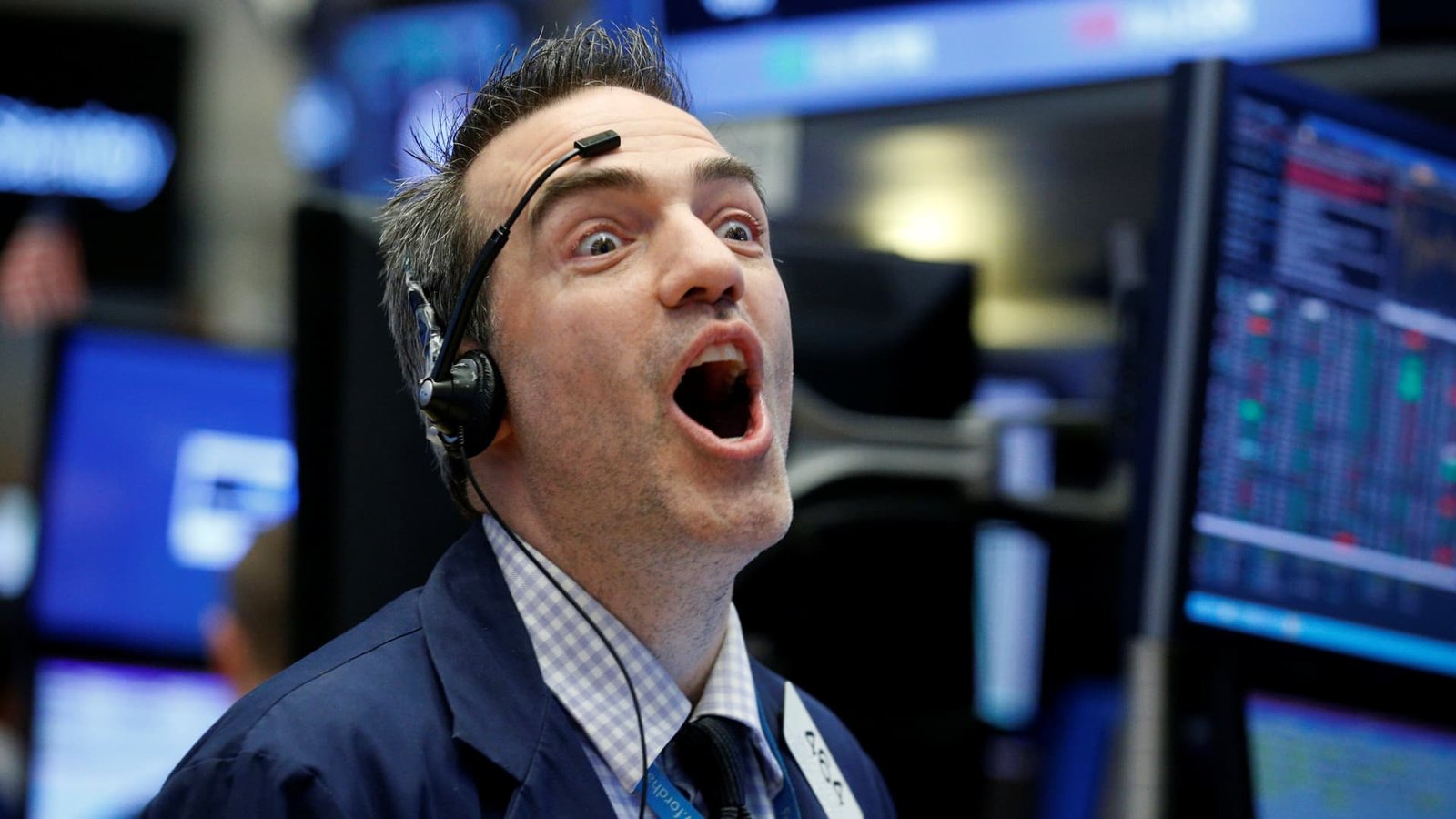
You can call it a comeback. Stocks rocketed to record highs last week on hopes of a peace deal with Iran, with the S & P 500 closing above 7,100 for the first time and the Nasdaq completing its longest-winning stretch since 1992 — 13 days of gains. For the week, the broad-based S & P jumped 4% while the tech-heavy Nasdaq rose 6%. The Dow Jones Industrial Average increased 1.7%. It capped a rare and dramatic turnaround for the stocks. As Barclays strategist Venu Krishna pointed out in a note to clients, the S & P 500 went from near correction territory (down about 9% from its all-time peak) back to an all-time high in just 11 trading days. That’s the fastest move to record levels from a bottom of at least 9% since at least 1990, he said. That quick reversal was largely the result of investors pricing in an end to the Iran-U.S. conflict. But Wall Street was also digesting solid bank earnings and a comeback in the beat-up software sector. Peace signs The week started just as it had every Monday since the U.S. attacked Iran in late February: investors trying to figure out how the latest overseas developments could impact their portfolios. First, negotiations in Islamabad broke down over the weekend, prompting President Donald Trump to announce a blockade of all maritime traffic in and out of Iran’s ports. None of that seemed to matter, though; the market roared higher. Tuesday brought another round of negotiations between Washington and Tehran, and on Wednesday, Trump told Fox Business that the war was “very close to over,” which sent stocks soaring. A session later, the president announced a ceasefire deal between Israel and Lebanon, leading to another record high. On Friday, Iran finally declared that the Strait of Hormuz was “completely open .” If the good news keeps coming, Jim Cramer said, there could be more gains in stocks that have been pressured by the war. He cited homebuilders like Home Depot, which jumped 3.6% on Friday. During Friday’s Morning Meeting, Cramer said he sees a coming rotation into stocks that were pressured by the war. “Now the Fed has the chance to be able to cut rates under Kevin Warsh . So, what we’re seeing is a move back into things that have really lagged,” he said. Software returns Beaten-down software stocks were our biggest winners in the portfolio, with Microsoft, CrowdStrike , and Salesforce our top three gainers. Software stocks have been hit this year on fears that artificial intelligence startups will eat their market share. The iShares Expanded Tech-Software ETF (IGV) rose nearly 14%, recovering some of its losses, but remains down roughly 20% for 2026. Microsoft was up 14% week-to-date. Management needs to allocate more of its available compute capacity to Microsoft Azure rather than to Copilot, its floundering AI assistant. CrowdStrike gained 11.9%. The Club’s not worried about what AI means for this company. As AI models get more advanced, it should actually be a tailwind for our two cybersecurity names, including Palo Alto Networks . We plan to eventually exit Palo Alto and put some of those funds into CrowdStrike. Salesforce jumped 10.4%. Although AI could hurt its seat-based business model, we’re holding out hope that management will turn things around. In May, we’ll be listening closely to CEO Marc Benioff’s commentary during its earnings release. The consumers are all right Bank earnings showed a pretty healthy consumer despite war-driven market volatility throughout the last month of the quarter. Results in consumer-facing businesses like credit cards painted a positive — if cautious — picture. JPMorgan said growth in consumer spending for the quarter was above the pace set in 2025. Credit card spending volume also went up 9% year over year, while delinquency rates remained fairly stable. JPMorgan CFO Jeremy Barnum said that “consumers and small businesses remain resilient.” Wells Fargo’s credit card business was promising, too. New credit card account openings jumped nearly 60% year over year, CFO Mike Santomassimo said. Revenues from its consumer banking and lending division experienced a first-quarter revenue increase of 6.6.% Before the war-driven surge in energy prices, CEO Charlie Scharf said that gas accounted for 6% of total debit card spending and 4% of total credit spending. Each of those levels rose 1%. “Consumers are spending more than a year ago, which includes spending more on gas, but they haven’t slowed spending on everything else,” Scharf said. It was an otherwise lackluster report from Wells. Although the bank came in above earnings expectations, management disappointed us for the second quarter in a row with its revenue miss. The Club downgraded the stock to a hold-equivalent 2 rating on the release. Wall Street’s other large banks weathered the first quarter of 2026 much better. Club holding Goldman Sachs, along with peers like Bank of America, JPMorgan, and Morgan Stanley , beat on both the top and bottom lines. “The one [bank] you really want to own is Goldman because that was actually a really good quarter,” Cramer said Friday. We continue to love this stock for its profitable dealmaking business. (See here for a full list of the stocks in Jim Cramer’s Charitable Trust.) As a subscriber to the CNBC Investing Club with Jim Cramer, you will receive a trade alert before Jim makes a trade. Jim waits 45 minutes after sending a trade alert before buying or selling a stock in his charitable trust’s portfolio. If Jim has talked about a stock on CNBC TV, he waits 72 hours after issuing the trade alert before executing the trade. THE ABOVE INVESTING CLUB INFORMATION IS SUBJECT TO OUR TERMS AND CONDITIONS AND PRIVACY POLICY , TOGETHER WITH OUR DISCLAIMER . NO FIDUCIARY OBLIGATION OR DUTY EXISTS, OR IS CREATED, BY VIRTUE OF YOUR RECEIPT OF ANY INFORMATION PROVIDED IN CONNECTION WITH THE INVESTING CLUB. NO SPECIFIC OUTCOME OR PROFIT IS GUARANTEED.