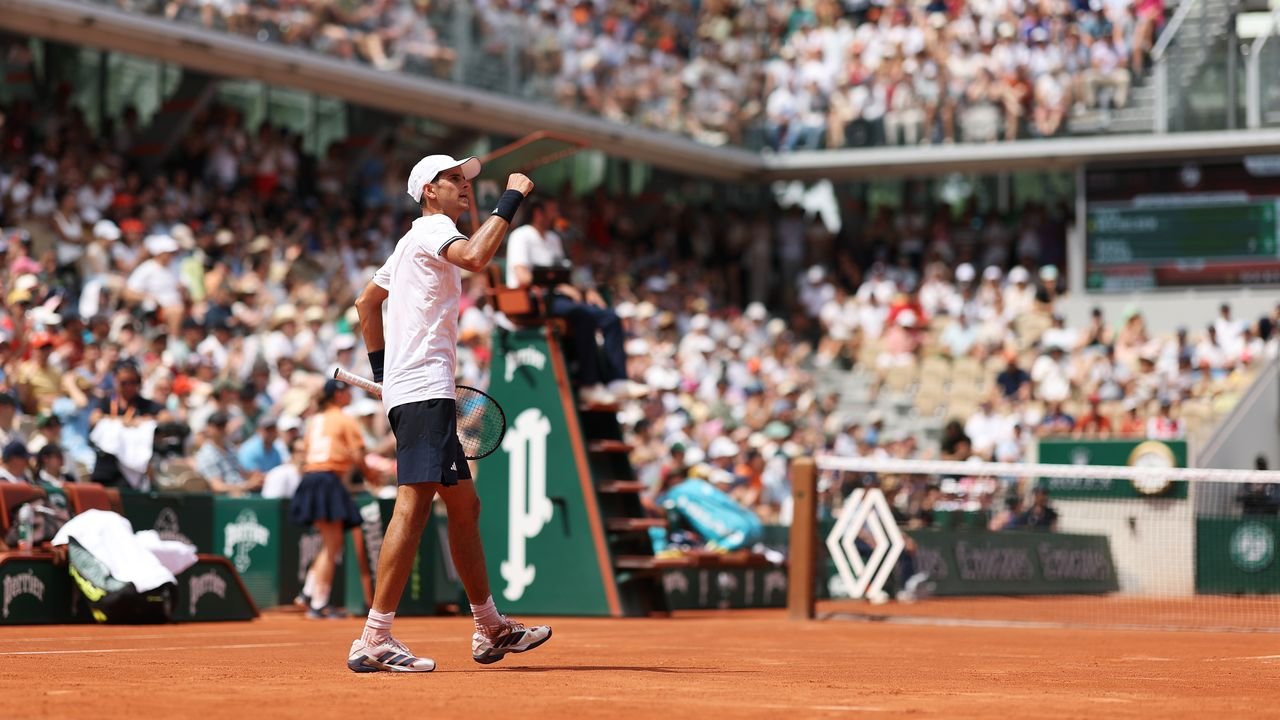
Tennis is unlike any other spectator sport. Instead of fans crowding in for one big tournament, there are hundreds of matches at each of its four major championships, known as the Grand Slams. That means that fans get the chance to choose their own adventure, whether it’s court-hopping through several matches, staying honed in on a favorite player, or even just browsing the grounds, enjoying its trademark food and drinks and curated shops. That ability to personalize the experience makes it one of the most compelling sports to travel for.
So it’s no wonder that fans are truly going the distance. “Interest in these events is at an all-time high,” tennis journalist Chris Oddo tells Condé Nast Traveler from Paris, where he’s currently covering the French Open, the second championship of the season that’s also known as Roland Garros, running through June 7.
The 2027 season kicked off on a high in January when the Australian Open in Melbourne set a new attendance record of 1.37 million fans, a 14 percent rise from last year. Even its official hotel partner Marriott International noted a 4 percent increase in stays booked by international guests, including a staggering 20 percent uptick in American visitors for the final weekend. Other Grand Slams like the US Open are also experiencing historic fan growth, setting consecutive all-time attendance records.
At my first US Open in 2003, I remember being immediately overwhelmed by the range of activities on offer, but I quickly learned it was a pick-your-own-adventure experience. Over the years, I’ve posed with the championship trophy alongside my dad, watched my nieces collect player autographs after practice sessions, and even played a few points on an indoor court with a friend (does this mean I’ve technically played at the US Open?!). But my favorite tradition is eating my way through the tournament: I’ve watched the food courts evolve from generic stadium fare to thoughtfully curated, community- and chef-driven dining experiences that make them a destination in their own right.
Over the years, I’ve taken my love of Grand Slams internationally, both attending Wimbledon and touring its museum and venue off-season, as well as visiting the Aussie Open venue and a French Open pop-up in Central Paris. While each Grand Slam bears its own personality, they all exude that magical feeling that’s equal parts thrilling and overwhelming, especially to first-timers who might not anticipate the spread of the tournaments’ grounds and offerings.
So we turned to the insiders, from pro players like No. 4 American Jessica Pegula, International Tennis Hall of Fame (ITHF) Class of 2025 inductee Maria Sharapova, and four-time Grand Slam semifinalist Tommy Haas to founders of travel tennis tour companies, coaches, concessioners, and more to source the unwritten rules of attending a Grand Slam.
Go early in the tournaments
All the Grand Slams follow a bracket-style elimination, which means there are more matches at the beginning, as players get sent home after they lose. Pegula advises attending earlier in the tournament’s first week. “You get a chance to see a bunch of matches, and usually it’s cheaper and easier,” the World of Hyatt ambassador tells Condé Nast Traveler. She’s even seen her own friends, who may not be the biggest tennis fans, get to know up-and-coming players by catching them early on a small court. “Maybe that person does well and then you have a connection to them and follow them,” she says.