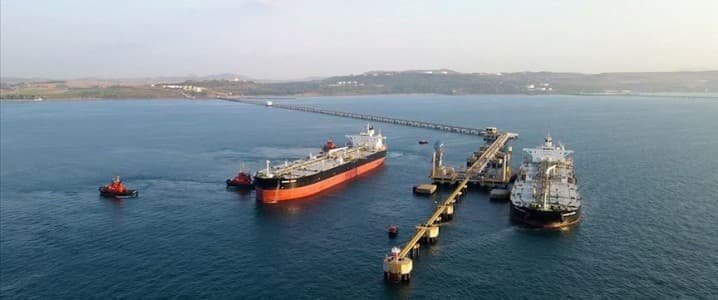
An oil tanker carrying crude from the Kurdistan Region of Iraq (KRI) unloaded its cargo at a U.S. port at the very end of last month – the first since the reopening of the critical Iraq-Turkey Pipeline (ITP) around two months ago. According to industry data, many more such cargoes are expected in the coming day, weeks, and months. Although the U.S. has a genuine use for the medium-heavy sour Iraqi Kurdish blend, these imports are about a lot more than oil and following the recent rocket attack on the KRI’s Khor Mor gas field, the timing of this resumption of oil exports to the U.S. looks particularly well-judged.
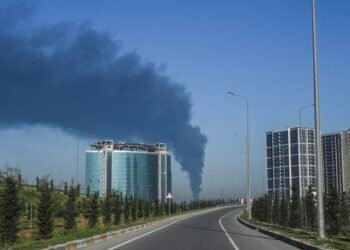
The Khor Mor attack was the most significant since the July barrage of drone strikes on several of the KRI’s oilfields that reduced output by around 150,000 barrels per day (bpd). This gas field in the Sulaymaniyah region of Iraqi Kurdistan did not affect the region’s oil production or exports, but it is a key provider of energy for the area’s power generation, so the attack caused widespread power outages. Although there were no official claims of responsibility for the attack, senior security sources close to Iraq’s Oil Ministry highlight the likely involvement of Iran – through one of its many Iraqi conduits – as ultimately being behind it for two reasons. First, as a warning of more to come if the KRI continues to develop its still largely latent gas potential, which would allow Iraq as a whole to more easily reduce its long-running dependence on Iran for up to 40% of its power needs through gas and electricity imports. Second, to re-enforce the wedge between Iraq and the U.S. that centres on this continued relationship between Baghdad and Tehran, which looks to be reducing with a recent influx of Western firms back into the country.
Several such companies have been working on allowing Iraq to capture more of the gas that emerges as a by-product of oil drilling (‘associated gas’) and was for decades just burned away. The raw figures for these operations has always looked compelling, with official estimates that Iraq’s proven reserves of conventional natural gas amount to 3.5 trillion cubic metres (tcm) or about 1.5% of the world total, placing it 12th among global reserve-holders. This said, around three-quarters of these proven reserves consist of associated gas. However, Iraq did not revise its figure for proven gas reserves in 2010 at the time of the upwards revision of proven oil reserves, and logical figures for non-associated gas were not provided at the time – or since – from the Iraqi oil and gas authorities either. The International Energy Agency (IEA), though, estimates that ultimately recoverable resources will be much larger than the official estimates of 3.5 tcm – its estimate is 8.0 tcm, of which around 30% is thought to be non-associated gas. This means that almost 40% of the resources yet to be found are expected to be in non-associated gas fields.
Nonetheless, there has been some progress in recent years, with the most notable being British energy giant Shell’s efforts relating to the Basrah Gas Company, focused on turning associated gas from Iraq’s southern oilfields into fuel for power and exports. More recently, France’s TotalEnergies launched its own Gas Growth Integrated Project with a similar aim as part of its broader US$27 billion four-pronged deal with Iraq. As fully analysed in my latest book on the new global oil market order, several earlier attempts led mainly by U.S. firms had failed to make meaningful headway on Iraq’s gas flaring – and reducing its energy dependence on Iran – principally because of deep-rooted opposition to this change in Baghdad, supported by Tehran. That said, the Kurdistan Region had long looked a better prospect to the West, before Russian influence dramatically expanded there with Rosneft’s effective takeover of the region’s oil sector in late 2017, as also detailed in my latest book.
At the time of the last major analysis done by the IEA in 2012, it was estimated that the KRI area held 25 trillion cubic feet (tcf) of proven gas reserves and up to 198 tcf of unproven gas resources, around 3% of the world’s total deposits. The figures looked realistic, given that the U.S. Geological Survey believed that undiscovered resources in just the Zagros fold belt of Iraq, a large part of which falls in the KRG area, amounts to around 54 tcf of gas. Discovered reserves, though, total less than 10 tcf of proven plus probable reserves and less than 30 tcf of contingent resources. The bulk of these are non-associated gas deposits located in the Region’s central and southern areas, especially those in the Bina Bawi, Khor Mor, Khurmala, Miran and Chemchemal fields. Additionally, the IEA highlighted that judging from the 65% success rate of drilling activity in its oil operations, a high degree of prospectivity in gas operations was likely and this was set to push up gas to the near-1,300 mmcf/d forecast by the end of 2025.
At that point, given the relative lack of focus on its gas sector, Kurdistan still did not possess a fully developed gas infrastructure. Aside from a gas pipeline that ran from Khor Mor via the then-relatively undeveloped Chemchemal field and the Bazian power plant to the Erbil power plant, and a short pipeline that links the Summail field with the Dohuk power plant, facilities for processing plants and pipelines for domestic gas transmission to power plants still needed to be fully completed. This lack of internal and external infrastructure had tended to deter investment in the past, leaving several fields – most notably Miran and Bina Bawi, which together hold 12 Tcf of recoverable gas – effectively stranded and offering operators little value for gas exposure in the market given the lack of export infrastructure. It was this lack of development that Iran has long wanted to keep in play, both through attempting to thwart attempts at investment from the West and in the event that any went ahead trying to disrupt them on the ground using their proxy militia assets in the country.
Consequently, the ongoing investment into the KRI’s gas sector by foreign firms, especially directly from the West, has been the target of Iranian-backed destabilisation operations. These have morphed more broadly in recent months into similar operations in the KRI’s oil sector too, as seen with the drone attacks in July. As underscored exclusively to OilPrice.com some time ago by a senior energy source who works closely with Iran’s Petroleum Ministry, Iran’s view is that: “By keeping the West out of energy deals in Iraq, the end of Western hegemony in the Middle East will become the decisive chapter in the West’s final demise.” On the other side of the power equation, the U.S. and its key allies want the Kurdistan Region (and Iraq more broadly) to terminate all links with Chinese, Russian and Iranian companies connected to the Islamic Revolutionary Guards Corps over the long term. The U.S. and Israel also have a further strategic interest in utilising the Kurdistan Region as a base for ongoing monitoring operations against Iran. Once these basic elements are understood, then everything that has happened, is happening, and will happen, makes perfect sense.
As such, the continued importation by the U.S. of Iraqi oil source through the KRI should be seen in this context. This is a clear statement of intent by the U.S. and its core allies that they are there to stay, not just in the KRI but in Iraq, and that this will not only involve a surge in exploration and development deals across the entire country, but also financial support to north and south during the entire oil and gas process – from excavation to delivery. Moreover, the on-the-ground presence of Western security personnel will also continue north and south, as is permitted under international law when relating to the safeguarding of valuable assets in a foreign jurisdiction. In short, as a senior Washington-based legal source connected to the U.S. Treasury Department exclusively underlined to OilPrice.com last week: “This [the recent oil shipment from Iraq to the U.S.] is just part of the whole which says, ‘we’re here again now, and this time we’re not going away’.”
By Simon Watkins for Oilprice.com
More Top Reads From Oilprice.com
Oilprice Intelligence brings you the signals before they become front-page news. This is the same expert analysis read by veteran traders and political advisors. Get it free, twice a week, and you’ll always know why the market is moving before everyone else.
You get the geopolitical intelligence, the hidden inventory data, and the market whispers that move billions – and we’ll send you $389 in premium energy intelligence, on us, just for subscribing. Join 400,000+ readers today. Get access immediately by clicking here.