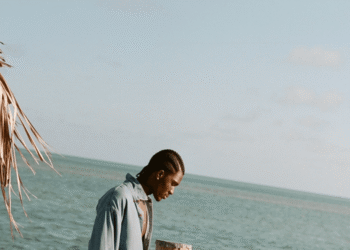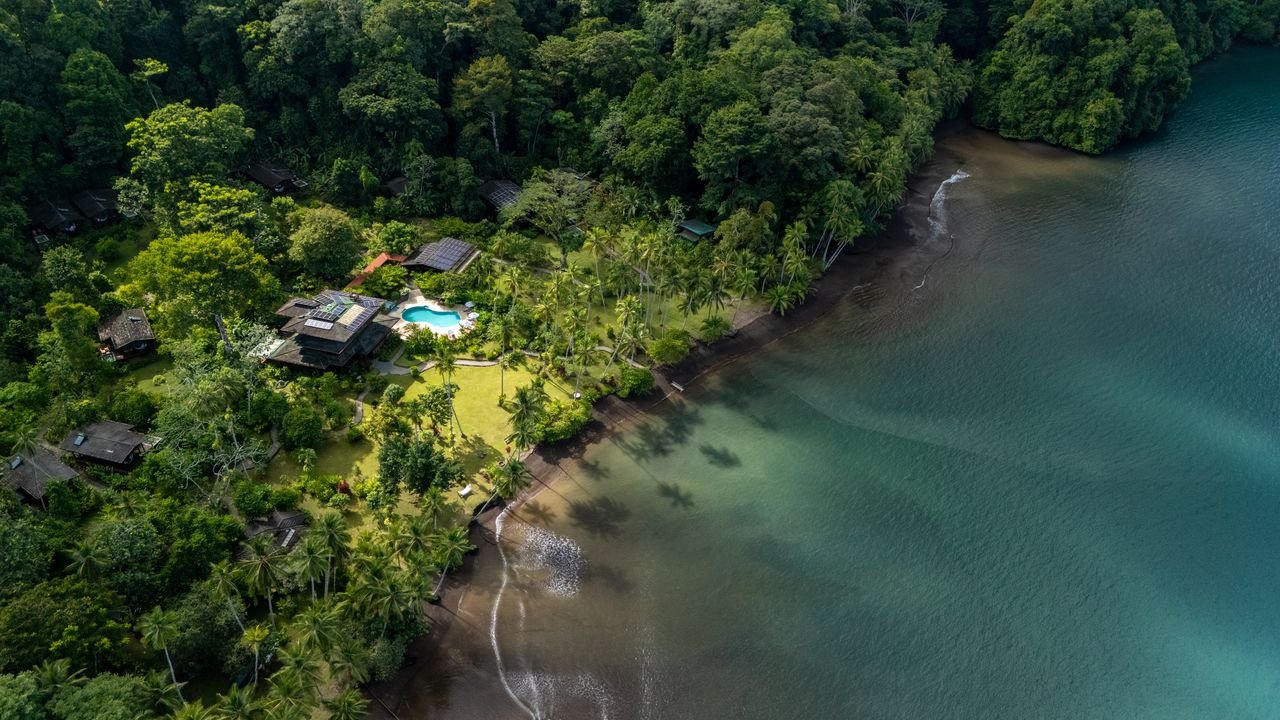
We arrive at Playa Cativo during golden hour. The jungle is seductively aglow, chartreuse palm fronds backlit by the setting sun. As our boat speeds across the choppy cove, I hold on tight to my Imperial, carefully raising the glass bottle to my lips between waves.
The only way to reach this secluded slice of paradise—a 1,000-acre private nature reserve bordering Piedras Blancas National Park in Costa Rica’s Osa region—is by boat. By now, the evening’s creeping shadow has cast itself across the sea, lending a tinge of enchantment to the dark emerald waters.
“We call this place Golfo Dulce, or ‘sweet gulf,’ because all the rivers around this area feed into the sea, bringing fresh water,” says Laura Vega, one of Playa Cativo’s local concierges, who picked me and two other journalists up in the nearby town of Golfito, following a short propeller plane ride from San José.
Separating mainland Costa Rica from the Osa Peninsula, Golfo Dulce is one of the world’s four “tropical fjords,” Vega says. Similar to its Scandinavian sisters, green mountains rise starkly from the water’s edge. But instead of snowy ridges and swaths of farmland, the hills are blanketed with dense tree canopies and serpentine mangrove roots.
The reason Golfo Dulce is so well-protected—and difficult to access—is because it’s surrounded by national park land, Vega explains as our boat nears the sandy stretch of coastline marking Playa Cativo. Directly behind the hotel is Piedras Blancas National Park; across the gulf is Corcovado National Park, on the Osa Peninsula. Together, they form “a protected corridor for more than 148,000 hectares of tropical rainforest, home to all sorts of mammals, monkeys, birds, and mountain life,” she tells us.
The 300-square-mile inlet is one of the only places in the world where both Northern and Southern Hemisphere humpback whales birth and nurse their young, temporarily overlapping on their way from their respective Arctic and Antarctic feeding grounds. This fact has helped Golfo Dulce earn a designation as Latin America’s first Whale Heritage Site (one of only eight such designations worldwide). We won’t see any on this trip—peak whale watching season is between July and October—but resident pods of dolphins and sea turtles live in the warm, protected waters year-round.