This is part of Iconic Passages, a collection of stories celebrating America and the many ways we move through its vast and diverse landscapes. Read more here.
I jolted awake as the Sunset Limited barreled west across the Texas desert. It wasn’t yet dawn, and still pitch-black outside. The distant whistle and rumble of the train lulled me back to sleep several times before I finally rose.
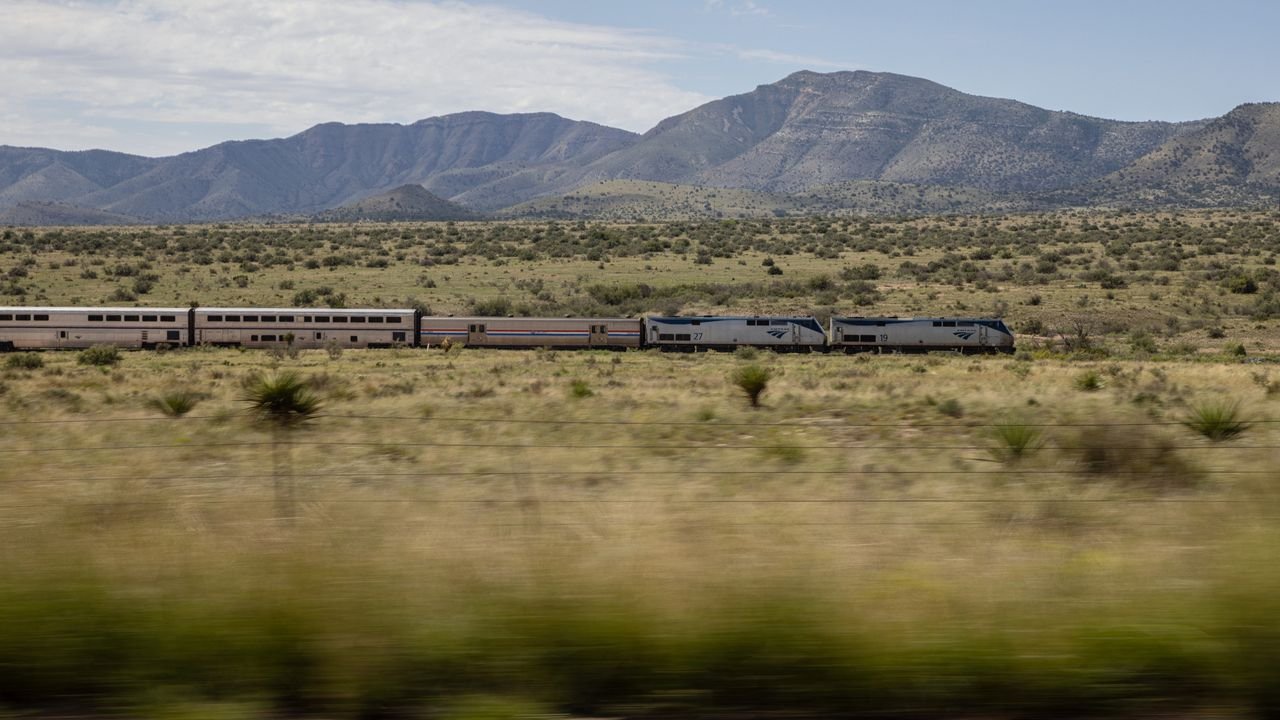
I left my small roomette sleeper compartment just before 7 a.m., and walked to the dining car for breakfast. Outside, first light was beginning to break, the horizon behind us awash in orange and pink. Nearly 24 hours had passed since we departed New Orleans, and as the sky brightened, it became clear that the landscape had changed drastically overnight—the alligator-filled creeks of Louisiana and the green suburban sprawl of eastern Texas replaced by the shrub-dotted mesas of the parched, unforgiving Southwest.
The dining car attendant seated me across from a friendly older man who introduced himself as Scott Frisch. He wore a tank top and slippers—he, too, had just stumbled out of bed and into our booth. We ordered French toast and scrambled eggs with potatoes, made to order by a team of Amtrak chefs downstairs, and washed it down with hot coffee and orange juice. Warmed by the food, Mr. Frisch and I kept talking long after we’d finished eating. There was hardly a rush; those of us staying on board all the way to Los Angeles still had another 24 hours to go.
“I’m moving from Palm Beach to Phoenix,” he said. Frisch had just turned 70, and the following day was to be the first day of his new job. A longtime aerospace engineer, he had worked on cockpit systems for aircraft ranging from military planes to the first space shuttle—but he hated to fly. In an airplane-dependent America, that meant two long Lyft rides, a coach bus, and a multiday train ride for his move. He didn’t seem to mind the drawn-out journey: “I’ve been out of work for three years, and it just feels good to get going again.”