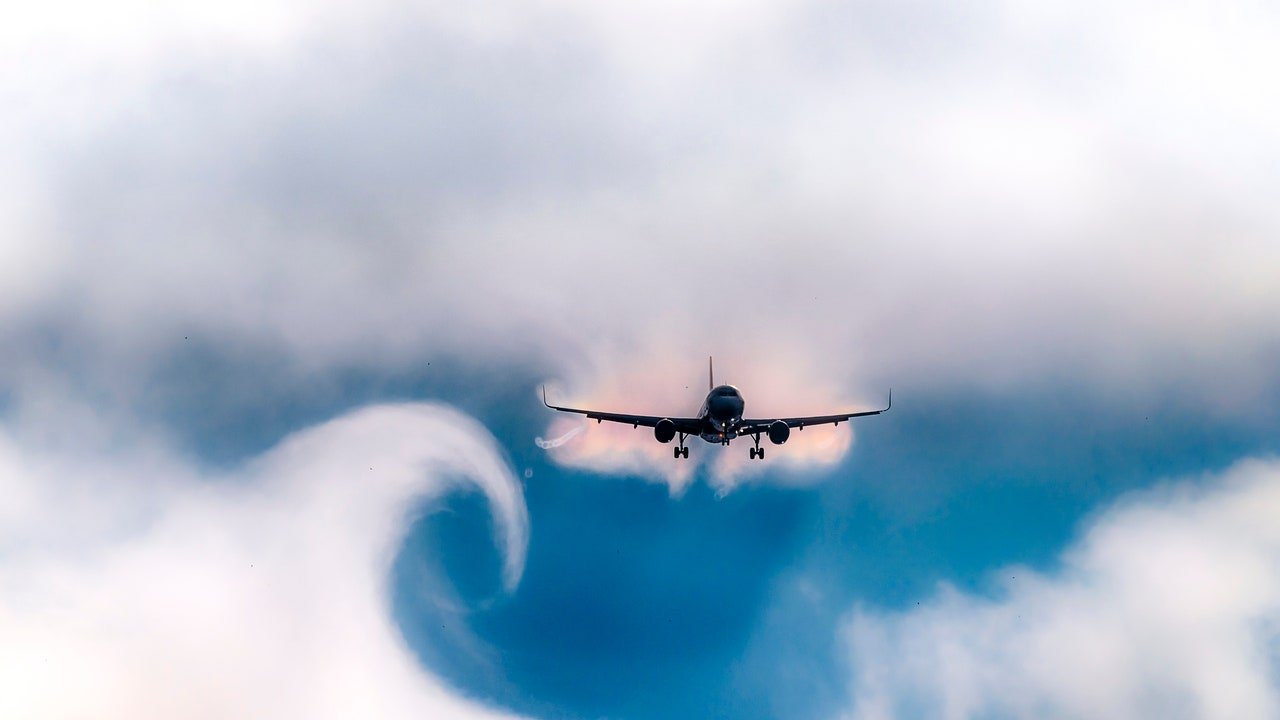
The issue with some types of turbulence, like clear air turbulence, is it can come out of nowhere, so you can be thrown while walking around the plane. This is why the best advice is to keep your seat belt on as much as possible.
Is turbulence happening more often?
Yes, turbulence is increasing with climate change. However, for the individual, you are more likely to be hit by longer flight routes, more delays, and longer waiting times at airports. Airlines will normally plan out the route with the least amount of turbulence. Avoiding turbulence will lead to longer and more convoluted flight paths.
Can a plane crash from turbulence?
If the plane was flying through an active thunderstorm, turbulence and other weather variables like downdrafts, heavy rainfall, and hail could lead to an incident. However, thunderstorms are very well forecasted, and an airline would not let you fly through an active thunderstorm, so you should not worry. Turbulence on its own would not lead to a plane crash.
Is there a link between climate change and an increase in turbulence? If so, what’s happening?
Global warming refers to the rapid warming of the troposphere globally in time. The troposphere is the layer of the atmosphere closest to the surface which we live in. There are several layers within the atmosphere; the layer above the troposphere is the stratosphere. The increase in greenhouse gases traps heat within the troposphere, which would usually be emitted into the stratosphere. Therefore, the stratosphere is cooling at a rate similar to tropospheric warming. This creates a strong temperature difference vertically across the atmosphere.
What does this mean for turbulence? A stronger vertical temperature gradient leads to a more chaotic jet stream. As jet streams get stronger, it gets more chaotic and unstable, and the number of CAT (clear-air turbulence) encounters increases.
What are airlines doing to combat it? Is there new technology in the works?
CAT forecasts, which are like temperature and rain forecasts but just for turbulence, are around 70 to 80 percent accurate. Airlines plan out flight routes to try and avoid turbulence as much as possible. This often leads to longer flight times, longer wait times, increased use of fuel, and more emissions of CO2 into the atmosphere.